Anthropic and METR report reveals how AI is dramatically accelerating AI research
A new METR report shows that Anthropic has crossed the threshold of dramatic AI-driven acceleration in research and development.
A public report by METR sheds light on how artificial intelligence is accelerating research and development at Anthropic. Analysts reviewed internal company data and responsible scaling policies to assess the real impact of AI models on their own continuous evolution.
- METR report analyzes the unprecedented acceleration of AI research and development at Anthropic.
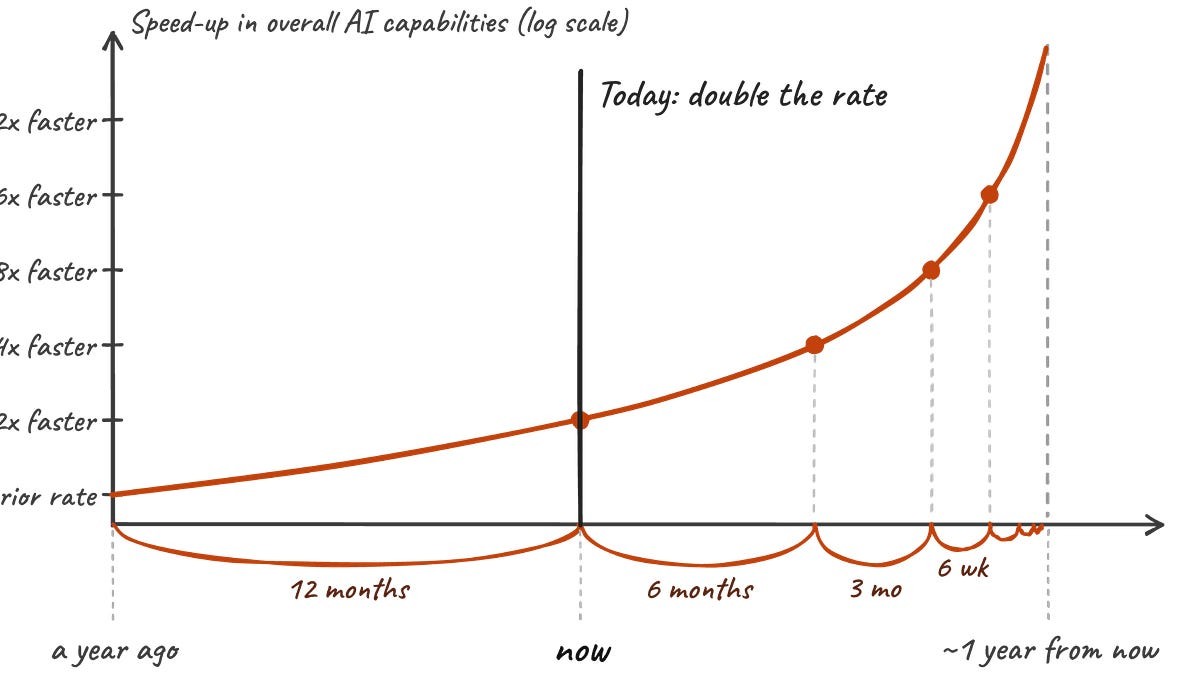
- Capabilities grew roughly twice as fast between October 2025 and October 2026 compared to prior periods.
- AI automation of R&D tasks serves as the primary driver behind this sustained rapid progress.
- Experts note that these findings point toward significantly shorter timelines for future breakthroughs.
Internal index and scaling policies
According to Anthropic's latest responsible scaling policy, the threshold for dramatic acceleration is met when overall capability progress proceeds twice as fast as previous sustained rates. Measurements from an internal version of the Epoch Capabilities Index confirm this threshold was crossed between October 2025 and October 2026.
Although a majority of the supporting evidence was redacted for safety reasons, the authors emphasize that this hidden data provided the most informative insights. The ongoing accelerated progress is primarily attributed to AI automating the very research and development processes that create new systems.
Read alsoMETR: AI accelerates Anthropic model development by nearly twofoldThe math behind research acceleration
Improving algorithms and model architectures relies on both computational resources and human researcher labor. The report highlights that to achieve a twofold increase in overall capabilities, the uplift in researcher productivity and experiment throughput needs to scale significantly higher—roughly 4 to 9 times, accounting for diminishing returns.
Despite the natural challenge that new ideas become harder to find over time, informal reports from Anthropic staff suggest an internal uplift of around 12x when utilizing their own models. This magnitude of acceleration functions effectively as a time-warp bubble, multiplying the output of researchers per unit of real-world time.
What this means for the tech industry
For developers, businesses, and the broader tech sector, such compounding acceleration signifies a monumental shift in timelines. If AI automation continues to compound without hitting severe bottlenecks, reaching extreme milestones could happen much faster than previously projected by external researchers.
Source: Hacker News: Front Page