Claude Personal Finance vs ChatGPT Finances: Key differences
Anthropic and OpenAI have introduced AI financial tools with bank account integration via Plaid. Learn the main privacy and feature differences.
Major artificial intelligence developers are expanding the capabilities of their chatbots by offering tools to analyze personal finances. Anthropic recently announced a new feature for Claude called Personal Finance, acting as a direct rival to OpenAI's Finances feature launched in May. Both options aim to help users better understand their finances and plan budgets, though they do not provide expert financial advice.
- Both Claude Personal Finance and ChatGPT Finances connect to bank accounts via Plaid.
- Both AI tools operate on a read-only basis and cannot make transactions or account changes.
- The primary difference lies in privacy settings and whether data is used for model training.
- Anthropic states its tool features no ads, sponsored recommendations, or proprietary loans.
Core similarities and dashboard features
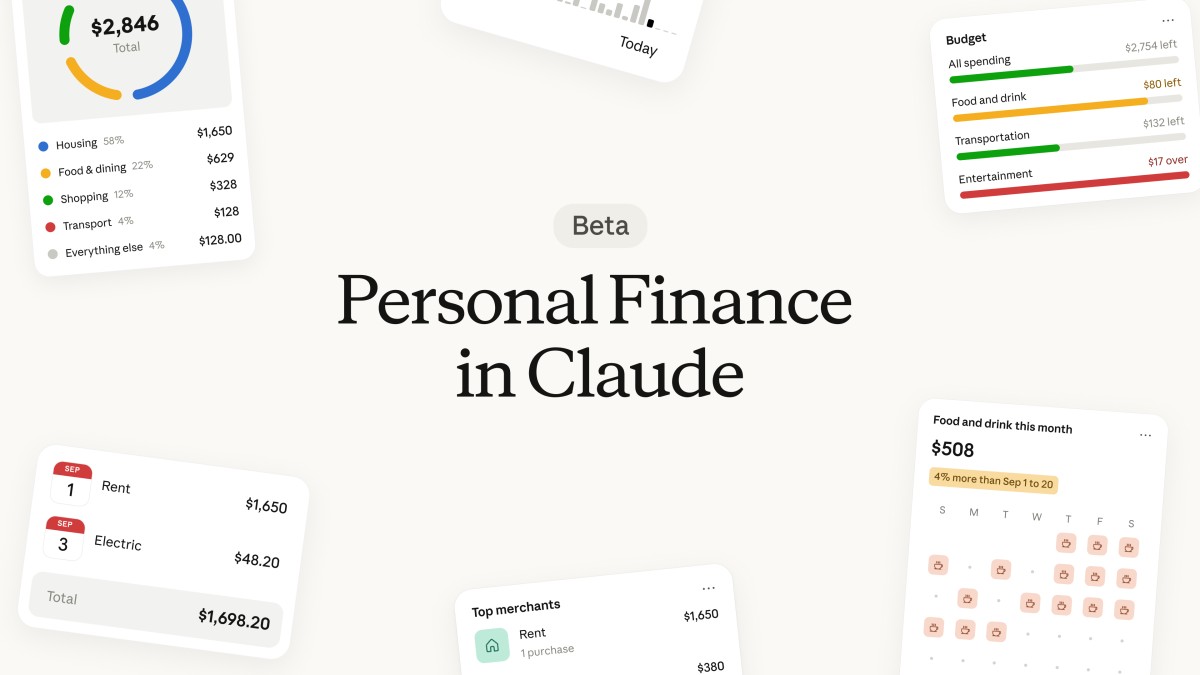
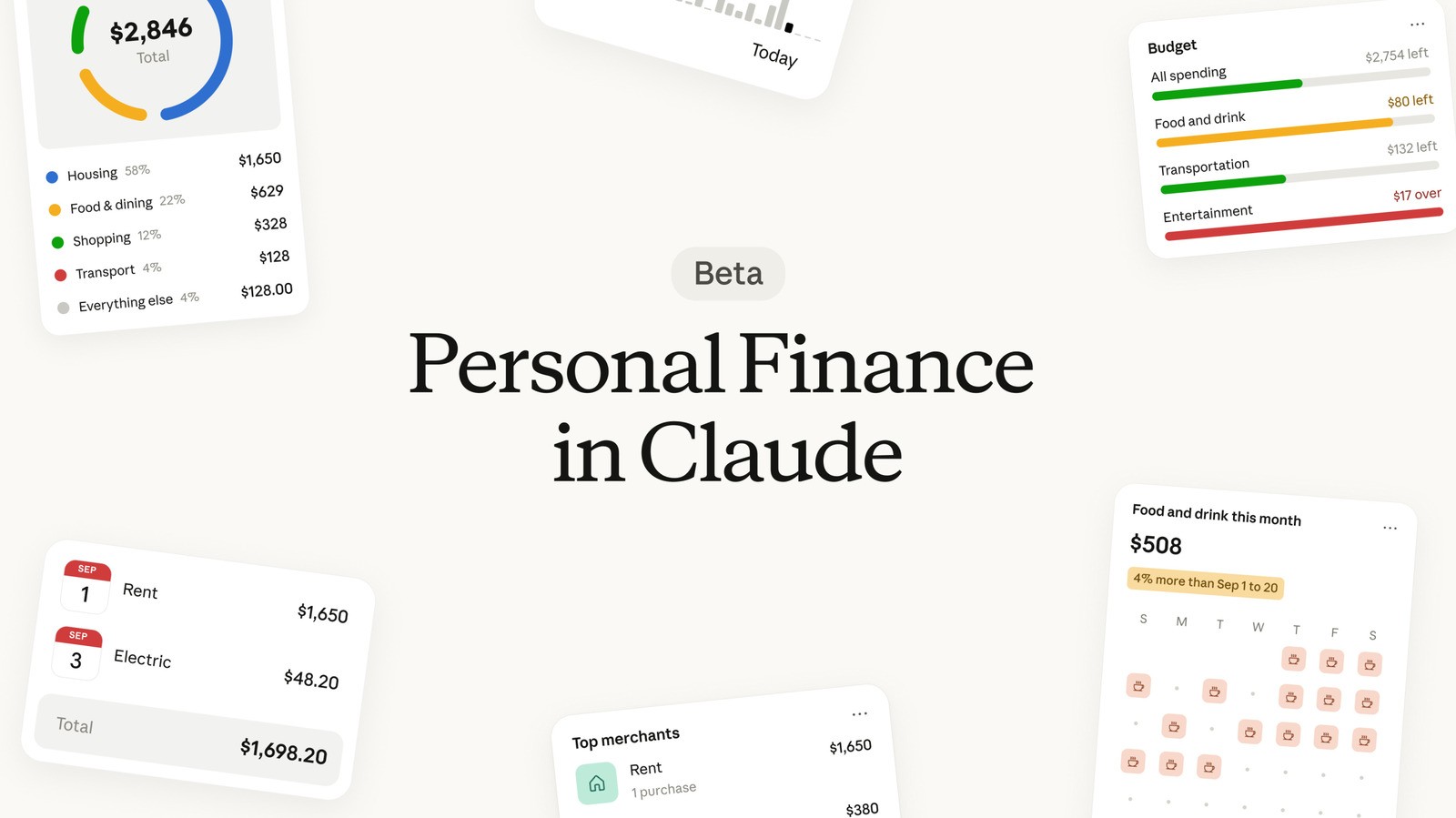
Covering a broad spectrum of personal finance topics, OpenAI and Anthropic's offerings share many common capabilities. Both AI chatbots can address general questions regarding financial goals, such as buying a house, planning an expensive family vacation, or creating a savings plan. Furthermore, Claude and ChatGPT generate visual dashboards to offer users clear insights into monthly expenses, investments, and spending habits.
To activate either tool, users must link their bank accounts using Plaid, enabling connections with popular financial institutions like Bank of America, Capital One, or Chase. Once configured, both AIs have strictly read-only access, meaning they view provided information without altering accounts. Anthropic specifies visibility over bank name, account type, balances, credit limits, and two years of transactions, while OpenAI reviews balances, transactions, investments, and liabilities.
Read alsoClaude gets personal finance features with bank account integrationPrivacy settings and data training differences
While core functions remain similar, the major divergence between Anthropic and OpenAI involves privacy settings. Anthropic states that conversations within the Personal Finance hub are not used to train its models by default, and unlinking the bank account purges previously provided data. Conversely, OpenAI applies standard model training settings to financial chats, requiring users to manually opt out in data controls, though unlinked data is deleted within 30 days.
Additionally, Anthropic differentiates itself by ensuring no ads, sponsored recommendations, or proprietary credit products exist within Personal Finance. Meanwhile, OpenAI has been testing ads for cheaper tiers and partners with Intuit to incorporate tax questions and credit card applications. Anthropic plans to gather feedback from banks and wealth managers to further improve its AI offering.
What this means for users
The introduction of financial tools by leading AI companies marks a significant step toward automated budget management and financial literacy. Users considering these features must weigh the convenience of OpenAI's expanding ecosystem against Anthropic's stricter privacy guarantees regarding financial data training. Understanding these nuances helps ensure secure and effective personal finance management using generative AI.