CVE-2026-6460: Uncovering a 22-Year-Old Type Flaw in PostgreSQL
Security researcher Mehmet Inche has discovered a 22-year-old type-confusion vulnerability in the core of PostgreSQL, escalating it to RCE.
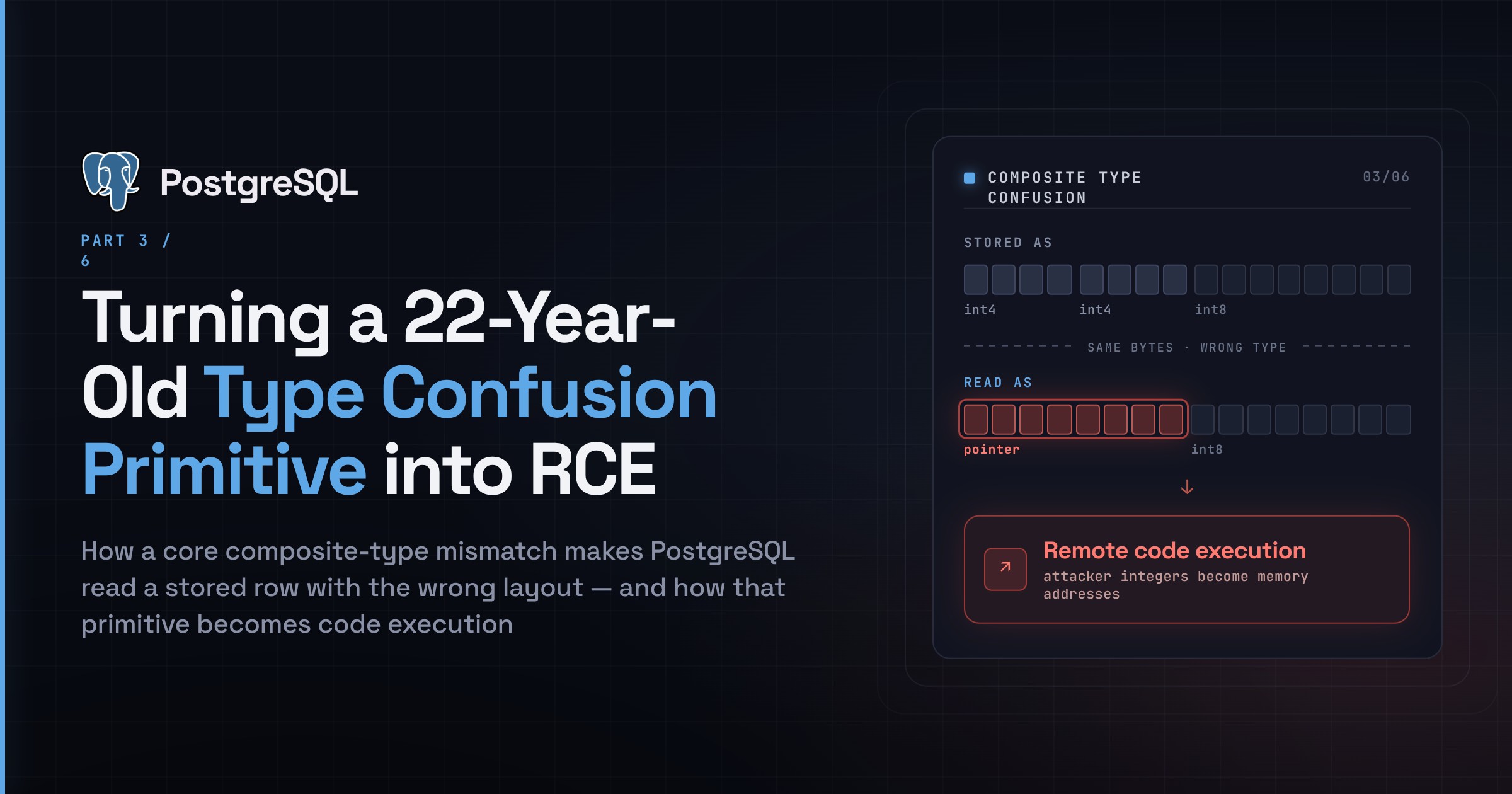
Security researcher Mehmet Inche has published the third installment of his blog series focusing on systemic risks within the managed PostgreSQL industry. The new article details the discovery of a type-confusion vulnerability hidden deep inside the core of the database management system for 22 years, now tracked as CVE-2026-6460.
- The investigation started while auditing memory-corruption issues in the pg_clickhouse extension.
- Deep diving into PostgreSQL internal data structures like Datum and OID revealed foundational processing details.
- Manipulating composite data types successfully triggered reliable memory corruption and remote code execution.
- The vendor was notified and timely patches were deployed to secure affected installations.
Investigating pg_clickhouse and Database Internals
During June and July, the author focused on exploiting memory-corruption vulnerabilities across various PostgreSQL extensions. One of these was pg_clickhouse, which translates ClickHouse values into native PostgreSQL formats. A mistake during this type conversion process ultimately led to code execution and sparked a deeper curiosity about how the database handles its internal data representations.
To satisfy this curiosity, the researcher traced basic queries down to the core parser and execution trees. With the assistance of an AI agent and detailed code analysis, he examined how constants are stored within generic 8-byte carriers known as Datums and how type metadata is associated with them.
Read alsoCritical Java4Shell RCE vulnerability impacts OpenJDKUnderstanding Datums, OIDs, and Type Confusion
A Datum does not inherently know what type of data it represents. The 8-byte container holding a value relies entirely on metadata like consttype and Object Identifiers (OIDs) pointing to system catalogs such as pg_type to interpret its meaning correctly.
The output and input functions responsible for formatting these values trust the assigned flags rather than inspecting the raw data dynamically. This architectural characteristic creates an opportunity for type-confusion primitives if the type is altered between construction and usage phases.
What This Means for Developers and Organizations
The discovery of CVE-2026-6460 highlights the immense complexity inherent in foundational software projects that have evolved over decades. While managed database providers and core maintainers have addressed the reported issues, it serves as a critical reminder of the importance of robust security audits across both database cores and third-party extensions.
For engineering teams and database administrators, this research emphasizes the necessity of maintaining rigorous patch management protocols and staying vigilant about underlying infrastructure updates to mitigate complex architectural risks.
Source: Hacker News: Front Page