Discovered Materials offers $1M in prizes for AI-solved science challenges
Discovered Materials, a YC startup, is offering a $1 million prize pool for AI models that can solve five critical unsolved problems in materials science.
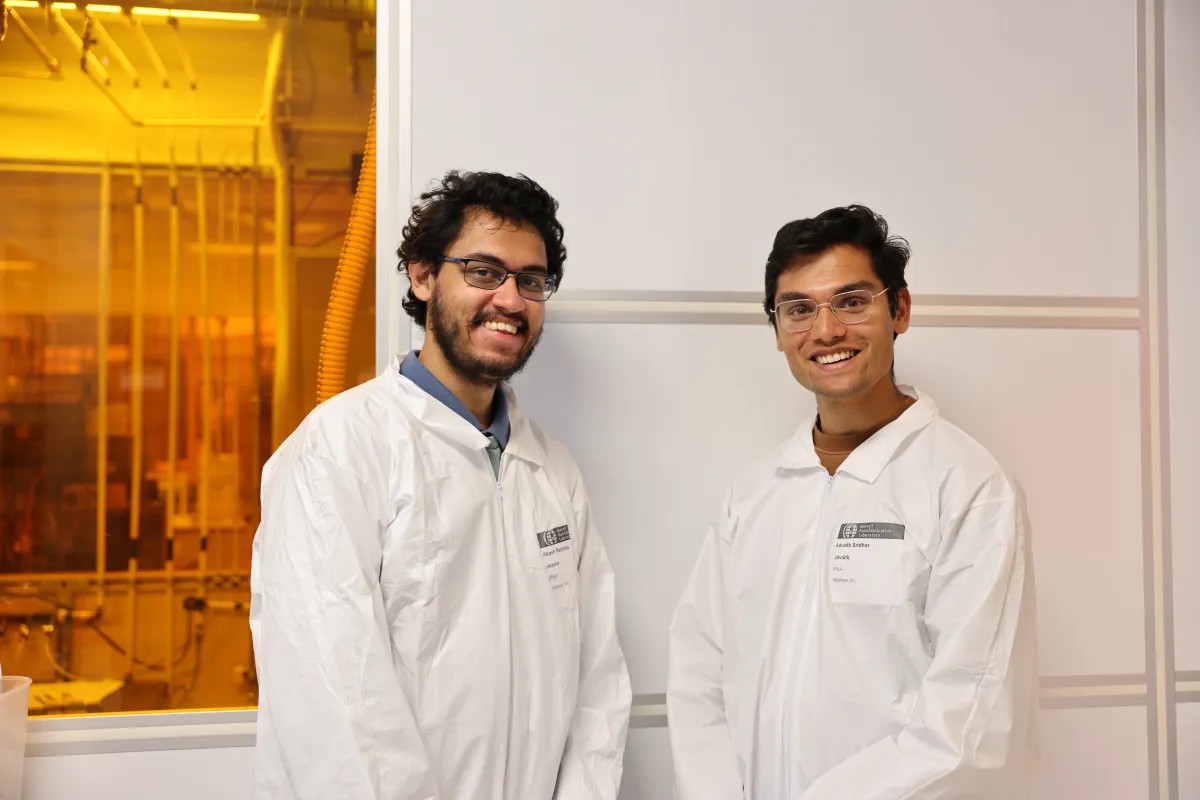
Discovered Materials, a startup focused on using AI to discover substances for advanced chips, has announced a $1 million challenge to push the boundaries of materials science. The company is offering $200,000 for each of the five identified scientific problems, aiming to see if frontier AI models can finally tackle complex physical phenomena.
- A total prize pool of $1 million is split into five $200,000 challenges.
- Topics include cuprate superconductivity, silicon interface structure, and thermal property mapping.
- The challenges were developed in collaboration with leading global academics to serve as benchmarks for AI.
Benchmarking Frontier AI
Unlike mathematics, materials science lacks a clear 'yes or no' definition for many problems, making it difficult to measure AI progress. Discovered Materials recruited an advisory group of academics to define specific challenges, such as numerical methods to improve Density Functional Theory (DFT) and theories to explain how light exposure changes material behavior.
Before the public announcement, the company tested its own AI agents against these problems for several days with limited success. These challenges are now positioned as goalposts for major AI labs, inviting models from companies like OpenAI or Anthropic to prove their capability in solving complex, non-obvious physics problems.
Read alsoAI learns to design processors at old smartphone performance levelsImpact on Semiconductor Research
The startup's primary goal is the creation of new materials for semiconductors. By incentivizing the resolution of these problems, Discovered Materials hopes to accelerate the discovery of industrially useful substances. Founder Advaith Sridhar noted that their timelines for finding such materials have accelerated, and this competition serves as a critical step in verifying the efficacy of AI-driven research.
A New Paradigm for Scientific Inquiry
For the tech industry and research community, this move represents a shift in scientific inquiry where challenges are defined first, allowing AI to suggest explanations. This methodology confirms that AI's value lies not just in automation, but in its potential to navigate domains where human researchers struggle with the scale and complexity of atomic-level calculations.
Source: TechCrunch