DNA Typewriter technique traces lineage of 1.28 million cells
Scientists successfully reconstructed the origin history of 1.28 million mouse embryo cells using the DNA Typewriter molecular recorder.
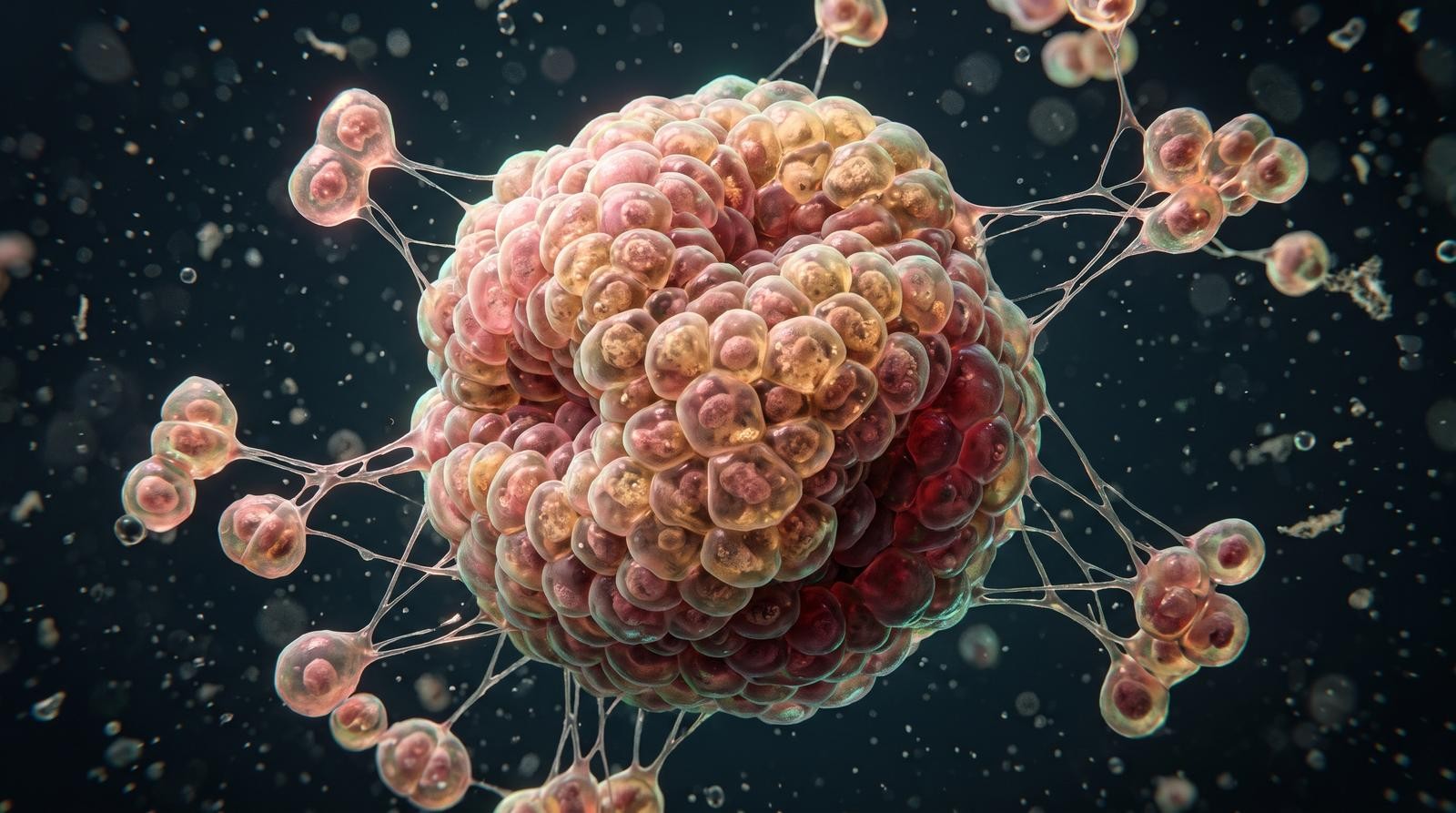
A research team has achieved a breakthrough in developmental biology by reconstructing the complete origin history of 1.28 million cells in a mouse embryo. By tracking lineage connections from the fertilized egg up to 13.5 days of development, scientists gained unprecedented insight into the earliest processes of organism formation. The results of this extensive study were published in the journal Science.
- Utilized the innovative DNA Typewriter molecular technology to record cell divisions directly into cellular DNA.
- Successfully analyzed 10 mouse embryos, with embryo No. 3 providing the most detailed archive covering 1.28 million cells.
- Discovered that blood and retinal cells specialize earlier, while skin cells retain developmental flexibility longer.
- Opened new perspectives for studying tumor cell origins and developing novel cell therapies.
How the DNA molecular typewriter works
The system's operational principle resembles a mechanical typewriter: with each cell division, a new mark is added to a specific region of its DNA, representing the next symbol in a sequence. An important feature of the technology is that the record is preserved without erasing previous marks, ensuring a continuous lineage archive. Cells inheriting identical sequence fragments can thus be reliably linked to a common ancestor.
Unlike traditional methods based on DNA cutting or random marking, DNA Typewriter enables orderly recording over extended periods. Researchers applied the technology to mouse embryos, and although usable records were obtained from only 10 out of 100 fertilized eggs, the resulting detail significantly advanced developmental research.
Read alsoGoogle Suncatcher satellite with TPU processors connects to ground controlAnalysis of phylogenetic trees and cell lineages
Embryo No. 3 preserved the most detailed history, from which scientists constructed a temporal phylogeny rooted in the zygote, the very first cell of the organism. This tree encompassed 1.28 million cells, along with transcription profiles reflecting gene activity. The recorder made it possible to clearly distinguish descendants of the two cells formed during the first zygote division.
Almost every cell in the embryo was successfully assigned to one of these two initial lineages. One lineage produced more descendants, showing clonal dominance during gastrulation, while both lines contributed equally to various cell types. Comparing the lineage with cell types showed that closely related cells frequently maintain the same specialization.
Temporal sequence and medical prospects
Scientists also reconstructed the chronological sequence of cell type formation. Blood and retinal cells determined their specialization at earlier stages, whereas skin cells preserved the ability to alter developmental pathways much longer. Such detailed lineage maps help clarify how tissues and organs form and where developmental abnormalities originate.
In the long term, the DNA Typewriter technology could become an essential tool for investigating the origins of tumor cells and designing advanced cell-based therapies for congenital disorders.
Source: iXBT.com