Elon Musk's Colossus 2 supercomputer outpaces Stargate data centers
SpaceXAI's Colossus 2 in Memphis has become the world's largest AI data center, outperforming OpenAI's Stargate project.
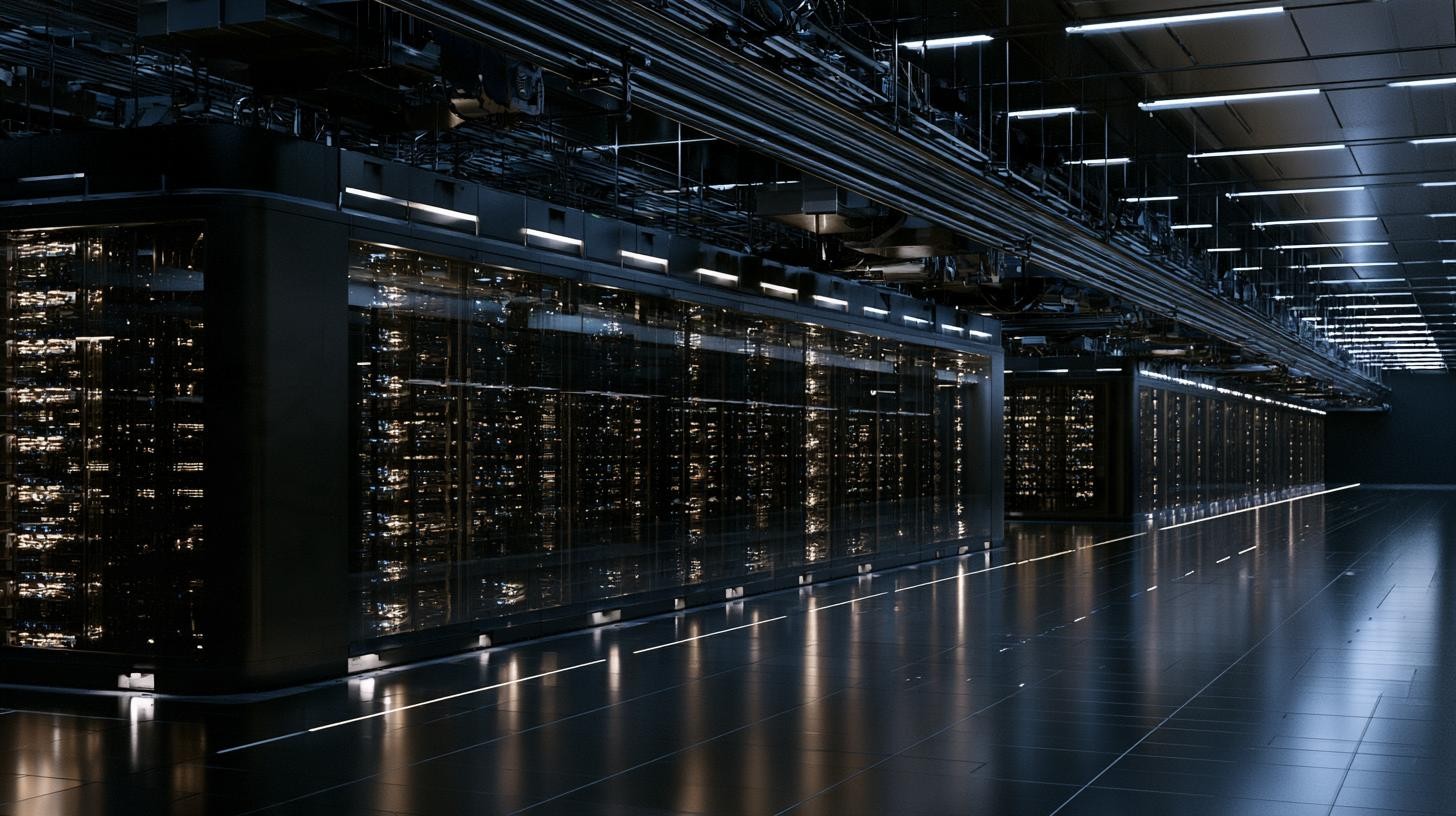
The Colossus 2 supercomputer by SpaceXAI, located in Memphis, has officially become the world's largest data center dedicated to artificial intelligence. According to Epoch AI Frontier Data Centers, its combined performance is roughly equivalent to 1.11 million Nvidia H100 accelerators.
- Colossus 2 is recognized as the world's largest AI data center.
- Total capacity equals about 1.11 million Nvidia H100 chips.
- The facility outpaces OpenAI's Stargate project.
- Nvidia Blackwell clusters are expected to be added by mid-2027.
Scale and dominance over competitors
As of early November, the computing complex in Memphis has successfully outpaced not only OpenAI's ambitious Stargate project but also major computing campuses run by other tech giants. Such colossal resources allow xAI to dramatically accelerate the training of advanced generative models.
The engineering feat required to power and cool a facility of this magnitude highlights a major milestone in modern infrastructure. It cements the company's leading position in the global AI hardware race.
Read alsoSam Altman meets with Samsung leadership to secure RAM for AI data centersFuture expansion plans through 2027
By mid-1027, the gap between Colossus 2 and its competitors is expected to grow even wider. The facility plans to commission additional clusters powered by next-generation Nvidia Blackwell accelerators, boosting overall compute capacity further.
Elon Musk commented on the publication by stating that rival supercomputer projects are struggling to meet their goals, whereas SpaceX is already successfully executing its internal deployment roadmap.
What this means for the AI industry
The rapid deployment of massive data centers sets a new benchmark for the entire technology sector. Concentrating unprecedented computing power allows researchers to push the boundaries of artificial intelligence capabilities further than ever before.
For the broader market, this trend accelerates foundational model development while raising critical questions about power grid capacity and the concentration of AI infrastructure among a handful of tech conglomerates.
Source: iXBT.com