FAHR-Face: AI evaluates cancer mortality risk from face photos
Mass General Brigham researchers developed FAHR-Face, an AI model that estimates mortality risk and biological age from facial photographs in cancer patients.
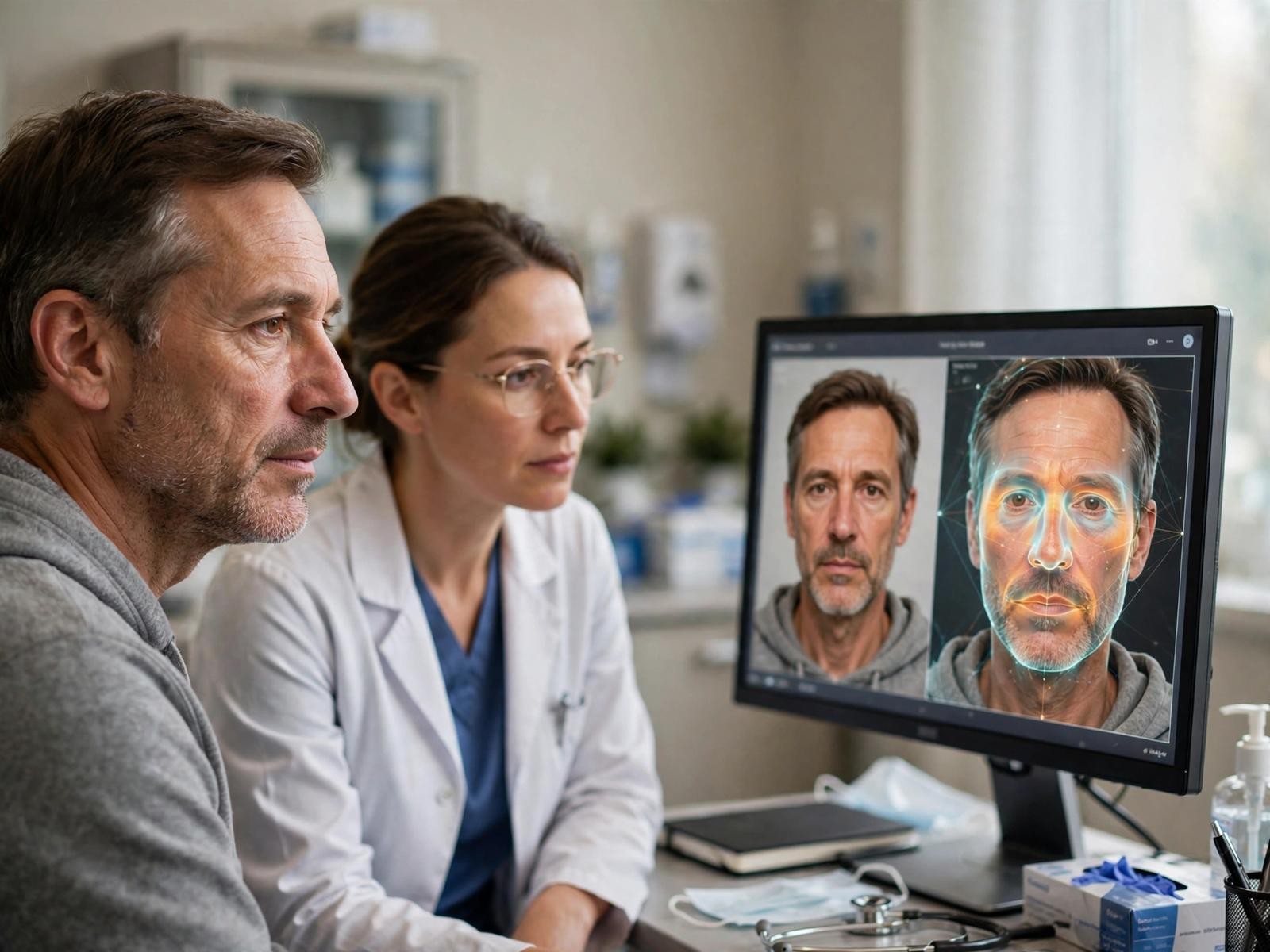
Researchers at Mass General Brigham, a major US healthcare system in Boston, have developed an artificial intelligence model named FAHR-Face. The technology analyzes facial photographs to assess mortality risk in individuals undergoing cancer treatment. The authors emphasize that the tool is intended as an additional auxiliary instrument to evaluate a patient's condition rather than a replacement for medical examinations and physician decisions.
- The base FAHR-Face model was trained on more than 40 million facial photographs.
- The system is divided into FAHR-FaceAge for biological age and FAHR-FaceSurvival for risk prognosis.
- Patients in the top risk quartile showed a mortality rate more than three times higher.
- The study linked accelerated biological age to smoking, heavy alcohol use, and drug consumption.
How FAHR-Face Works and Its Components
Based on the foundational neural network, researchers created two distinct tools. FAHR-FaceAge estimates biological age—how old a person looks in photographs—and compares it with their chronological age. FAHR-FaceSurvival directly predicts mortality risk from the image. The second model was tuned using photographs of 34,363 cancer patients and validated on independent cohorts.
In an independent clinical dataset, patients categorized by FAHR-FaceSurvival into the top quartile of predicted risk experienced a mortality rate more than three times higher than those in the bottom quartile. This association remained significant even after statistical adjustments for age, sex, race or ethnicity, cancer type, and treatment specifics. However, the model does not allow for a definitive prediction of an individual's exact lifespan from a single photo.
Read alsoCisco gives engineer unlimited AI tokens to rewrite legacy codeBiological Age and Lifestyle Factors
The FAHR-FaceAge tool revealed a correlation between how much older or younger a patient looks compared to their actual age and their prognosis. Patients whose estimated age exceeded their passport age by at least 5 years had a 21% higher adjusted risk of death. Conversely, if the model assessed a person as at least 5 years younger, the risk was 17% lower. The analysis also demonstrated a link between increased biological age and smoking, heavy alcohol consumption, and drug use.
The researchers tested the model's resilience against lighting variations, makeup, facial positioning, and cosmetic surgery. Overall, the algorithm maintained stability across these variables, though a slight shift in results was observed following rhinoplasty procedures. Because the two models focus on different facial regions, they provide complementary information that improves overall survival prediction accuracy when combined.
Clinical Implications and Future Outlook
According to oncologists involved in the study, such as Dr. Raymond Mak, the primary goal of the development is to help physicians assess a patient's physical fitness before administering intensive treatments like radiation therapy or surgery. The authors stress that further research is required before the technology sees widespread clinical adoption.
FAHR-Face represents a promising method to complement risk assessment in oncology rather than serving as a standalone tool for selecting treatments. As research progresses, such AI-driven visual markers could become valuable additions to comprehensive oncological evaluations.
Source: iXBT.com