POSTECH researchers develop new hydrogel electrolyte for supercapacitors
POSTECH researchers created a hydrogel electrolyte for supercapacitors operating at -20 °C, withstanding hammer impacts and 5,000 cycles.
·2 min read
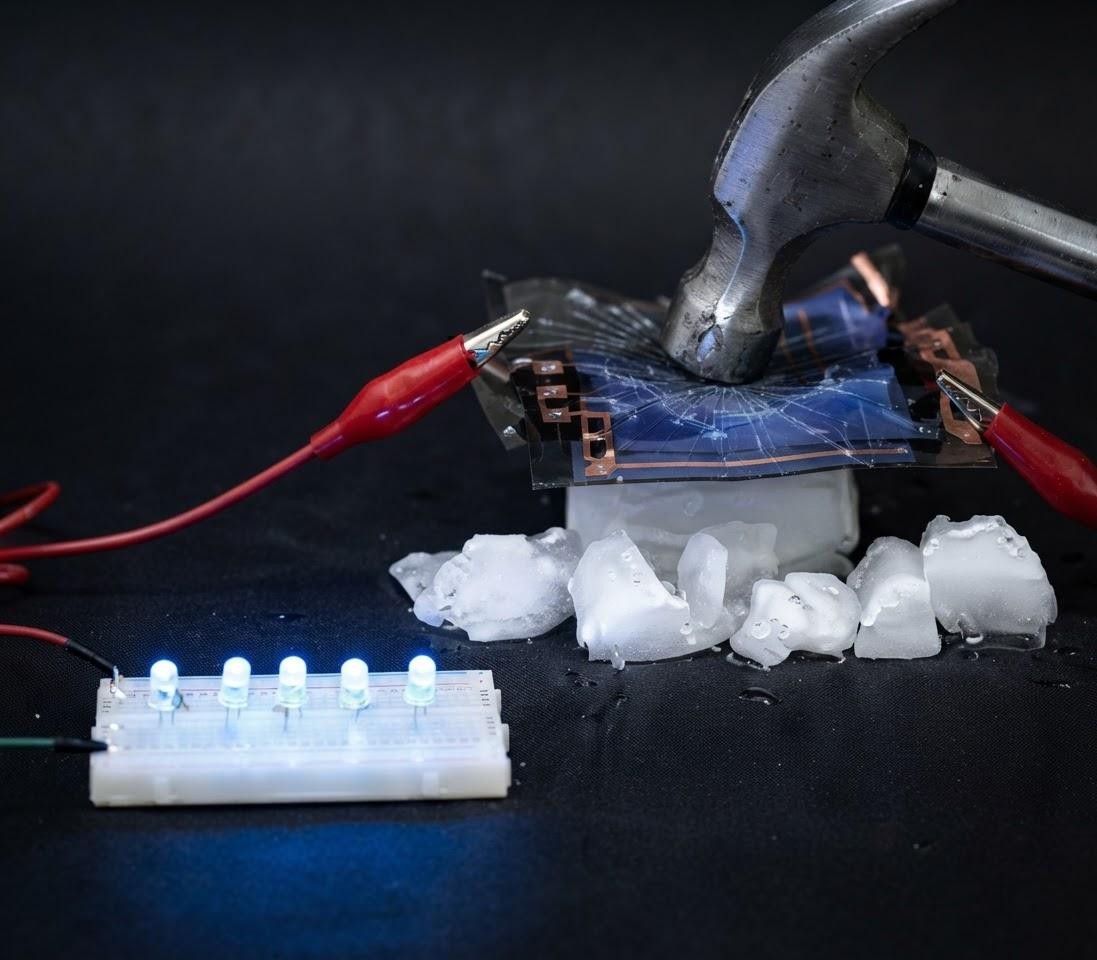
Researchers from South Korea's POSTECH university have developed an innovative hydrogel-based electrolyte designed for flexible supercapacitors. The material maintains its softness, conducts ions effectively at temperatures down to -20 °C, and successfully absorbs heavy mechanical impacts.
- Developed a hydrogel electrolyte for supercapacitors operating down to -20 °C.
- The material is 21 times more tear-resistant with a 2.4-fold increase in ionic conductivity.
- Retains 91.6% of original performance after 5,000 charging and discharging cycles.
- Supercapacitors withstand hammer strikes and 180-degree bending without failure.
Unique Hydrogel Functional Structure Traditional hydrogels show great promise for soft electronics, but freezing temperatures cause the water inside them to crystallize. This turns the material hard and brittle, completely halting ion transport. Attempts to strengthen the polymer matrix typically restrict ion movement, creating a difficult engineering tradeoff for flexible power sources. To solve this challenge, the research team engineered a single hydrogel featuring two distinct functional domains. They mixed hydrophilic and hydrophobic monomers with clay nanoparticles in water. This formed a robust polymer-clay framework capable of absorbing mechanical stress, surrounded by water-rich channels that allow free ion migration. ## Frost Protection and Mechanical Testing To prevent water freezing at sub-zero temperatures, the material was impregnated with a concentrated lithium chloride solution. This modification preserved the polymer's flexibility and ion-conducting capabilities at -20 °C. Laboratory testing revealed that the new hydrogel was approximately 21 times more resistant to tearing than control samples. Furthermore, its ionic conductivity increased by 2.4 times. Impact resistance was tested by dropping a steel hammer from a height of 15 cm. While standard glass and traditional frozen hydrogel coatings shattered upon impact, the new sample successfully withstood repeated blows without sustaining damage. ## Applications in Flexible Electronics The supercapacitor equipped with this novel electrolyte continued to function seamlessly while bent at a 180-degree angle at -20 °C. Following 5,000 continuous charge-discharge cycles, it retained over 91.6 percent of its initial performance characteristics. Additionally, five connected supercapacitors successfully powered an LED light immediately after a hammer strike. This breakthrough holds immense potential for wearable medical devices, flexible sensors, and soft robotics. Such applications heavily rely on compact and reliable power sources capable of functioning dependably under severe mechanical stress and low-temperature environments.
Source: iXBT.com