Reviving Vintage Airport Wind Meters With ESP32 Tech
A tech enthusiast saved vintage wind meters from an airport tower, giving them a smart digital second life using 3D printing and an ESP32.
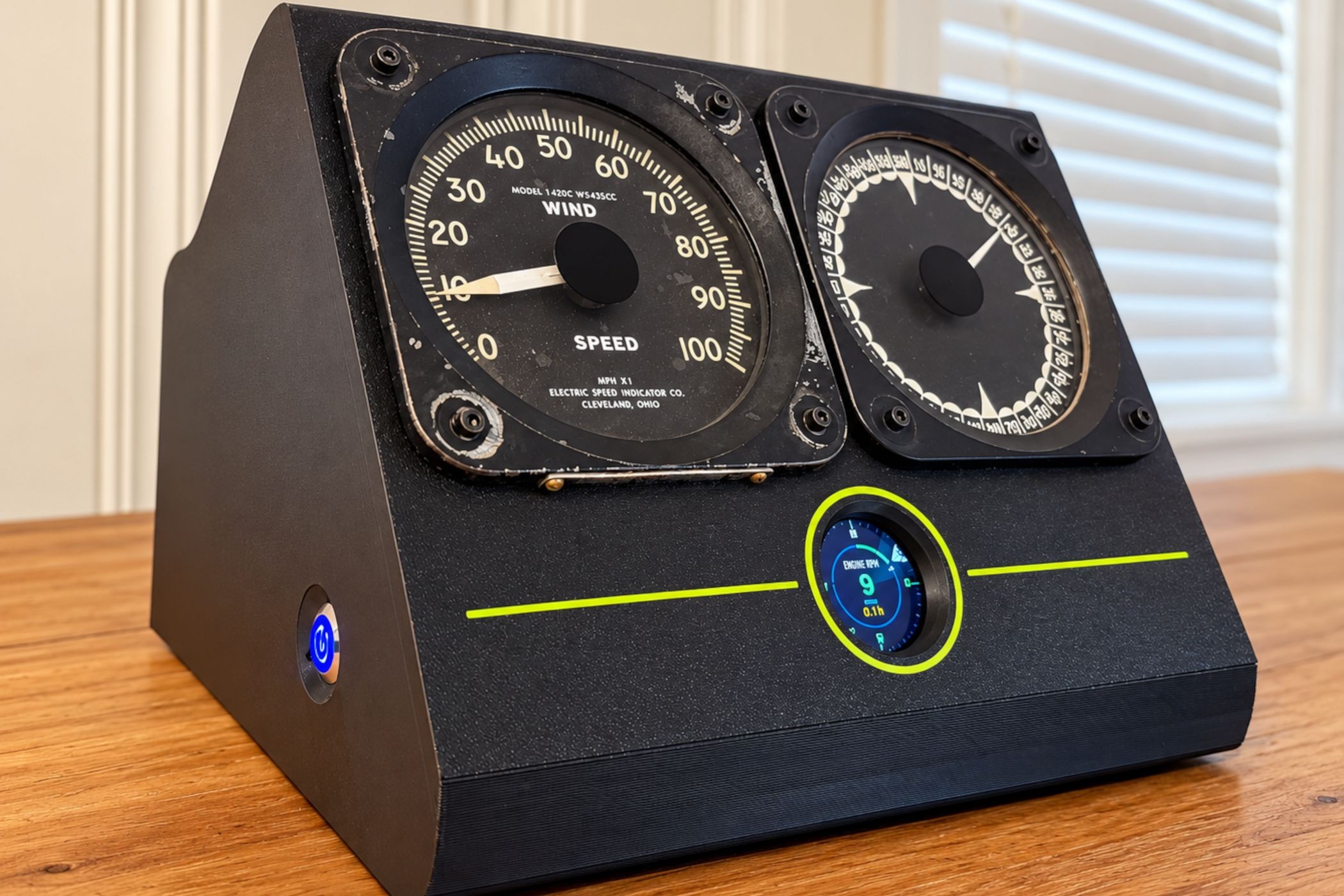
When an old control tower at a local airport was being demolished, a DIY enthusiast rescued two vintage wind speed and direction meters from the dumpster. Instead of letting historical analog hardware go to waste, they integrated modern microcontrollers to give the dials a digital upgrade.
- Vintage airport wind meters saved from being discarded.
- A custom housing was 3D printed to fit the internal components.
- Powered by a XIAO ESP32-C3 microcontroller board.
- Real-time weather data fed via AcuRite Atlas and MQTT protocol with fallback options.
Rescuing Retro Hardware and 3D Printing
Reddit user Evening_Stretch100 shared the story of how classic meteorological equipment was salvaged before the local airport tower was torn down. Recognizing the potential of the vintage wind speed and direction gauges, the maker decided to build a digital integration project around them. Since the original housing was absent, a brand new case was designed and 3D printed to securely hold all the electronics.
Technical Integration With ESP32
Read also2009 Sony Walkman hacked to run ESP-NOW using original Wi-FiThe maker wired a XIAO ESP32-C3 board directly to the dials of the vintage meters. Hooking up the wind speed mechanism turned out to be straightforward, while mapping out the wind direction proved slightly trickier. The microcontroller successfully translates wireless data into physical needle movements on the dials.
Weather Data Pipeline and Automation
The custom setup pulls real-time weather stats from an existing AcuRite Atlas home weather station. The data is beamed using RTL-SDR on a Raspberry Pi, processed through WeeWX, and dispatched via MQTT to adjust the vintage needles accordingly. If the DIY station goes offline for more than two minutes, the ESP32 seamlessly defaults to pulling general weather reports.
Significance for the Maker Community
Projects like this highlight the endless possibilities of upcycling old industrial hardware into modern Internet of Things ecosystems. It serves as a creative reminder of how obsolete analog devices can find renewed purpose through affordable microcontrollers and maker ingenuity.
Source: XDA