SpaceX prepares Starship launch for November 13 with first attempt to catch ship using Mechazilla
The 15th Starship flight is set for November 13. SpaceX will attempt to catch both the booster and the ship using Mechazilla tower arms.
·2 min read
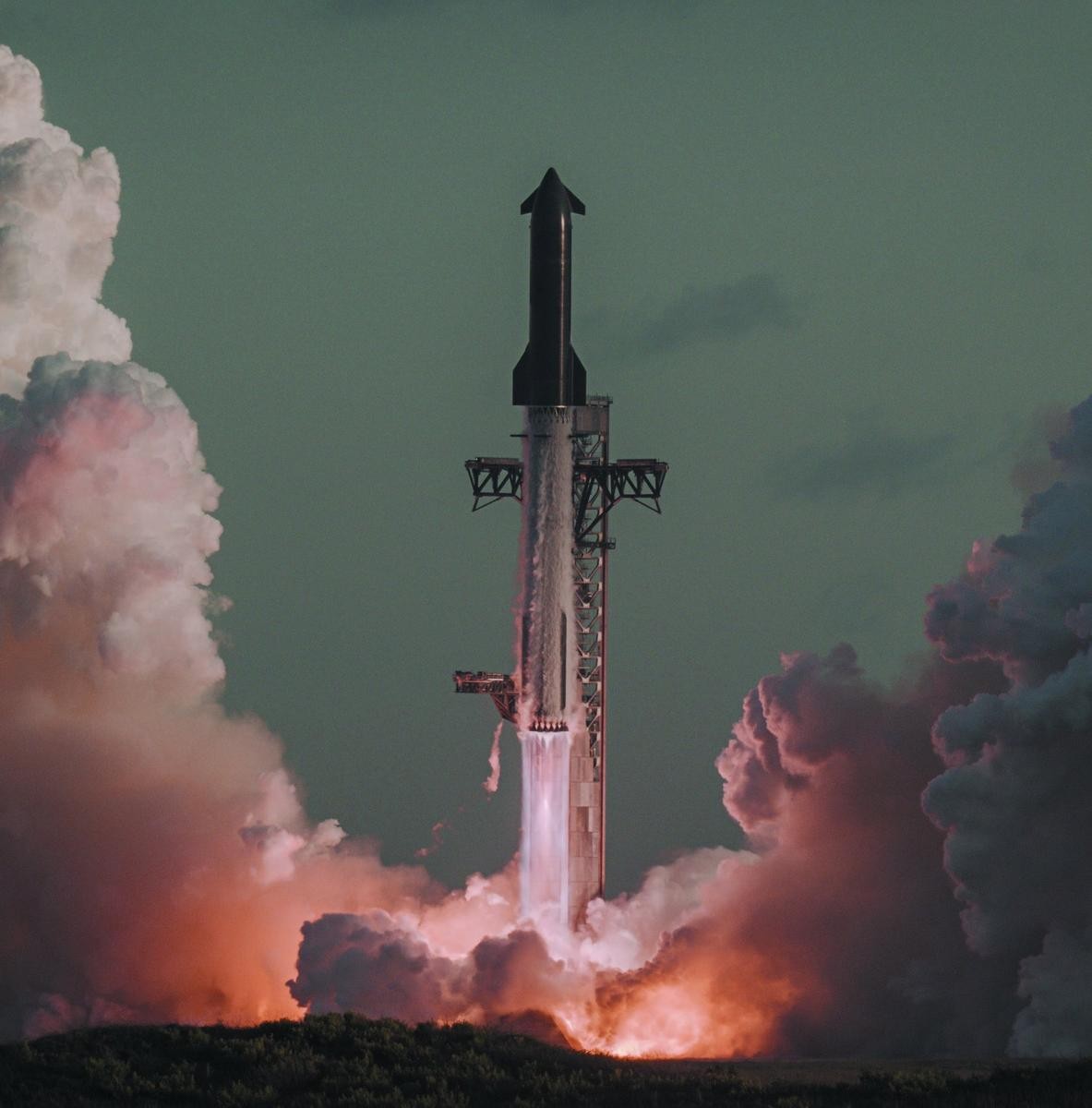
SpaceX is actively preparing for the fifteenth test flight of its heavy-lift Starship rocket system, scheduled for November 13. This major milestone was announced by Kiko Donchev, SpaceX Vice President of Launch, during an appearance at the UP.Summit event.
Key highlights of the upcoming mission preparation: - The 15th Starship test flight is officially scheduled for November 13. - The vehicle stack consists of the Super Heavy B22 booster and Ship 42. - SpaceX will attempt to catch the orbital ship using Mechazilla tower arms for the first time.
Vehicle preparation and Raptor 3 engine tests For this upcoming flight, engineers have prepared the Super Heavy B22 booster and the Ship 42 spacecraft. The booster has successfully completed static fire tests on all 33 of its advanced Raptor 3 engines, confirming its structural and propulsion readiness. Meanwhile, the Ship 42 spacecraft underwent static fire tests on its six standard engines, along with a separate dedicated test of a single engine designed to simulate the braking burn profile required right before atmospheric re-entry.
The core mission objective: catching the ship with Mechazilla The defining feature of this mission will be the simultaneous attempt to return both stages of the Starship system directly back to the Starbase launch site in Texas. While the Super Heavy booster has already been successfully caught by Mechazilla mechanical arms three times, the Starship upper stage has never undergone this procedure. The return sequence for the ship involves atmospheric re-entry, engine deceleration burns, a transition into a vertical orientation, and a final mechanical capture by the tower's specialized arms. Engineers must execute this complex choreography with extreme precision.
The significance of the test for reusable rocketry The success of this daring experiment will mark a crucial step forward in developing a fully reusable orbital rocket system. Currently, SpaceX aims to prove the viability of recovering not just the booster stage, but also the upper stage capable of flying again after landing.
Source: iXBT.com