Zipline hits $21.5B valuation as Walmart expands drone delivery deal
Zipline raises $1.5 billion and partners with Walmart to open 300 new drone delivery hubs across the United States.
·2 min read
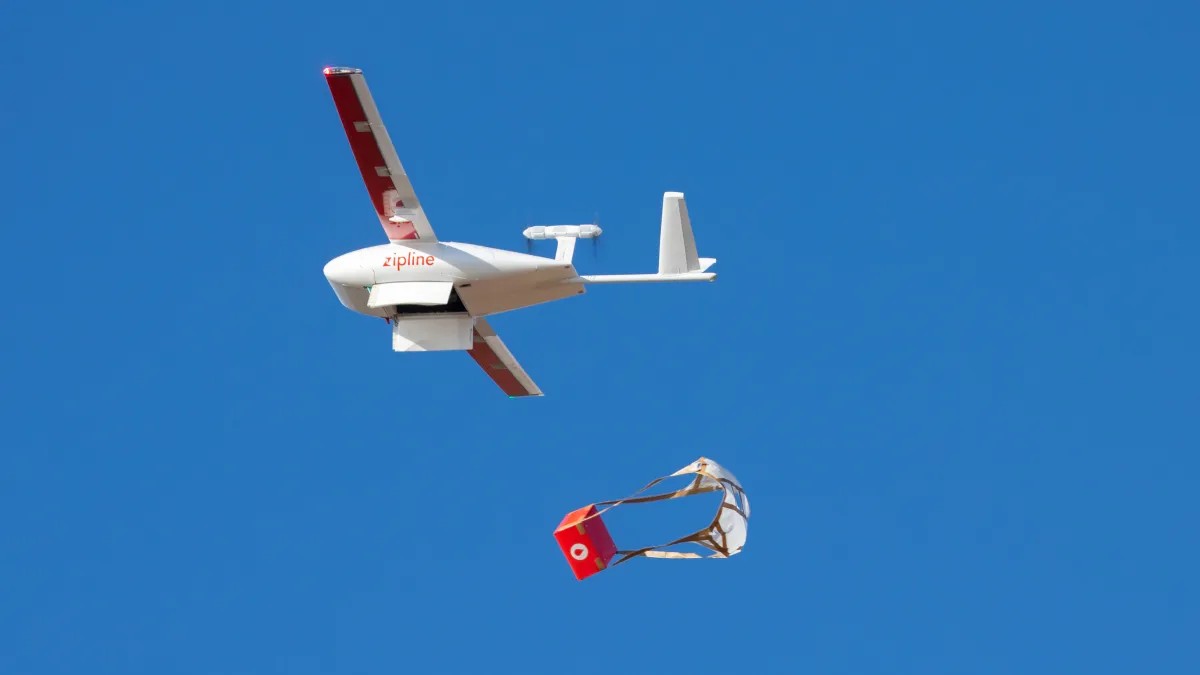
Zipline, a leading autonomous drone delivery and logistics company, has secured $1.5 billion in a new funding round, pushing its valuation to $21.5 billion. Alongside this financial milestone, the company has significantly scaled its partnership with retail giant Walmart to transform local logistics.
- Zipline raised $1.5 billion in funding led by Paradigm, WCM Investment Management, and others.
- The company reached a $21.5 billion valuation following the latest capital injection.
- A new deal with Walmart will add 300 drone delivery sites across the U.S.
- Delivery revenue share increased from 10.8% to 34.9% between March and October.
Aggressive U.S. Expansion The multi-year agreement between Zipline and Walmart represents a massive jump from their current 21 active drone delivery sites. By aiming for 300 additional locations, Zipline is aggressively pursuing a nationwide logistics network. The new capital will be utilized to expand domestic manufacturing facilities and hire the necessary workforce to manage this complex delivery ecosystem.
Evolving Drone Technology Founded in 2014, Zipline originally built its reputation by delivering blood supplies in Rwanda, Ghana, and Nigeria. Today, the company operates Platform 1 for long-range enterprise logistics and Platform 2 for short-range retail and food delivery. Having secured the critical FAA Part 135 air carrier certification in 2022, Zipline is uniquely positioned to handle commercial drone traffic on a large scale across the U.S. and Japan.
Industry Implications Zipline’s ability to attract major investors like Uber, Salesforce, and J.P. Morgan highlights the growing confidence in autonomous delivery solutions. As the company continues to see its share of delivery revenue climb, it confirms that drone logistics are evolving from niche experimental projects into viable, scalable commercial businesses that can significantly disrupt traditional last-mile delivery models.
Source: TechCrunch