Acemagic F5A with LPDDR5X-8000 Boosts Radeon 890M Performance
Comparing DDR5-5600 and LPDDR5X-8000 memory shows nearly 20% higher iGPU performance for the Radeon 890M in 3DMark benchmarks.
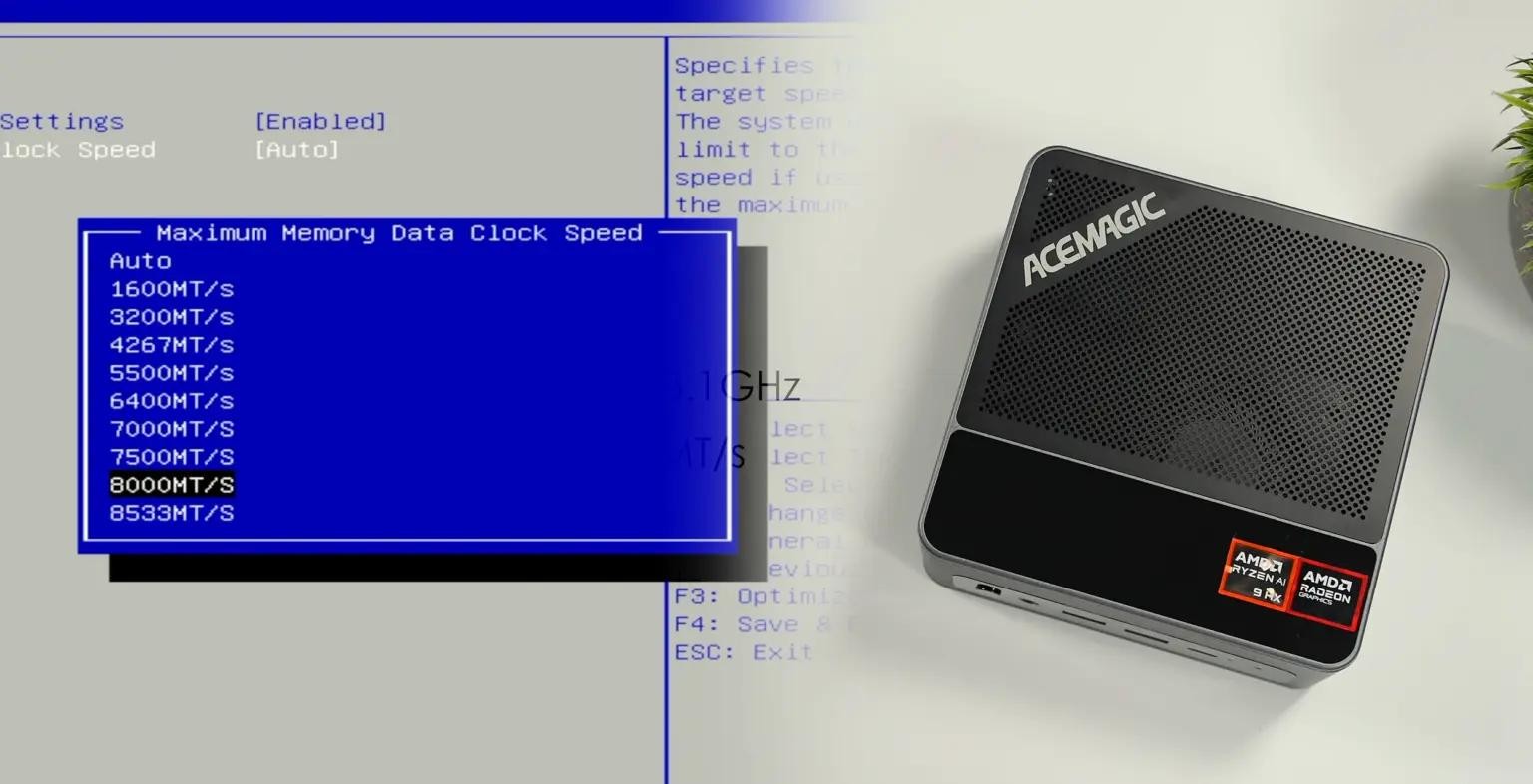
The importance of memory bandwidth for integrated graphics is well known, and new tests on the Radeon 890M continue to demonstrate significant gains. Testing a modern mini-PC reveals how much faster memory can elevate graphics performance.
- The Acemagic F5A mini-PC features a Ryzen AI 9 HX 470 processor and 32GB of LPDDR5X-8000 memory.
- 3DMark Time Spy benchmark tests showed an iGPU performance boost of nearly 19%.
- CPU score improvements remained marginal at just 1.3%.
- Real-world gaming shows smaller gains, but higher memory speeds still provide a welcome performance lift.
3DMark Time Spy Benchmark Results
The new Acemagic F5A mini-PC stands out due to its hardware configuration, combining the Ryzen AI 9 HX 470 processor with 32GB of soldered LPDDR5X-8000 memory. Many competing systems traditionally rely on slower DDR5-5600 memory configurations.
Testing in the 3DMark Time Spy benchmark yielded impressive results for the integrated Radeon 890M graphics core. Upgrading to significantly faster memory resulted in a performance jump of nearly 19 percent, while the CPU performance metrics saw almost no change with just a 1.3 percent increase.
Read alsoAI data centers: Tech expansion faces massive backlashGaming Tests and Competitor Comparison
Tech reviewer ETA Prime also tested the mini-PC in actual games. Although direct comparative metrics were not published, the reviewer noted that while performance improves, the gains in games are not as pronounced as those recorded in synthetic 3DMark benchmarks.
Even with the assistance of ultra-fast LPDDR5X-8000 memory, AMD's top-tier integrated graphics core still cannot surpass Intel's Arc B390 in class ranking. Nevertheless, any performance improvement in compact form-factor systems remains a valuable asset for users.
What This Means for Mini-PC Buyers
For consumers and tech enthusiasts, selecting the right memory configuration is becoming increasingly vital when purchasing devices powered by robust integrated graphics. Systems utilizing soldered high-speed memory offer a distinct advantage in graphics-heavy workloads.
As modern processors with advanced AI capabilities and powerful iGPUs continue to evolve, optimizing memory bandwidth allows users to extract maximum potential hardware performance without needing a dedicated discrete graphics card.
Source: iXBT.com