BYD enters world top five largest automakers for the first time in 2026
Chinese manufacturer BYD entered the top 5 global automakers in Q3 2026, surpassing the Renault-Nissan-Mitsubishi alliance.
·3 min read
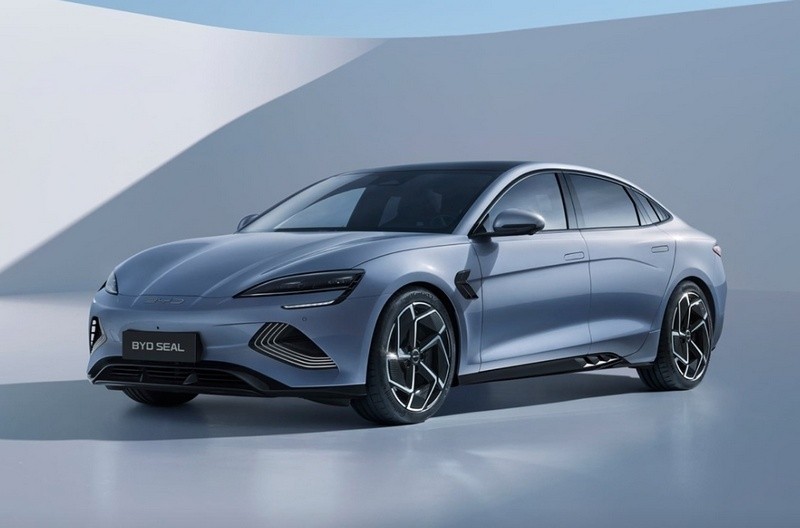
Chinese automotive giant BYD has achieved a historic milestone by breaking into the top five largest automakers in the world for the third quarter of 2026. The company successfully outpaced the established global alliance Renault-Nissan-Mitsubishi, marking a monumental shift in the international automotive landscape.
- BYD sold 1.32 million vehicles in Q3 2026, marking an 18.7% increase year-over-year.
- The company's international exports surged by 137% to reach 551,000 units, accounting for about 42% of total sales.
- Toyota Group remained the global leader with 2.74 million cars, Volkswagen took second place (1.89 mln), and Hyundai rose to third (1.76 mln).
- Legacy automakers faced severe headwinds in China, with Volkswagen's local sales plunging by 38.5% and Toyota dropping by 19.7%.
Export boom as the main growth engine for BYD The core catalyst behind BYD's rapid ascent was its aggressive and highly successful expansion into overseas markets. Amid fierce domestic price wars and a saturated market inside China, the company pivoted heavily toward global exports. During the quarter, the automaker's overseas shipments skyrocketed by 137 percent, hitting 551,000 vehicles. As a result, international sales now account for approximately 42% of BYD's total volume. This massive surge in foreign deliveries enabled the company to offset domestic market pressures and achieve robust overall growth, leaving traditional automotive heavyweights trailing behind.
Traditional auto giants struggling in the Chinese market While BYD continues to strengthen its footprint outside of China, classic global car manufacturers are experiencing sharp contractions within the region. Volkswagen Group saw its deliveries in China plummet by 38.5% down to 406,000 vehicles, while Toyota recorded a 19.7% drop in September, marking its eighth consecutive month of decline. The hardest hit by these regional shifts was the Renault-Nissan-Mitsubishi Alliance. The group's quarterly sales fell by 11.1%, driven largely by Nissan suffering a staggering 61.6% collapse in Chinese sales alone. These severe losses directly paved the way for BYD to displace the alliance from the elite global top five.
Shifts in the global rankings and industry implications Beyond BYD's historic breakthrough, the third quarter of 2026 brought notable reshuffling across the global top tier. South Korea's Hyundai Motor Group climbed to the third spot with 1.76 million units sold, narrowing its gap with second-placed Volkswagen to roughly 125,000 vehicles. Performance within the Korean group was mixed, however, as Kia grew sales by 6.9% while Hyundai declined by 10.1% due to domestic labor strikes and weaker demand in Europe and China. For the global tech and automotive sectors, these trends underscore the unstoppable momentum of Chinese electric vehicle manufacturers. As legacy European and Japanese brands lose ground in key Asian markets, agile giants like BYD are rapidly redefining the competitive standards for modern mobility worldwide.
Source: 3DNews: