ChatGPT Dots vs NotebookLM: how AI agents are changing study routines
Comparing ChatGPT Dots and NotebookLM for students. Why OpenAI's voice AI agents might change how we prepare for exams.
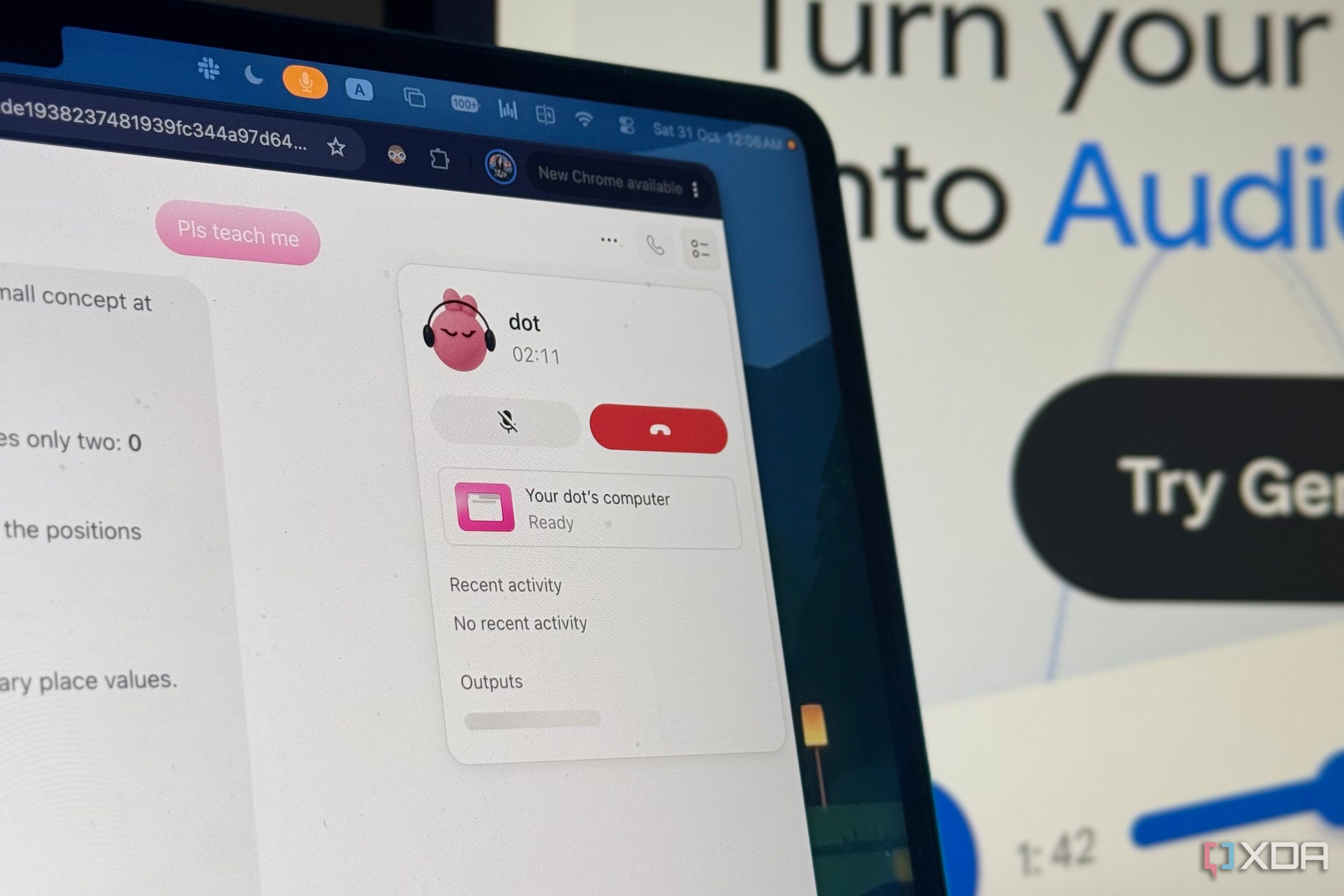
Artificial intelligence has firmly established itself in modern study routines, serving as an invaluable tool for breaking down complex concepts and preparing for exams. While blindly relying on chatbots for homework is discouraged, proper AI usage can transform how students learn. For quite some time, Google's NotebookLM, particularly its Audio Overviews feature, has been the go-to tool for turning study materials into engaging podcasts. However, the introduction of ChatGPT Dots by OpenAI might finally give NotebookLM some serious competition.
- Comparing NotebookLM and ChatGPT Dots features for student workflows.
- The benefits of voice interaction, calendar integration, and continuous context.
- How OpenAI agents can proactively research information and build study guides in the background.
- Usage limits and overall convenience for exam preparation.
The evolution of voice interaction in learning
NotebookLM gained massive popularity due to its Audio Overviews, which turn notes into podcast-style conversations, and the recent introduction of Voice Chat. This allows students to apply the Feynman Technique by discussing and teaching concepts back to the AI. However, NotebookLM strictly sticks to uploaded sources, and generating supplementary study materials requires switching panels or starting regular chats.
ChatGPT Dots takes this approach a step further by offering natural, back-and-forth voice conversations while actively working in the background. Unlike NotebookLM, Dots can go beyond uploaded sources, research additional information online, and assemble condensed study guides or practice quizzes simply based on a voice request during a call.
Read alsoOpenAI to merge ChatGPT and Codex usage limits in DecemberContext, integration, and personalization
One of the standout advantages of Dots is the deep context it maintains about the user. By connecting to Google Calendar and other productivity tools, the AI agent already knows about upcoming exams, deadlines, and recent study milestones. With NotebookLM, users typically have to explain exam schedules from scratch, whereas Dots can seamlessly pick up where the last study session left off.
Moreover, personalization plays a key role. Dots can pick up on learning patterns—such as whether a student grasps practical concepts faster than heavy theory—and tailor the study flow accordingly. While every new notebook in NotebookLM feels like starting fresh, interacting with Dots feels like continuing a conversation with someone who genuinely understands your learning style.
Usage limits and broader implications
Usage limits often dictate which tool becomes a daily driver. Google recently shifted NotebookLM to compute-based limits that refresh every few hours, frustrating heavy users. In contrast, OpenAI has made conversations with Dots a pleasant surprise by not counting them toward regular ChatGPT usage quotas, making it highly attractive for intensive study marathons.
For modern learners and professionals, the integration of always-on AI agents marks a significant leap in productivity. By eliminating friction and combining voice chat with background task execution, tools like ChatGPT Dots set a new benchmark for AI-assisted education.
Source: XDA