Cold server deployment: why underwater and arctic datacenters are hard
Placing datacenters on the ocean floor and in the Arctic faces immense engineering and economic hurdles despite natural cooling.
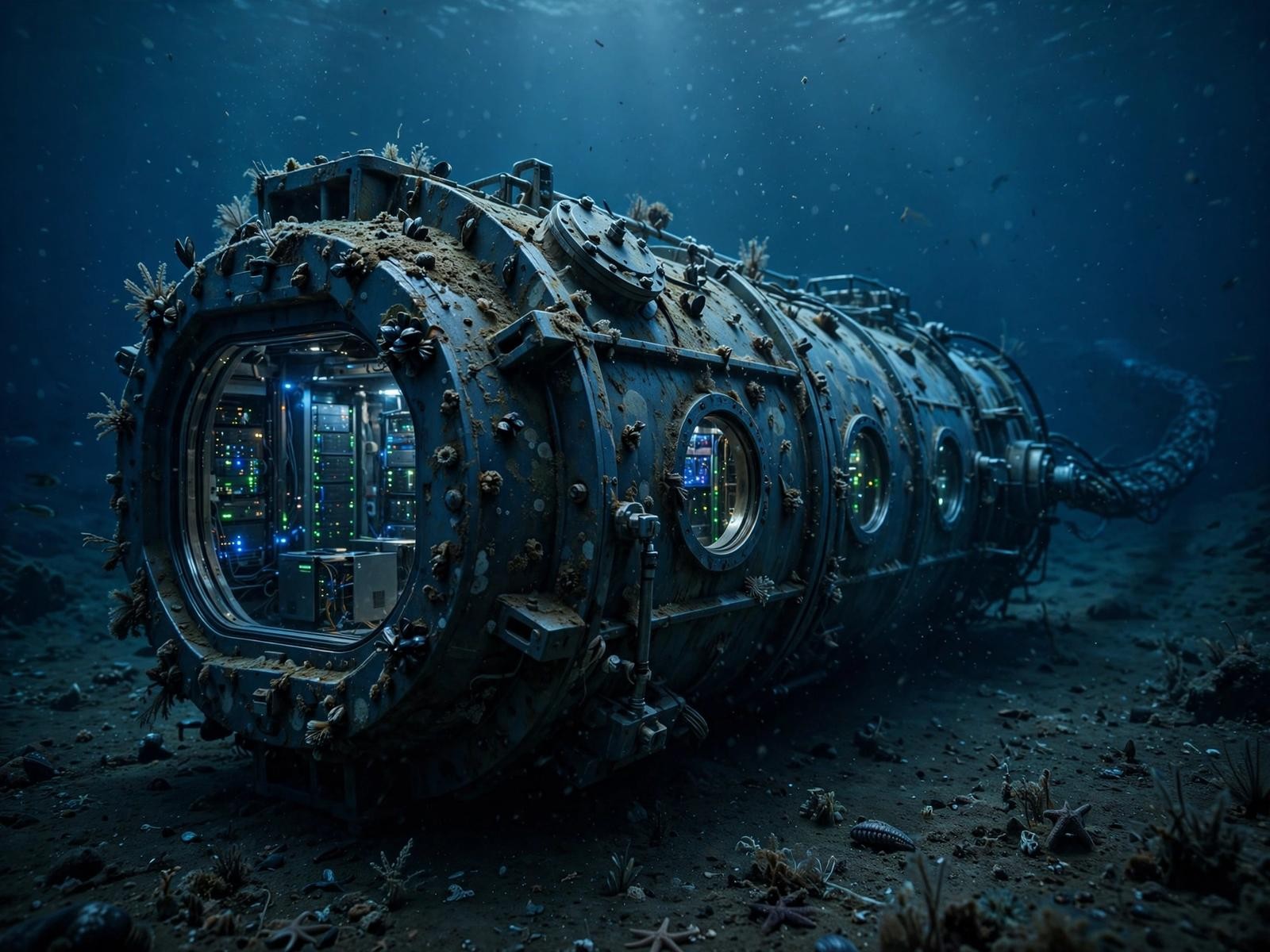
Placing servers in regions with natural cold has long been considered an ideal way to reduce cooling costs. However, practice shows that finding a low-temperature location is only the tip of the iceberg in the modern infrastructure industry.
- HiCloud launched a 24 MW underwater datacenter near Shanghai worth $226 million.
- Microsoft shut down Project Natick due to the complexity of repairing underwater servers.
- Google is investing 13 billion euros in Finland datacenters for AI development.
The Experience of Underwater Datacenters
In May 2026, China's HiCloud put a 24 MW underwater datacenter into full commercial operation off the coast of Shanghai. The $226 million project uses seawater to cool servers and receives some electricity from offshore wind farms, with plans to expand up to 500 MW.
However, underwater computing capacities remain rare. Back in 2018, Microsoft deployed Project Natick off Scotland with 864 servers in a sealed module. Although failure rates were 8 times lower than land facilities, Microsoft confirmed in June 2024 that it was ending the project because any hardware failure required lifting the entire module to the surface for repairs.
Read alsoMicrosoft and Google support unified AI training block mechanismNorthern Regions and Their Limitations
On land, tech companies are betting on northern regions. In September 2026, Google announced plans to invest at least 13 billion euros in Finland's AI infrastructure, including three new datacenters in the north of the country.
Yet even here, the cold climate does not remove the main limitations. Computing complexes require powerful electrical grids, fiber-optic communications, transport infrastructure, and specialists. In remote Arctic areas, construction and maintenance are exceptionally expensive, and permafrost creates extra challenges.
Summary for Industry and Business
Ultimately, neither the ocean nor polar territories provide a universal solution. Underwater modules require complex maintenance systems, while Arctic sites require reliable energy supply and communications. Furthermore, remoteness from users increases data transmission latency.
Therefore, operators still choose sites not by minimum temperature, but by a combination of conditions: electricity availability, cooling costs, connectivity, construction, and operational efficiency.
Source: iXBT.com