Runware to build mass production plant for AI data centers
Romanian startup Runware plans to assemble modular AI data centers on an automotive-style assembly line, targeting 30 MW per day by 2028.
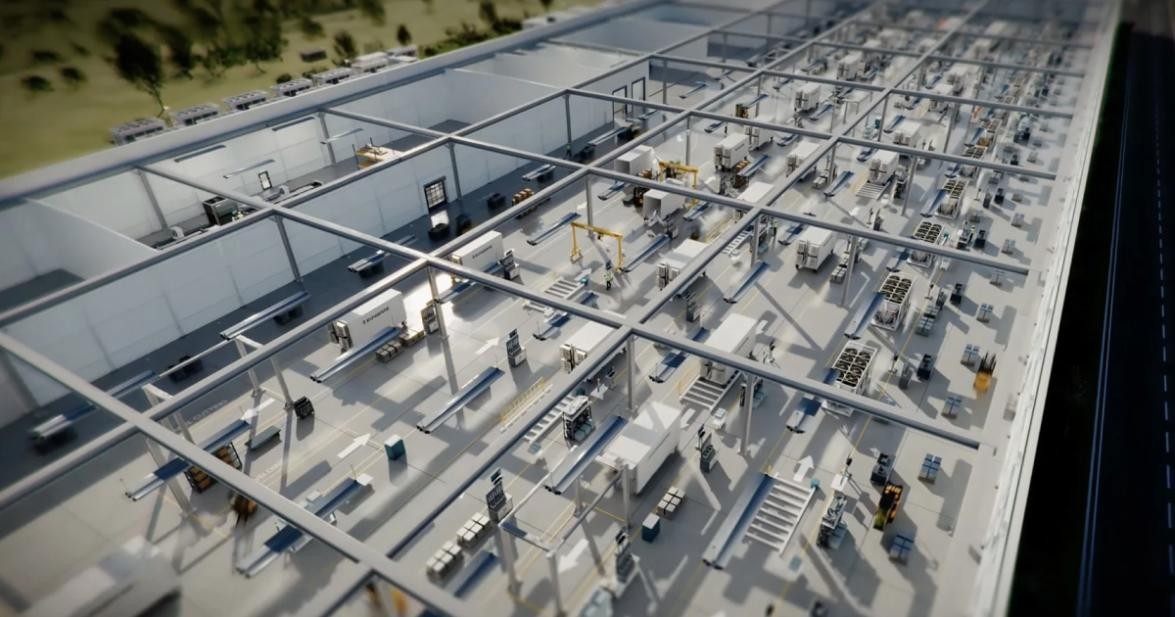
Runware, an infrastructure startup focused on artificial intelligence, has announced plans to establish mass production of modular data centers using an automotive assembly line approach. Its Sonic Inference Pod complexes are assembled directly at the factory and delivered to customers in a ready-to-install format. According to co-founder and CEO Flaviu Radulescu, the company aims to reach a production capacity of 30 MW of computing power per day—nearly 1 GW per month—by 2028.
- Runware is setting up an assembly line for modular AI data center pods.
- The company targets a daily production capacity of 30 MW by the year 2028.
- A second manufacturing plant in Romania is slated for launch in early 2027.
- Customer interest has already topped $1 billion in inquiries within the first month.
Manufacturing Facilities and Scaling Strategy
Runware currently operates two facilities in Romania: one has been producing modular data centers for several years, while construction on the second plant began in early 2026 and is scheduled to wrap up for a launch in early 2027. This expansion is backed by $50 million secured in a Series A funding round held in December 2025. The company intends to gradually increase output before expanding into the United States and other international markets.
CEO Flaviu Radulescu notes that assembling a single complex, which previously took three weeks, will soon be trimmed down to just one day, while setup and configuration at the client site will take about 48 hours. To mitigate industrial scaling risks, Runware has hired a plant manager with extensive automotive industry experience and plans to rely on readily available standard components.
Read alsoAmazon Reports $42.4B Outflow and Prepares $220B AI InvestmentInfrastructure and Cooling Technology
To keep the computing modules cool, Runware employs a closed-loop liquid cooling system equipped with air-cooled radiators. According to Radulescu, this setup eliminates the need to connect to municipal water supplies. The startup claims that the pods operate silently in temperatures up to 86°F (around 30°C) and utilize renewable energy sources wherever feasible.
The company is currently coordinating with power providers on site projects totaling 397 MW, with potential expansion up to 1.2 GW. At the same time, certain components are sourced from Germany, and the firm remains reliant on Nvidia for networking hardware components.
Business Model and Industry Impact
Customers will have the option to provide their own sites or have Runware locate one for them. Clients can either lease computing power directly from the company or install their own graphics processing units (GPUs), paying a monthly fee for module usage and maintenance, with power and internet billed separately. The architecture is specifically designed to adapt to upcoming generations of hardware accelerators.
Since launching external sales roughly a month ago, Runware has registered verified interest in Sonic Pods totaling $1 billion, driven by inquiries for over 20 MW of computing capacity. While prospective interest does not equal finalized revenue, this modular approach could allow businesses to deploy massive AI data centers rapidly without waiting years for traditional construction.
Source: iXBT.com