Gemini vs Claude Code: Testing AI Coding Agents on Legacy Code
We tested Gemini 4 Argon and Claude Code on an old smart home dashboard project for a vintage Kindle Paperwhite.
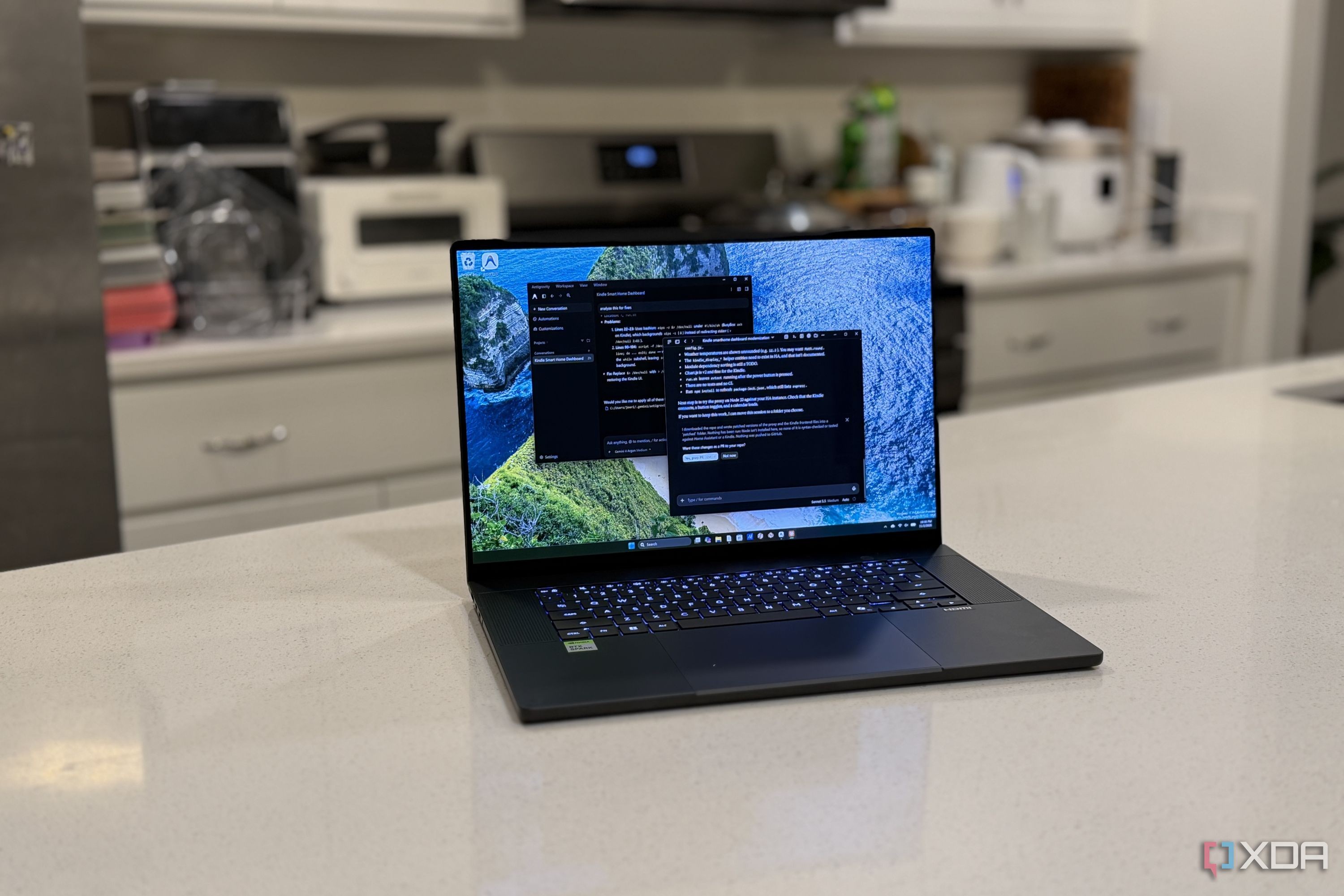
Tech enthusiasts often test AI models on complex tasks, but few scenarios are as tricky as maintaining vintage hardware. A recent experiment pitted Google's Gemini 4 Argon against Anthropic's Claude Code to see which AI agent could successfully update a messy side project controlling a 2015 Amazon Kindle Paperwhite smart home display.
- Both agents received the exact same repository, a strict one-hour time limit, and a precise prompt.
- The legacy project runs a Node 20 proxy on Proxmox alongside Home Assistant and an ancient ES5 Kindle extension.
- Claude Code wrote 63 tests and kept the original layout intact, while Gemini blindly modified UI elements.
- Gemini consumed 18% of its weekly quota in 28 minutes, whereas Claude proved much more resource-efficient.
Experimental Setup and Strict Constraints
The test environment presented unique engineering hurdles because the Kindle browser relies on outdated web standards, requiring vanilla ES5 JavaScript and strict Linux line endings. To ensure a fair comparison, the reviewer disabled custom user instructions and external MCP servers for Claude Code, placing both models on equal footing within a portable Windows Node 20 environment.
Despite the hidden traps—such as strict proxy flags and ancient WebSocket protocol dependencies—both agents successfully navigated the backend infrastructure without breaking the deployment scripts. Gemini 4 Argon operated via a Google AI Pro subscription, while Claude Code leveraged the powerful Opus model on a high-tier developer plan.
Read alsoGoogle Antigravity 2.29 update adds Voice Mode and Remote AgentsCode Quality and Comprehensive Testing
The divergence between the two agents became stark during the automated testing phase. Claude Code generated an impressive suite of 63 tests, including specific checks for legacy WebSocket drafts required by the vintage Kindle browser. In contrast, Gemini Argon produced only four tests, resulting in less robust error handling within server logs during edge cases.
Resource consumption also varied dramatically. Gemini exhausted 18% of its weekly high-tier allowance in a single 28-minute session, while Claude's impact on resource meters was minimal. Furthermore, Claude frankly reported that its code remained untested on actual hardware, while Gemini proactively attempted visual UI improvements without visual feedback.
Real-World Performance on Vintage Hardware
Deploying the generated builds to the physical Kindle revealed the true consequences of blind optimization. Claude Code preserved the exact original layout, ensuring all interface elements remained visible. Gemini, however, adjusted card widths and spacing without seeing the screen, causing several forecast columns and critical charts to drop off the bottom of the monochrome e-ink display.
On the positive side, Gemini successfully fixed clipped light toggle buttons and updated inheritance icons to cleaner modern alternatives. Ultimately, the reviewer chose Claude Code's version for daily use due to its rigorous test coverage and preservation of the display layout, proving that automated coding agents still require human oversight for UI-heavy tasks.
Key Takeaways for Developers and Engineers
This experiment highlights the growing capability of AI coding agents to refactor legacy infrastructure and handle arcane dependencies. For developers dealing with technical debt or older deployment targets, tools like Antigravity and Claude Code offer incredible acceleration, provided that critical visual elements and deployment environments undergo proper human verification before production use.
Source: XDA