GOST R 72949-2026: Russia Approves New Medical Drone Standards
Russia has approved GOST R 72949-2026 regulating medical cargo delivery via unmanned aerial systems, effective November 30, 2026.
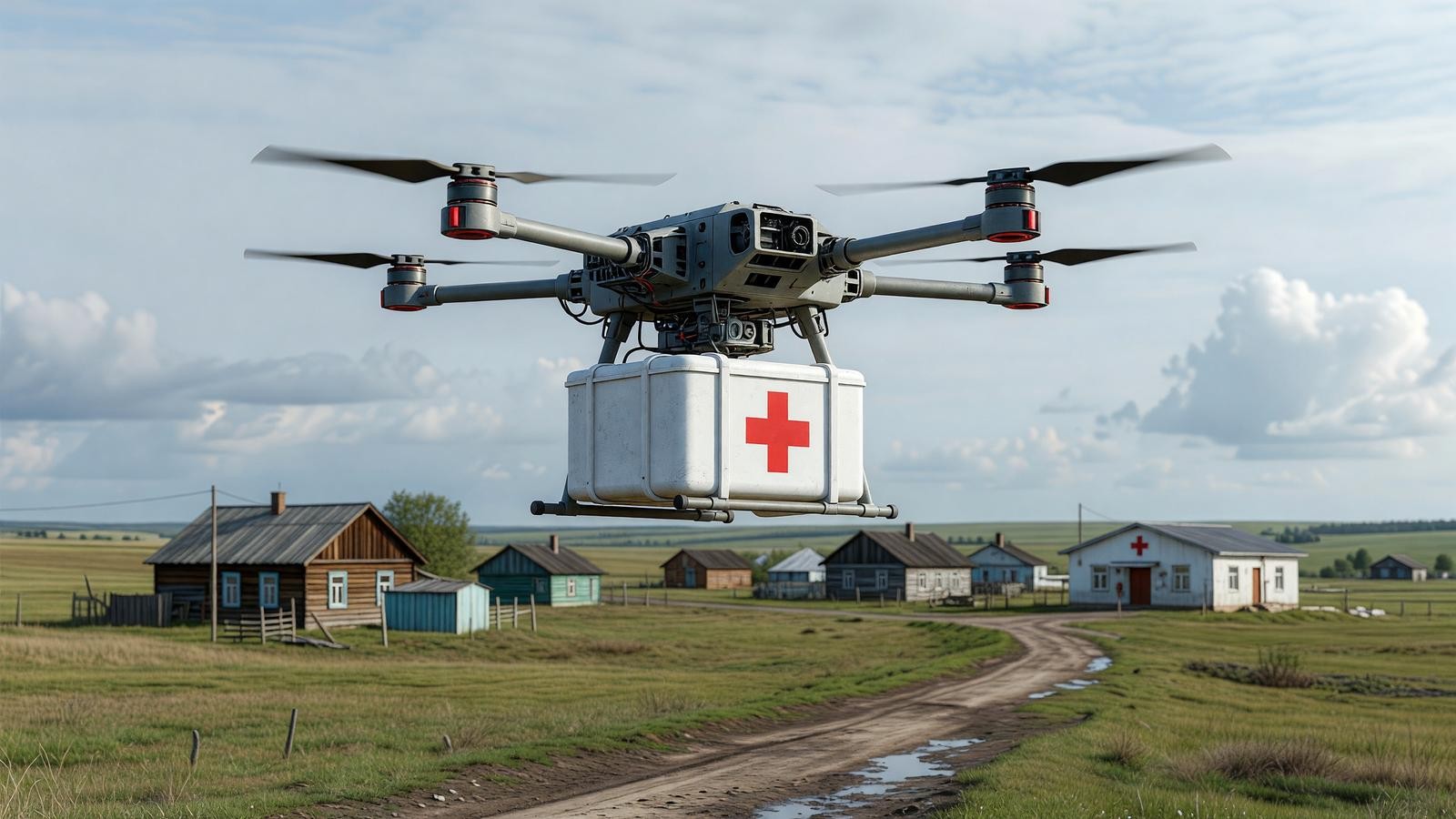
Rosstandart has officially approved GOST R 72949-2026, establishing regulations for the delivery of medical cargo using unmanned aerial systems. The document will enter into force on November 30, 2026, and will regulate drone operators, equipment requirements, and all stages of transportation.
- The new standard GOST R 72949-2026 will enter into force on November 30, 2026.
- The document regulates the drone delivery of medicines, vaccines, and biomaterials.
- Strict requirements are set for temperature control, disinfection, and EAEU validation.
- The standard was developed by Ecolibri, the Burnazyan FMBC, and the National Telemedicine Agency.
Transportation and Temperature Requirements
The standard applies to the transportation of medicines, vaccines, biomaterials, and other cargo sensitive to storage conditions. In particular, it sets requirements for maintaining temperature: refrigeration units must not be filled by more than two-thirds of their volume to ensure uniform cooling.
Additionally, cargo compartments must be disinfected, and in certain cases, this must be done before every flight. Thermal containers and temperature control systems must undergo qualification and validation in accordance with the principles of the EAEU good distribution practice.
Read alsoSpaceX Considers Acquiring Boost Mobile to Enter US Cellular MarketLogistics and Unmanned Aviation Development
The developers of the document expect that uniform requirements will simplify the organization of regular routes between medical institutions and remote settlements. Using drones will speed up supplies to areas where delivery depends on road conditions, ice crossings, and seasonal navigation.
The GOST was prepared with the participation of JSC Ecolibri, the A.I. Burnazyan Federal Medical Biophysical Center of FMBA Russia, and NPO National Telemedicine Agency as part of the unmanned aviation standardization program for 2024–2032.
Significance for Medical Logistics
The introduction of this official standard creates a robust legal and technical foundation for integrating commercial and medical drones into healthcare supply chains. This is especially vital for remote areas where the timely delivery of medicines and vaccines directly impacts public health and safety.
Source: iXBT.com