NASA X-59: Quiet supersonic aircraft makes public debut at air show
NASA's experimental supersonic X-59 aircraft is publicly showcased at the Max Power air show, aiming to solve the issue of sonic booms.
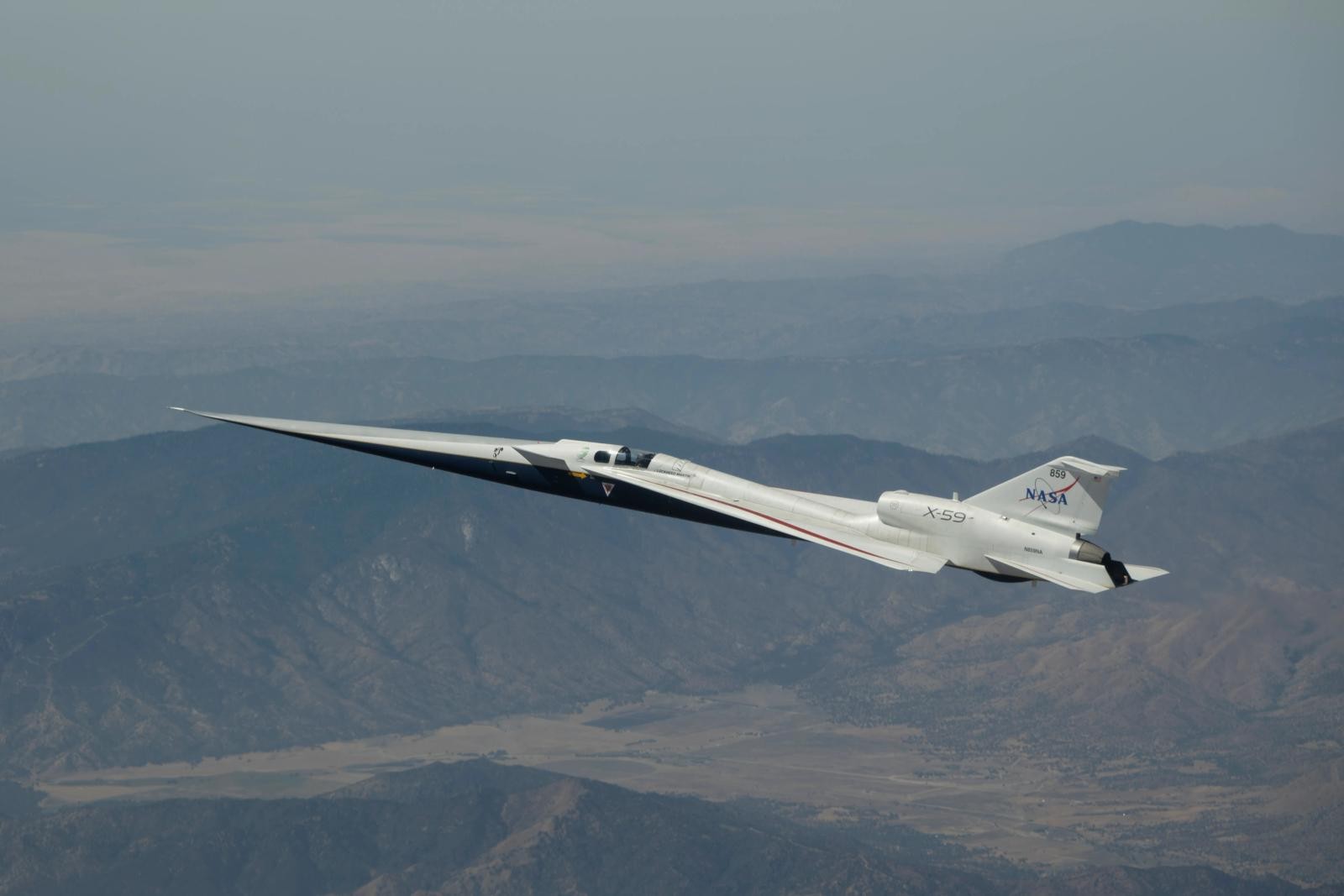
NASA continues rigorous testing of the experimental supersonic aircraft X-59, designed to solve one of civil aviation's greatest challenges: the loud sonic boom. The prototype flew across several states from Birmingham, Alabama, to Daytona Beach, Florida, arriving just ahead of the Max Power aerospace exhibition and air show near the Kennedy Space Center.
- The X-59 journey began on October 28 from Edwards Air Force Base in California.
- The prototype flew through El Paso, Fort Worth, and Birmingham before reaching Florida.
- Powered by an F414 engine, the aircraft has already reached speeds of up to 1.53 Mach.
- The air show features F-16 fighters, MiG-29, and updates on the experimental X-70 project.
Design features and unique nose cone
The most striking visual feature of the X-59 is its unusually long and pointed nose, which reshapes the shockwaves produced during supersonic flight and prevents them from merging into a disruptive sonic boom. Instead of a deafening explosion, people on the ground are expected to hear only a subdued thump resembling a car door closing, even at cruise speeds around 1.4 Mach.
Because of the elongated nose, the experimental aircraft lacks a traditional forward-facing windshield. The pilot relies entirely on the eXternal Visibility System (XVS), which combines forward-facing cameras with a high-resolution cockpit display. The aircraft utilizes an F414 turbofan engine and has successfully demonstrated high-speed capabilities during its ongoing flight test campaign.
Read alsoSpaceX showcases record-breaking Falcon 9 booster with 37 flights at Max PowerFuture flight tests and aviation impact
Following baseline flight performance checks, NASA intends to conduct community overflight tests over populated residential areas. Residents will rate perceived loudness while researchers gather ground noise data to share with the Federal Aviation Administration (FAA) and international regulators. These findings could provide the data needed to lift long-standing bans on overland supersonic commercial flight.
If successful, the technology could pave the way for a new era of faster commercial passenger travel and significantly reduced flight times. Alongside the X-59, the Max Power air show features flight demonstrations by the U.S. Air Force Thunderbirds F-16 demonstration team, NASA F-5 and F-15D jets, and a privately owned MiG-29 belonging to Jared Isaacman, alongside fresh details regarding the experimental X-70 Fractal aircraft.
Source: iXBT.com