Nest smart thermostat temperature accuracy issue revealed by room sensors
An XDA editor added temperature sensors to every room and discovered their Nest thermostat had been misreading the house temperature for years.
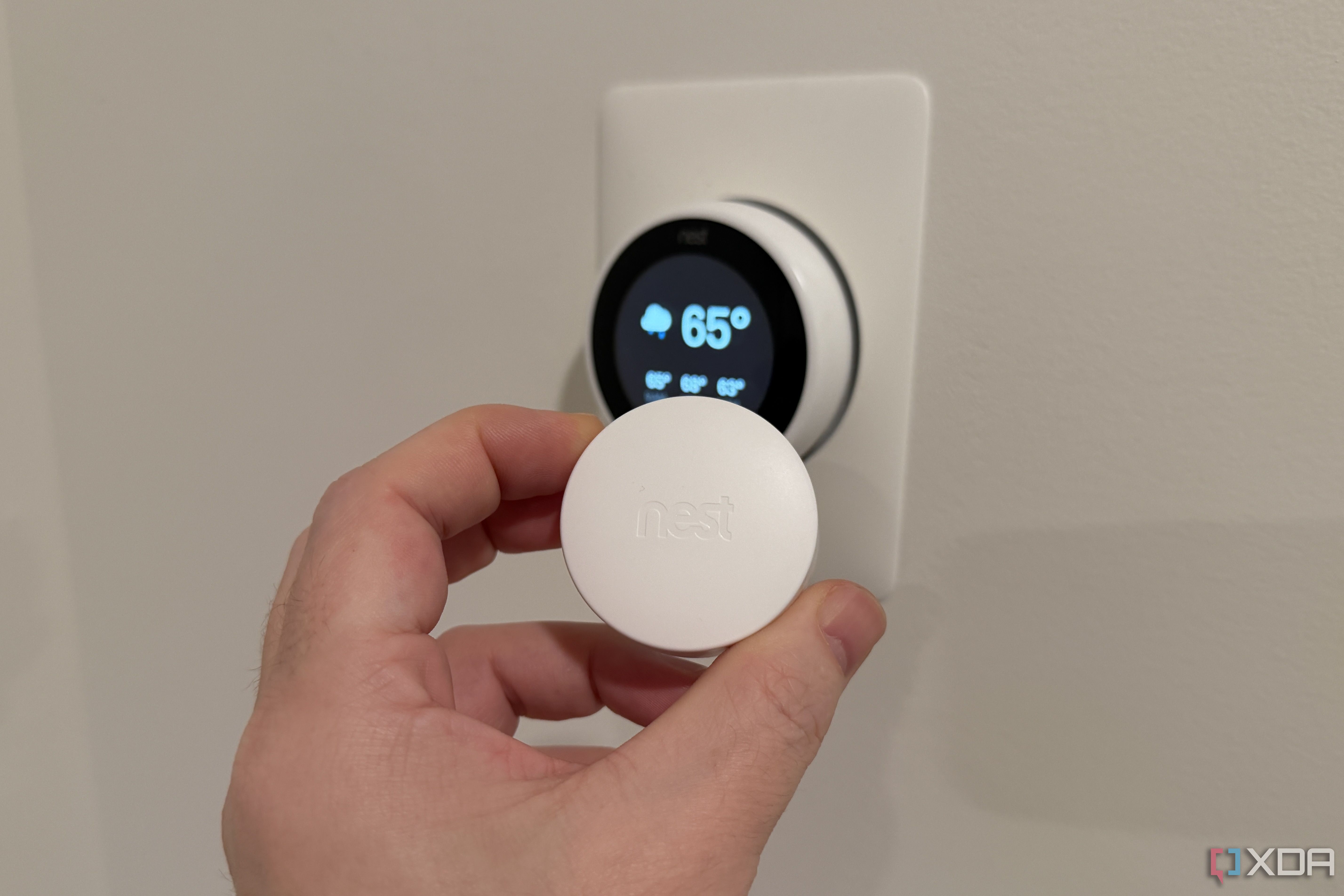
A long-time smart home user and owner of a 3rd-gen Nest Learning Thermostat realized that their heating and cooling setup had been secretly sabotaged for years. The thermostat was originally installed in an open-plan living room following textbook placement guidelines, sitting beneath a central air return vent on a central wall without direct sunlight. However, relying on a single measurement point in a multi-story townhome left the basement and upper floors constantly uncomfortable.
- The Nest thermostat previously judged the entire house temperature based on a single hallway or living room location.
- Adding a $40 Nest Sensor to other rooms proved there was a significant temperature swing across floors.
- Basic physics dictates that cool air sinks and warm air rises, creating stark climate differences.
- The aging 3rd-gen thermostat supports up to six sensors, but only one can remain active at any given time.
Temperature physics and layout flaws Even with optimal placement on a central wall away from direct sunlight, thermodynamic realities created major climate imbalances in a multi-level home. The author tested temperature swings at night after sunset by pairing a Nest Sensor and moving it around various rooms, letting it acclimatize for about 20 minutes in each location while keeping the thermostat in control of the AC.
The experiment revealed up to a 4-degree Fahrenheit swing between the living room and the warmest parts of the house. The office desk sensor regularly registered 78F or higher while the thermostat was set to 74F. Temperature swings during the day proved even more dramatic, especially in upstairs hallways and bedrooms characterized by poor air circulation.
Ecosystem limits and future alternatives While adding a remote sensor improved comfort in targeted areas, it introduced notable hardware limitations. Because the sensor relies on Bluetooth Low Energy, it occasionally drops connectivity in certain parts of the house, requiring careful placement to maintain an optimal signal. Furthermore, the legacy sensors lack built-in occupancy detection and rely purely on temperature readings.
With family members working on different floors—one in the basement office and another on the top floor—achieving universal comfort with a single active sensor remains impossible. Scheduling helps mitigate the issue slightly, but extreme outdoor weather exposes the limitations of single-point control. The author ultimately plans to transition away from Google toward a HomeKit-compatible thermostat integrated with Home Assistant.
Source: XDA