Neura Robotics and TUM launch 17 million euro RoboGym center for robots
Neura Robotics and TUM opened a 17 million euro RoboGym facility and unveiled the MiPA humanoid robot equipped with tactile skin for safe human collaboration.
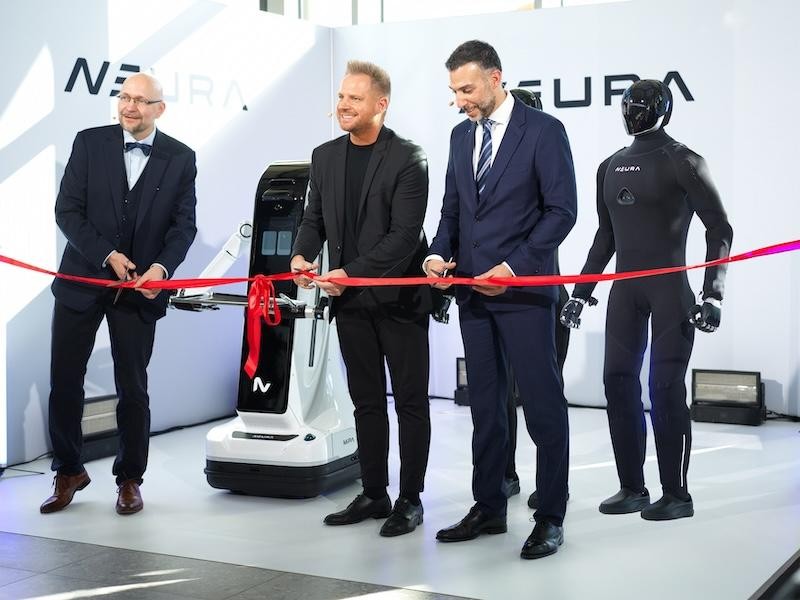
German robotics manufacturer Neura Robotics and the Technical University of Munich (TUM) have officially opened the RoboGym research center, valued at 17 million euros. This facility spans several thousand square meters and is designed to train humanoid robots and cobots in conditions closely mirroring real manufacturing and daily life.
- Opening of the 17 million euro RoboGym research facility in Germany.
- Unveiling of the new MiPA humanoid robot featuring Neura's tactile skin.
- Creation of a modular testing ground to train robots for safe human collaboration.
The 17 million euro RoboGym facility
The RoboGym research center covers thousands of square meters and is built specifically for training humanoid robots and cobots. The space is designed as a modular testing ground featuring various environments, including apartment zones, industrial workstations, and laboratory areas. Here, robots undergo daily reinforcement learning cycles, practicing millions of interactions with objects that were previously difficult to grasp.
The main goal of the project is to teach machines to work safely and ergonomically alongside humans. Instead of traditional programming code, machines acquire skills through demonstration. Investments in the project are shared between Neura and public funding from the federal state of Bavaria, with the facility open for joint initiatives with industrial partners.
Read alsoSamsung Galaxy Z Fold 9 to feature under-display camera in 2027The MiPA humanoid and its tactile skin
During the opening ceremony, the company publicly unveiled its new humanoid robot named MiPA. It is a full-scale anthropomorphic robot with articulated arms and hands, equipped with Neura's proprietary sensory tactile skin. This specific feature allows the robot to sense pressure and force in real time.
Thanks to the tactile skin, MiPA can safely perform delicate tasks, such as handing fragile items to a human or operating an electric drill on a conveyor belt in close proximity to an operator. This technology sets the robot apart from competitors and makes it suitable for real-world industrial and domestic scenarios.
Significance for the robotics industry
The launch of the RoboGym center and the presentation of the MiPA robot mark a significant milestone in integrating androids into human working environments. The ability of machines to adapt to changing conditions and safely interact with humans opens up new horizons for industrial automation and service sectors.
Source: iXBT.com