Opera One browser launches local AI feature for Windows and Mac
Opera One has introduced WebAI support, allowing websites and extensions to run AI models locally on Windows and Mac without cloud data transfer.
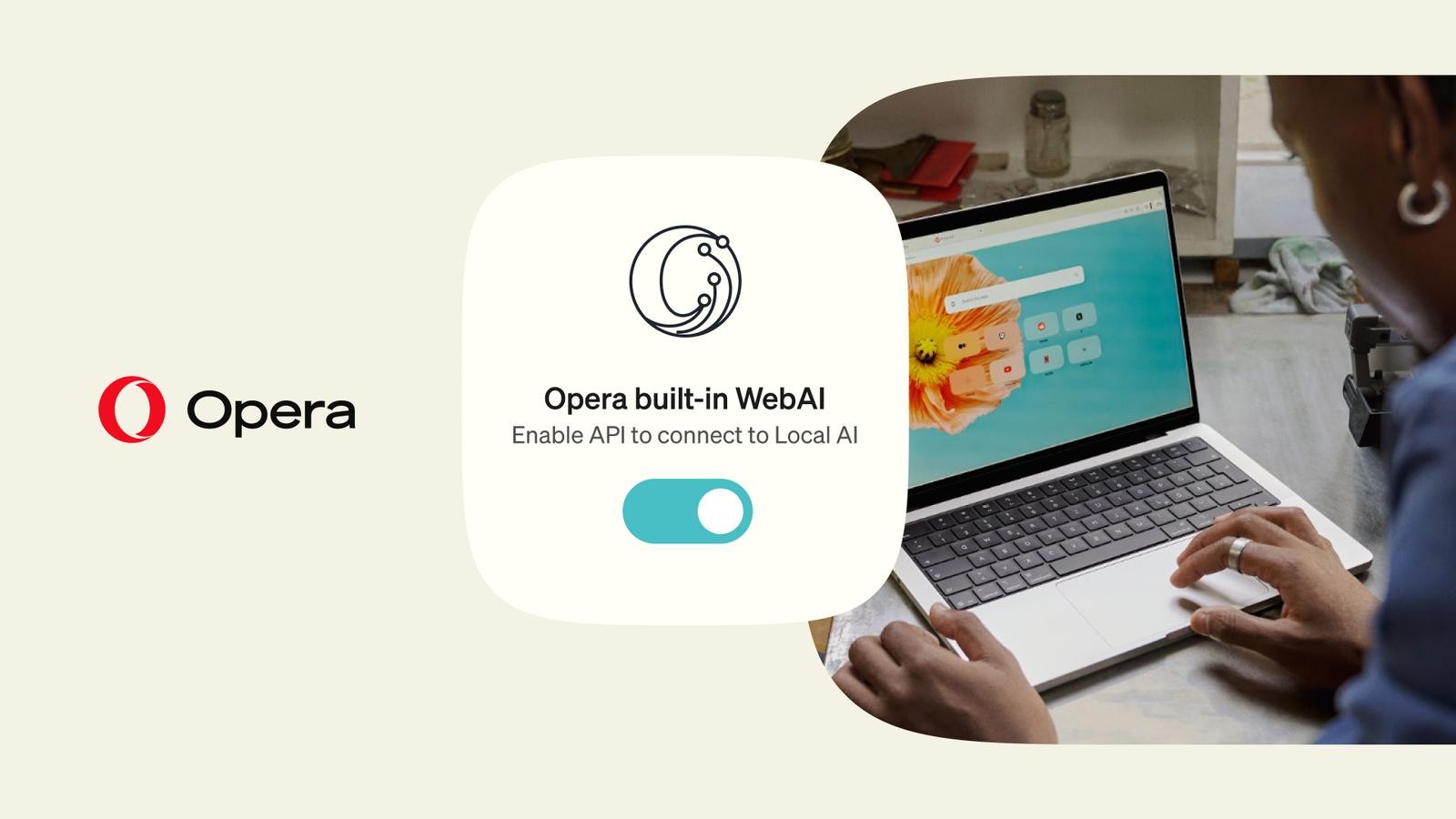
Opera has begun the preliminary rollout of WebAI support in its flagship Opera One browser. This technology enables websites and extensions to interact with AI models running directly on the user's computer, handling tasks such as text generation and content classification. The company is offering this feature as an early preview that users must enable manually.
- Opera One has integrated WebAI technology to enable browser-based local AI processing.
- Supports 64-bit Windows PCs with Intel and AMD processors, along with Apple Silicon Macs.
- Features Google Gemma and Apple's local base model, with files downloaded after feature activation.
- Local processing reduces the need to send sensitive data to external cloud AI providers.
Hardware Requirements and Compatibility
The initial preview version of the feature targets capable desktop hardware. It officially supports 64-bit Windows computers powered by Intel and AMD processors, as well as Mac computers equipped with Apple Silicon chips. Windows on Arm devices is currently not supported by the preview release.
Opera does not mandate a dedicated Neural Processing Unit (NPU), meaning overall performance depends entirely on the computer's general hardware capabilities. Models are downloaded only after the user explicitly enables the feature, and built-in permission controls allow restricting model access for individual websites.
Read alsoOpera One now lets Mac users run Apple’s foundation model directly in the browserSupported Models and Future Web Standards
Among the supported models, Opera highlights Google's Gemma and Apple's local base model for compatible Mac computers. The company intends to integrate additional models optimized for a wide variety of hardware devices in the future. WebAI is positioned as a proposed web standard, meaning its long-term industry impact will depend on broader adoption outside of the Opera browser ecosystem.
Security Risks and Enterprise Considerations
While local processing can minimize the necessity of sending confidential data to external AI providers, it does not guarantee absolute security on its own. Experts warn that malicious websites could potentially attempt to manipulate local models using hidden instructions, while unsafe extensions might gain access to sensitive on-screen data.
For enterprise deployments, organizations will still require strict access control policies, centralized permission management, and careful monitoring of model updates. Industry analysts suggest a hybrid approach is most likely, where local AI handles straightforward operations while cloud systems tackle more demanding tasks.
Source: iXBT.com