China to test uncrewed lunar lander ahead of crewed mission by 2030
China plans an uncrewed rehearsal of its lunar landing before sending astronauts by 2030, testing docking and surface operations.
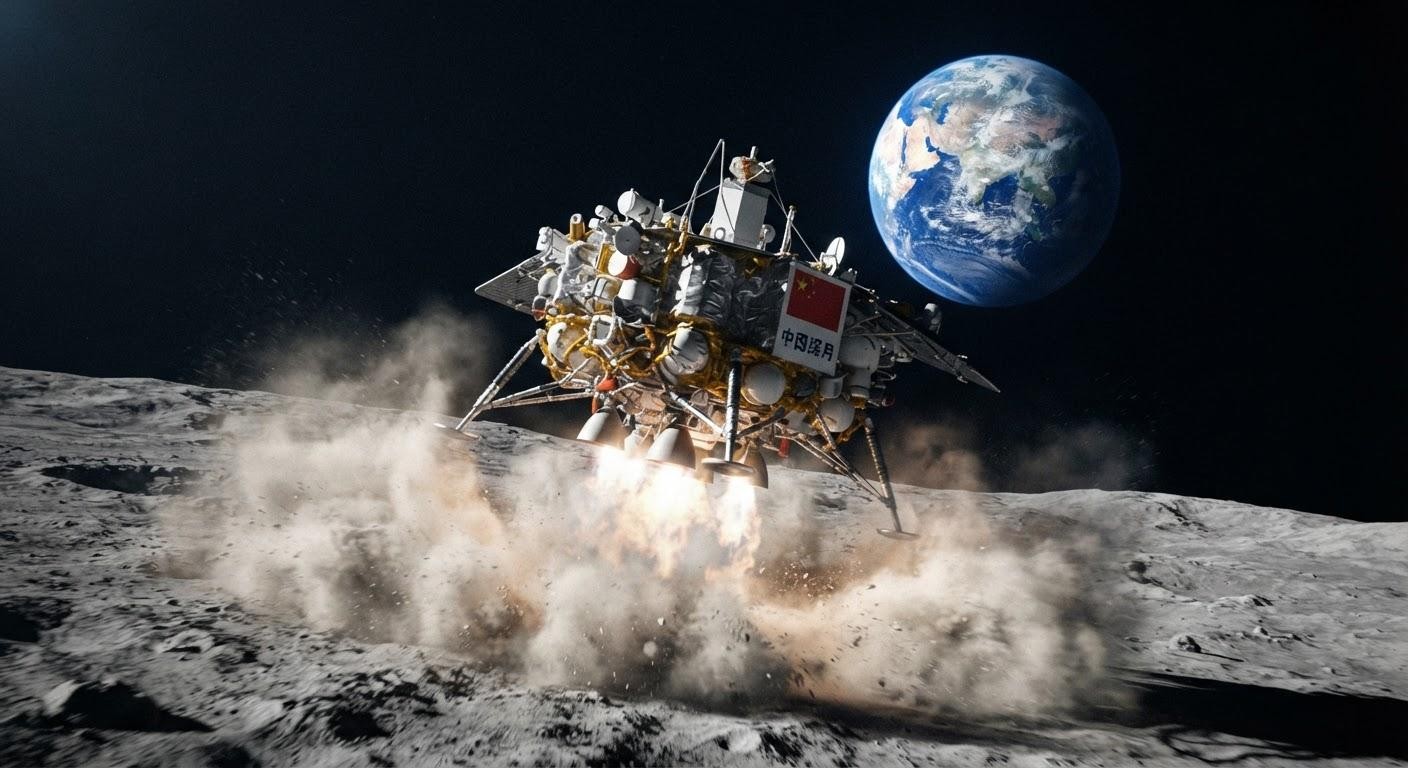
China is pressing ahead with preparations for its historic crewed lunar landing mission scheduled before 2030. According to official reports from the country's human spaceflight program, space authorities will conduct an uncrewed rehearsal to thoroughly test the lunar landing module and all flight phases.
- China will test an uncrewed lunar landing module before 2030.
- Two Long March-10 rockets will be used to deliver equipment.
- The Mengzhou spacecraft will transport crew to orbit while the lander descends.
Mission Architecture and Rocket Launch Plan
To accomplish this complex lunar expedition, China plans to utilize two Long March-10 carrier rockets. One rocket will launch the lunar landing module into the designated flight trajectory, while the other will deliver the crewed spacecraft named Mengzhou. Once reaching lunar orbit, both spacecraft are scheduled to rendezvous and dock.
The Mengzhou spacecraft is designed to transport a crew of three astronauts between Earth and lunar orbit. Meanwhile, the specialized landing module will carry two crew members down to the lunar surface and back up to the orbital vehicle for the return journey home.
Read alsoThe AI cost of JavaScript frameworks and benchmarksStep-by-Step Technology Validation
Wang Xiang, deputy chief designer of China's human spaceflight program, explained that mission preparation follows strict safety principles. Technologies that can be verified in low Earth orbit are tested first within the space station program, while all crew-related operations are practiced in uncrewed modes whenever possible.
Initially, engineers will test the Earth-orbit versions of the Long March-10 rocket and the Mengzhou spacecraft to evaluate atmospheric reentry and recovery systems. Testing will subsequently transition to the lunar-specific configurations of the hardware.
Objectives of the Uncrewed Flight and Experiments
During the uncrewed mission, the lunar lander will gather crucial scientific data directly on the Moon's surface. Collected metrics will include surface temperatures, characteristics of lunar dust, and performance data of onboard systems operating in the space environment.
The autonomous spacecraft must execute critical maneuvers without human intervention, including lunar orbit insertion, docking with Mengzhou, landing, surface ascent, and re-docking. Furthermore, on October 22, the China Manned Space Agency announced a call for scientific experiment proposals utilizing the lander's resources.
Significance of China's Lunar Program
Achieving the goal of landing Chinese astronauts on the Moon before 2030 will mark a major milestone in space exploration. The broader lunar program encompasses landing, short-term surface habitation, lunar rover mobility, sample collection, and scientific research followed by a safe return to Earth.
Source: iXBT.com