Rare find: user buys PC with working Intel Larrabee GPU prototype
A Reddit user accidentally purchased an extremely rare working prototype of the x86-based Intel Larrabee graphics card at an auction.
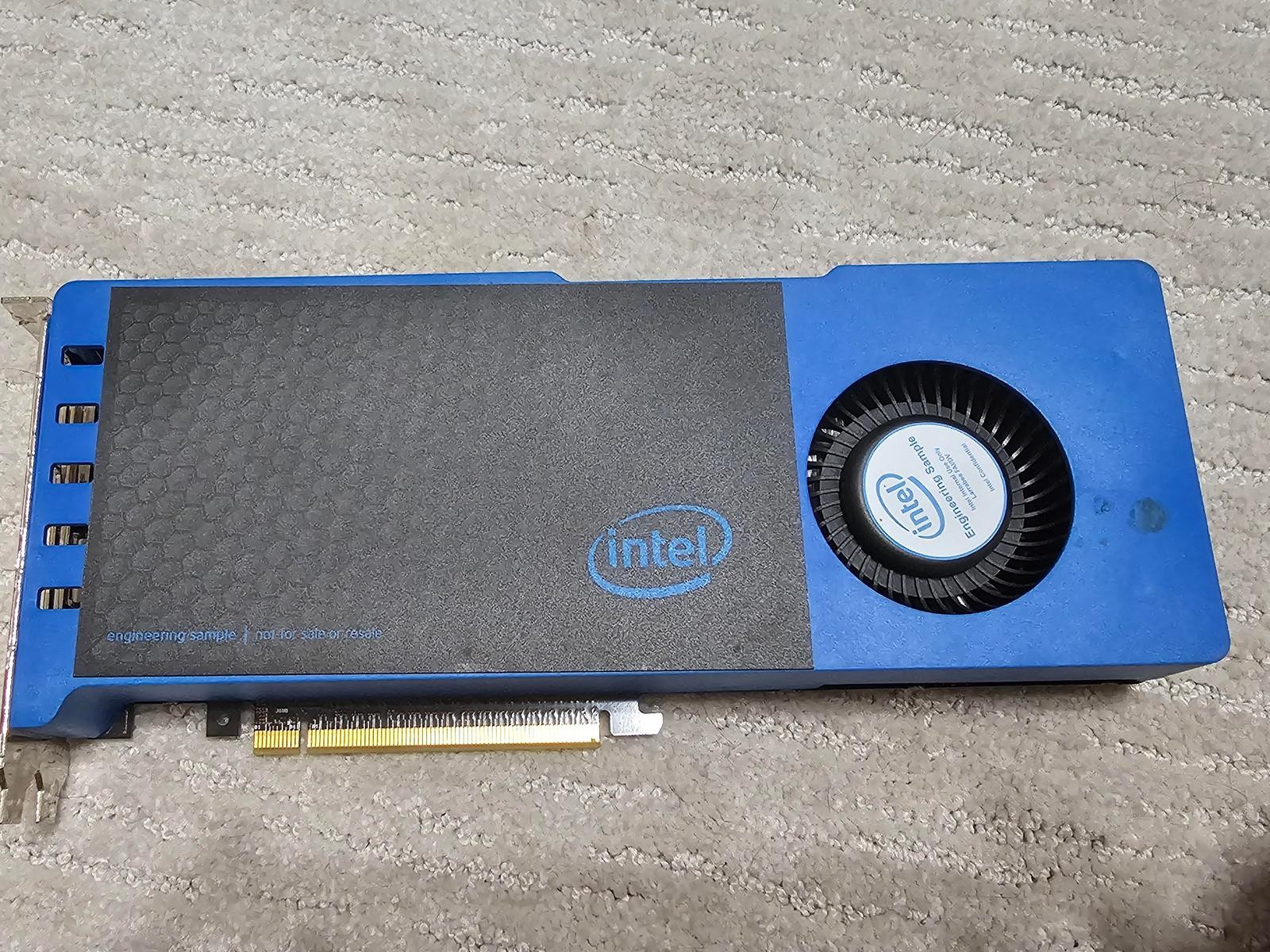
A Reddit user under the username pkellythompson has made a remarkable discovery after accidentally purchasing an old computer system at an online auction. What seemed like a routine retro hardware purchase turned out to be an extremely rare piece of computing history.
Key facts about the discovery: - The user bought a PC featuring a rare x86 Intel Larrabee prototype GPU. - The system includes an Intel diagnostic board and Visual Adrenaline development setup. - Two USB drives containing confidential Intel development software and drivers were found. - The experimental GPU successfully ran Crysis at 36 fps in 720p resolution.
The Intel Larrabee project originated as an ambitious attempt by the company to build a discrete graphics processor based on the conventional x86 architecture. Although retail consumer graphics cards were never mass-produced, the underlying technology eventually evolved into the Xeon Phi series of high-performance computing accelerators. Until recently, only a single working Larrabee sample was publicly known, having surfaced in 2022.
The historical value of this find is significantly enhanced by the fact that the GPU was acquired as part of a complete Intel Visual Adrenaline development system. Inside the computer chassis, enthusiasts also identified a proprietary Intel diagnostic circuit board, which engineers used during the early prototyping and debugging phases of hardware development.
Perhaps the most significant part of the discovery was the inclusion of two USB flash drives packed with original Intel Larrabee software. These files, which apparently had never left Intel's internal research laboratories before, included specialized drivers, development tools, documentation, and instructions for flashing the GPU's BIOS.
Read alsoIntel projects server processor market to reach 200 billion dollarsThanks to the recovered software, the owner managed to boot Windows 7 on the rare hardware platform and push the experimental architecture to its limits. After proper configuration, the system successfully ran the demanding video game Crysis, achieving a playable 36 frames per second at 720p resolution on medium settings.
For hardware historians and tech enthusiasts, the emergence of operational Larrabee hardware and proprietary software provides an unprecedented look into one of Intel's most ambitious yet cancelled architectural experiments. Such discoveries offer valuable insights into the evolution of parallel computing and early attempts at unifying CPU and GPU paradigms.
Source: iXBT.com