Samsung and Tesser Atomics to build nuclear-powered LNG carrier
Samsung Heavy Industries and Tesser Atomics partner to design a nuclear LNG tanker utilizing molten salt reactor and TRISO fuel.
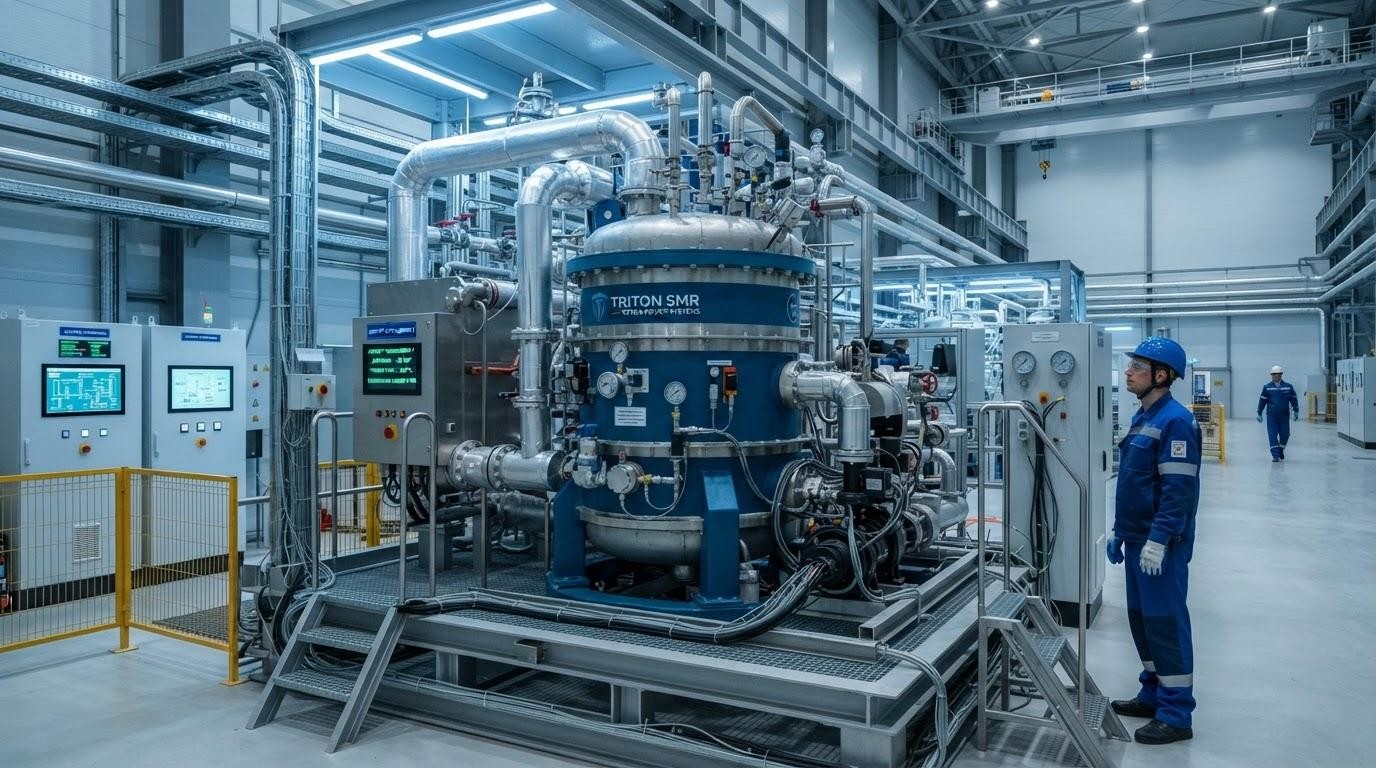
South Korea's Samsung Heavy Industries and the US-based Tesser Atomics have agreed to jointly develop a nuclear-powered liquefied natural gas (LNG) carrier. The agreement was signed on November 19, 2026, with plans to operate the vessels on commercial shipping routes between the United States and Europe.
- Samsung Heavy Industries will design and construct the commercial vessel.
- Tesser Atomics will provide the nuclear power plant and handle regulatory approvals.
- The propulsion system is based on the Triton molten salt high-temperature reactor.
- The reactor features on-the-fly refuelling without requiring shutdowns.
The Triton Reactor and TRISO Fuel Technology
At the core of the propulsion system will be the Triton reactor, developed by Tesser Atomics. It is a compact, high-temperature reactor cooled by molten fluoride salt. The system utilizes TRISO fuel, consisting of micro-sized fuel particles with a multi-layered protective coating developed with the support of the US Department of Energy.
One of Triton's standout features is its ability to refuel without shutting down the reactor. This allows fuel replenishment directly during operations, bypassing the lengthy dock downtime typically required for traditional nuclear reactor refueling. For a commercial gas carrier, consistent voyage duration and delivery schedules are vital for transport economics.
Read alsoTurning an Android TV Box into a Linux Mini ServerResearch Foundations and Project Background
The technical foundation of this project was developed under NuProShip, a Norwegian research initiative investigating the application of various reactor types on commercial vessels. Work is currently ongoing within the SFI SAINT research consortium with support from the Research Council of Norway, alongside Tesser Atomics.
Broader Nuclear Ventures for Samsung
For Samsung Heavy Industries, this marks the second major nuclear energy project of 2026. In July, the company signed an agreement with US engineering firm Sargent & Lundy to develop standardized floating platforms for small modular reactors meant to supply electricity to coastal cities and remote industrial sites.
Source: iXBT.com