Samsung HBM4 drives record 2026 revenue amid AI memory boom
Samsung reported record revenue for Q3 2026 driven by HBM4 AI memory demand. Chip shortages and high prices are set to persist into 2027.
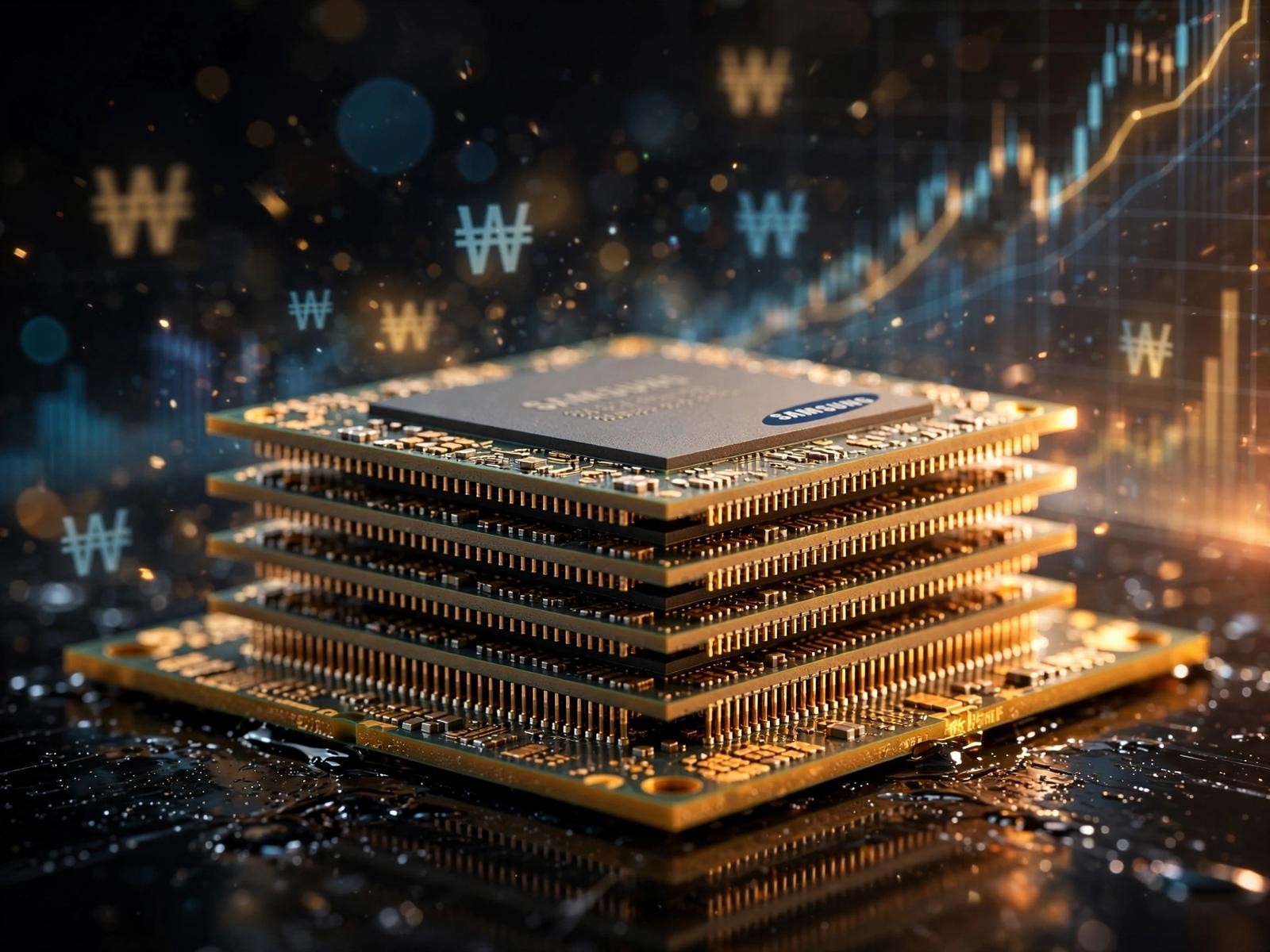
Samsung Electronics has reported its financial results for the third quarter of 2026, marking a historic high in revenue and operating profit. The unprecedented financial growth was almost entirely driven by the booming artificial intelligence infrastructure market rather than any substantial recovery in the traditional consumer PC sector.
- Samsung's revenue for Q3 2026 reached 195.3 trillion won, with operating profit hitting an all-time high of 107.4 trillion won.
- The Device Solutions semiconductor division generated 106.5 trillion won in operating profit out of 147.1 trillion won in total revenue.
- The primary catalyst for the record performance was the mass shipment of HBM4 stacked memory for advanced AI accelerators.
- Production constraints have forced Samsung to reallocate output toward high-margin AI components, driving up prices for standard consumer DRAM and SSDs.
Record performance of the semiconductor division
The South Korean tech giant's financial triumph is firmly anchored in its Device Solutions division, which posted staggering metrics. Company executives emphasize that this success was achieved on the back of rapid expansion in data centers and neural network computing systems. While the consumer PC and mobile device markets do not show comparable dynamics, demand for server-grade DRAM and corporate solid-state drives remains exceptionally high.
The role of HBM4 memory and market shortages
Read alsoMemory chips drive record profits for Samsung, SK hynix and MicronThe defining product behind Samsung's success is the next-generation HBM4 memory. The company significantly scaled up shipments of this advanced stacked memory, which is critical for powering high-performance AI accelerators. Because manufacturing lines are constrained, the corporation is forced to prioritize these components over standard silicon wafers, directly triggering global shortages and price hikes for regular consumer RAM and flash memory modules.
Outlook for 2027 and foundry business expansion
The forecast for the fourth quarter and full year 2027 remains strict: AI memory shortages will persist as cloud providers and autonomous AI agents drive demand faster than available supply. Upcoming CPU and GPU platforms will further increase the appetite for fast DDR5 and QLC SSDs. Additionally, Samsung's foundry business is capturing orders for base HBM dies and 2nm chips, with the Taylor, Texas facility expected to add momentum in 2027.
What this means for the market and consumers
For everyday buyers and businesses, Samsung's strategic shift toward AI infrastructure means a prolonged period of high memory prices. Much like the graphics card market, where resources are heavily skewed toward professional accelerators, the memory industry is currently prioritizing lucrative enterprise segments. Manufacturers have little economic incentive to increase production of inexpensive consumer modules while server solutions yield record margins.
Source: iXBT.com