Sodium-ion batteries: new anode enables 30-second charging and long lifespan
Scientists developed an innovative anode for sodium-ion batteries, withstanding 10,000 cycles and 30-second charging thanks to graphene and titanium dioxide.
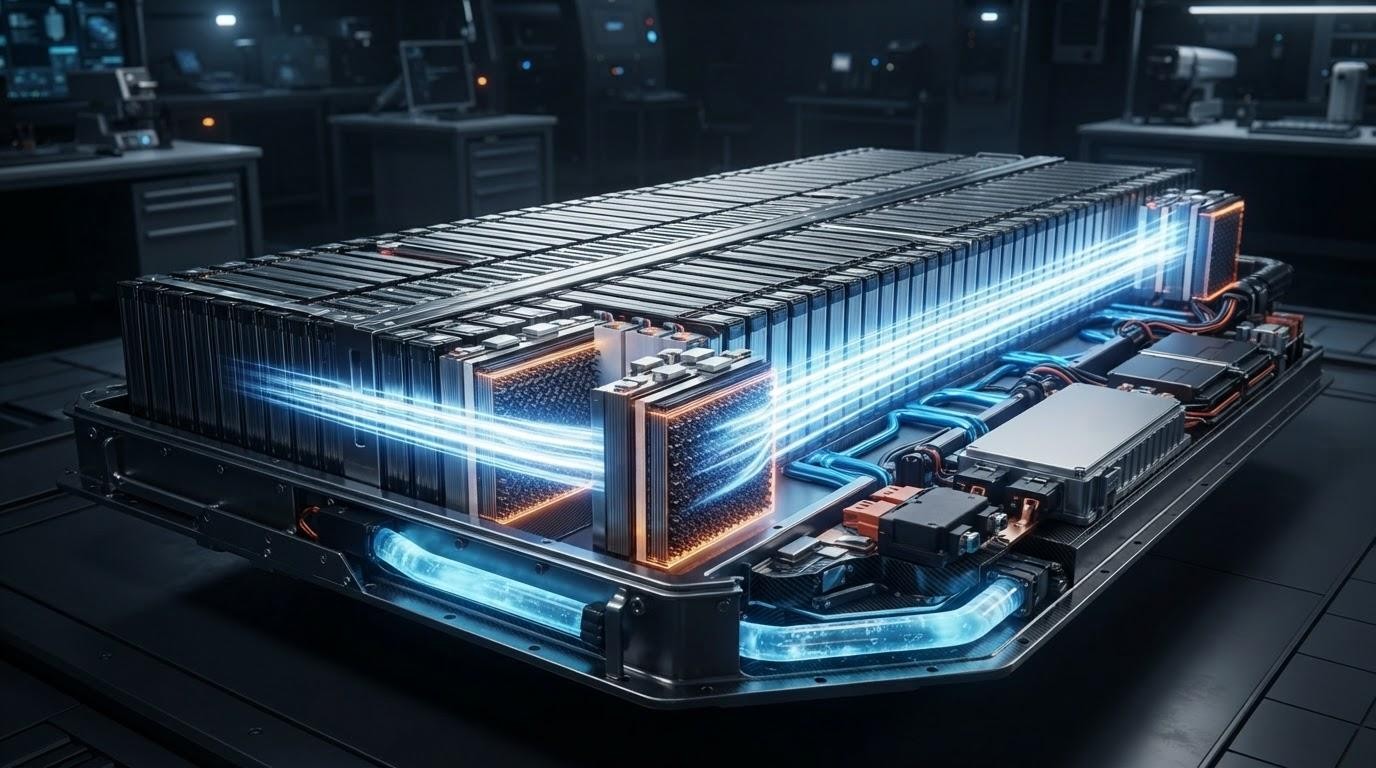
Researchers have developed a novel anode material for sodium-ion batteries that successfully resolves the longstanding tradeoff between charging speed and battery lifespan. In laboratory testing, the innovation successfully endured 10,000 cycles while charging in just six minutes, maintaining a steady capacity of 131 mAh/g. Even when charged in roughly 30 seconds, the capacity dropped minimally down to 121 mAh/g.
- The anode is built from titanium dioxide nanosheets combined with an ultra-thin 0.4 nm carbon coating.
- Lab prototypes survived 10,000 cycles at a six-minute charge rate and performed well under 30-second charges.
- A full laboratory cell featuring a sodium vanadium phosphate cathode successfully passed high mass-loading tests.
The role of graphene and advanced anode architecture
The anode is manufactured using titanium dioxide nanosheets approximately 10 nm thick, assembled into hollow spheres featuring a dual shell. Each nanosheet is coated with an ultra-thin carbon layer possessing a graphene-like structure measuring only 0.4 nm in thickness. This significantly enhances the material's electrical conductivity while simultaneously protecting it against structural degradation.
For comparison, conventional nanosheets lacking this protective coating typically break down after just 400 cycles. The new protective shell addresses multiple challenges at once by facilitating faster electron transfer and holding the nanosheets together to prevent cracking during intense charging. Furthermore, the coating limits direct contact with the electrolyte.
Read alsoiOS 27.3 and macOS 27.3 bring Vertical Tabs and Adaptive Dark Mode to SafariPractical tests and current technological limitations
The researchers also constructed a complete laboratory battery utilizing a sodium vanadium phosphate cathode, which withstood over 170 cycles under heavy load conditions. Notably, the electrodes retained functionality even under increased mass loading, a parameter that frequently serves as a critical vulnerability for early-stage laboratory developments.
Despite these promising results, commercial implementation remains distant. Tests were conducted on small laboratory cells, and the novel anode operates at a higher average voltage than traditional hard carbon, which could potentially reduce overall energy density. Consequently, the material must undergo rigorous testing in full-scale battery formats suitable for electric vehicles.
Implications for the energy storage market
If successfully scaled, this breakthrough could make sodium-ion batteries significantly more attractive for transportation and grid-scale energy storage systems. By combining ultra-fast charging capabilities with exceptional durability, this technology addresses the primary hurdles currently preventing widespread commercial adoption of sodium-ion chemistry in modern electric vehicles.
Source: iXBT.com