Sodium-sulfur batteries get new aluminum-based catalyst
Chinese researchers increased the durability of sodium-sulfur batteries using aluminum. The tech achieves 2500 cycles with minimal degradation.
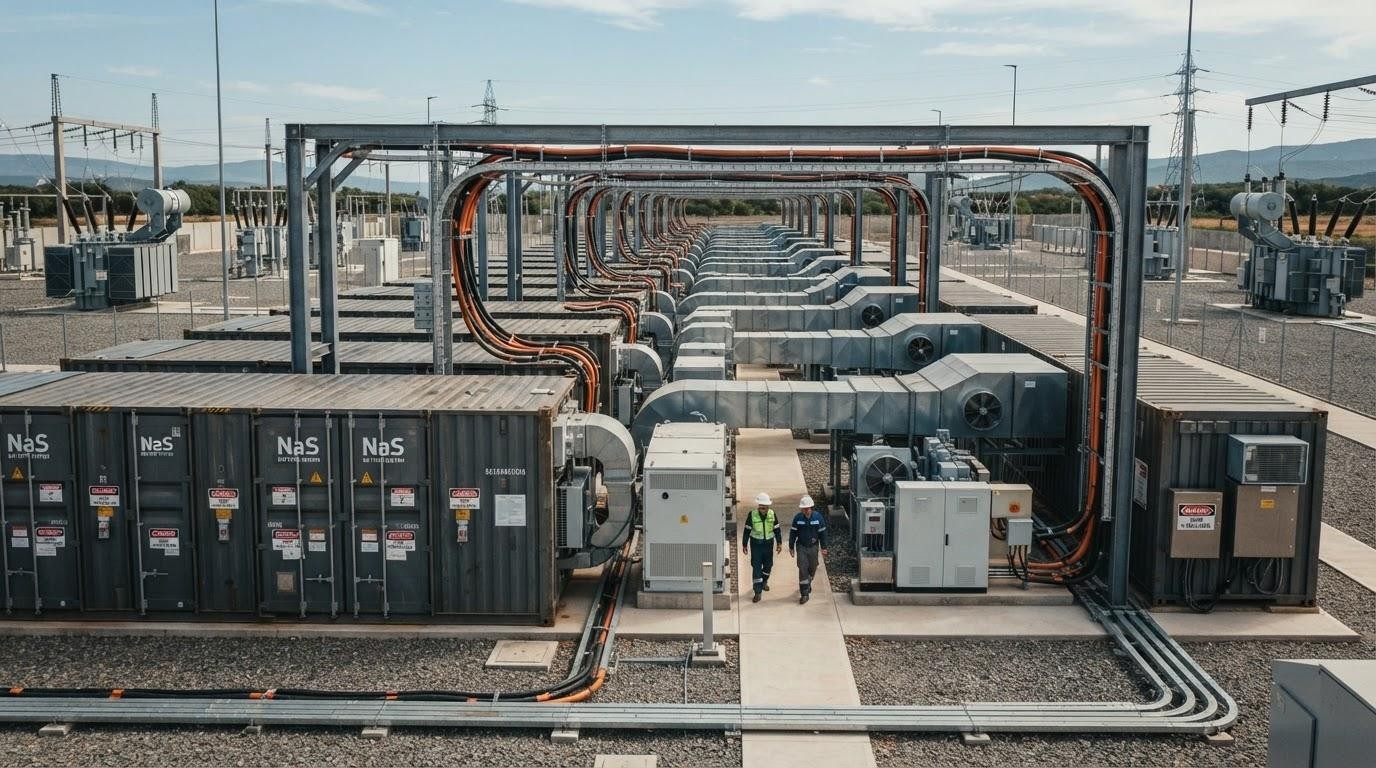
Chinese researchers have found a way to significantly increase the durability of sodium-sulfur batteries using cheap and widely available aluminum. By altering the atomic structure of the catalyst, the scientists successfully suppressed one of the main degradation mechanisms of these power cells.
- Developed a novel aluminum-based catalyst with an asymmetric Al–O₃N structure.
- Successfully suppressed the shuttle effect of soluble sodium polysulfides between electrodes.
- The battery showed a specific capacity of 1,196 mAh/g after 100 cycles and high stability up to 2,500 cycles.
- The technology paves the way for cheap energy storage solutions for large-scale power grids.
Novel atomic structure of the catalyst
The research was conducted by a team from the Chinese Academy of Sciences led by professors Wang Hui and Zheng Fangcai at the Hefei Institutes of Physical Science. Typically, individual aluminum atoms in a catalyst are surrounded by four oxygen atoms. The researchers replaced one of them with a nitrogen atom, creating an asymmetric Al–O₃N structure.
This reconfiguration altered the electron distribution around the aluminum atom and enhanced the catalyst's interaction with sulfur compounds inside the battery. As a result, the researchers successfully suppressed the transfer of soluble sodium polysulfides between electrodes. This destructive process, known as the shuttle effect, leads to active material loss and gradual performance deterioration.
Read alsoSodium-ion batteries: new anode enables 30-second charging and long lifespanLaboratory testing and performance metrics
During laboratory tests, the sodium-sulfur battery equipped with the new catalyst demonstrated impressive performance parameters. The device showed a specific capacity of 1,196 mAh/g after 100 charging and discharging cycles. Even after 2,500 cycles, the performance loss remained remarkably low, decreasing by just 0.017% per cycle.
According to the researchers, such stability allows the aluminum-based catalyst to effectively compete with materials built from much more expensive metals. Sodium and sulfur are abundant and accessible elements, but rapid performance degradation has long hindered the practical application of this battery technology.
Implications for large-scale energy storage
Sodium-sulfur batteries are considered a potentially low-cost energy storage option for large power grids. The new development demonstrates that catalyst efficiency can be improved not only by utilizing rare metals, but also by precisely engineering the atomic environment of common metals.
At this stage, the findings are limited to laboratory results. Before mass production and implementation in large-scale energy storage systems can begin, the technology must undergo further rigorous testing and verification.
Source: iXBT.com