Wonder Valley AI Data Center in Canada to Generate Massive Heat
Canada plans to build the $70 billion Wonder Valley AI data center, which will produce unprecedented amounts of heat.
·2 min read
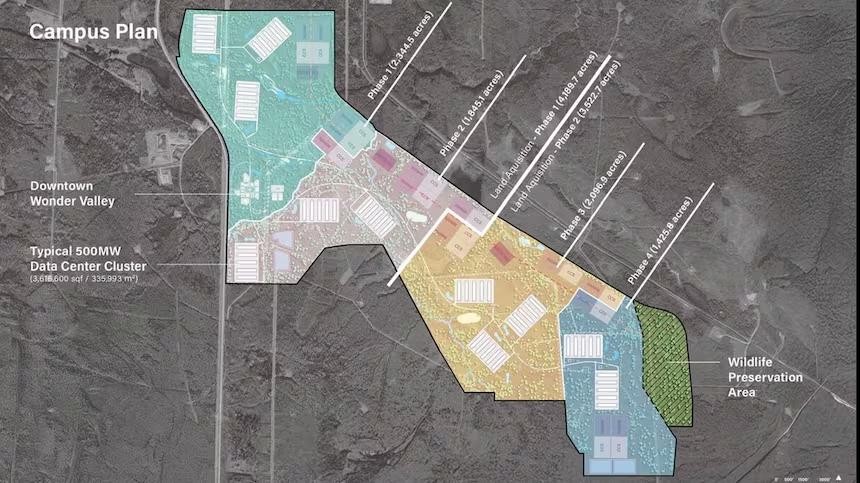
A massive artificial intelligence data center named Wonder Valley is planned to be built in the province of Alberta, northwestern Canada. The project has drawn significant attention due to its unprecedented scale and potential environmental impact. According to preliminary calculations by University of Utah physicist Robert Davis, the facility will generate an astronomical amount of heat daily.
- The Wonder Valley project is valued at $70 billion and will consume approximately 9 GW of power.
- The total thermal load of the complex is estimated to be between 16 and 18 GW daily.
- Annual carbon dioxide emissions could reach 30 million tons, exceeding 4% of Canada's total emissions.
- Local authorities exempted the project from strict environmental reviews, sparking protests from indigenous communities.
Scale and Unique Features of Wonder Valley Backed by investor Kevin O'Leary, the $70 billion project is designed to consume roughly 9 GW of electricity. Instead of drawing power from the main public grid, electricity is planned to be generated on-site using dedicated gas generators. This creates a unique setup where power generation and consumption happen in one localized spot. Physicist Robert Davis conducted a preliminary assessment at the request of the Sturgeon Lake Cree Nation. Based on his calculations, accounting for both gas turbine operations and server racks with AI accelerators, the total thermal load will reach 16–18 GW. Davis noted that this daily heat output is equivalent to the energy of 23 atomic bombs dropped on Hiroshima. ## Environmental Risks and Carbon Emissions The primary concern with Wonder Valley is the extreme concentration of heat sources in a single location. In traditional energy systems, power plant heat dissipates over large areas as electricity travels to homes and businesses. Here, both energy production and intensive computing will be tightly concentrated, potentially making it the largest single point heat source on Earth. Furthermore, relying on on-site gas generators will result in massive greenhouse gas emissions. Davis estimates that the facility's annual carbon dioxide emissions could hit approximately 30 million tons. This figure accounts for more than 4% of Canada's total overall emissions, posing a severe environmental challenge. ## Local Opposition and Regulatory Disputes The data center is planned to be located about 130 km southwest of the Sturgeon Lake Cree Nation's reservation, on land the indigenous people consider their traditional territory. In April, the Alberta government exempted Wonder Valley from a stricter provincial environmental assessment, citing the use of standard utility systems. This decision drew immediate backlash from the community. In September, the community filed for a judicial review of the exemption, followed by a request for a secondary review. Although Alberta's Ministry of Environment stated that the project will still need to secure necessary permits for air, land, and water impact, experts argue that individual permit checks cannot replace a comprehensive environmental impact assessment.
Source: iXBT.com