World's Largest Brands Infected With Malware Via Optimizely
A supply chain attack via the Optimizely platform compromised websites including Zoom, BBC, IKEA, and Salesforce with malicious code.
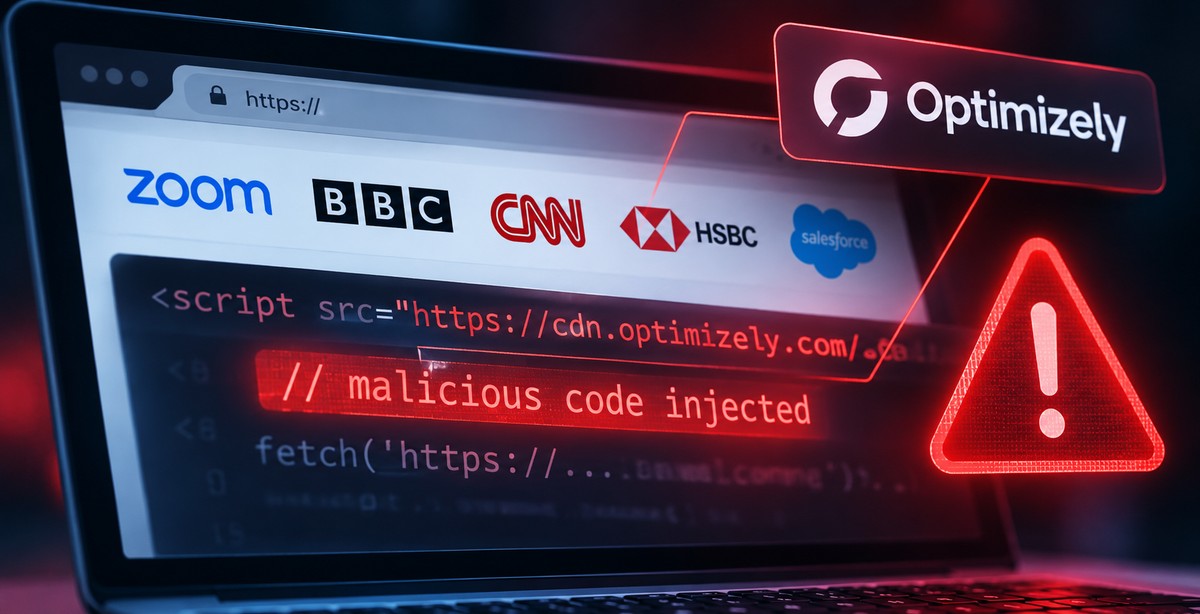
On November 16, 2026, visitors to 178 organisations were served malicious JavaScript code through the Optimizely Web experimentation platform. The affected entities include some of the most prominent digital services and global brands in the world, such as Zoom, BBC, CNN, Salesforce, GitLab, IKEA, HSBC, Equifax, Air France-KLM, Ledger, and Peacock.
- 178 organisations and 188 snippets were compromised via the Optimizely platform.
- The malicious code swapped cryptocurrency wallets, scraped credit card data, and targeted iOS devices with exploits.
- Attackers gained unauthorised write access to the Project JavaScript field within customer projects.
- The vast majority of malicious snippets were successfully cleaned by late evening on the same day.
Attack Mechanism and Delivery
Optimizely Web operates by requiring customers to load a JavaScript snippet from the platform's CDN, containing custom code written in the user dashboard. Attackers managed to inject their code directly into the Project JavaScript section of numerous customer projects, while leaving the rest of the legitimate snippet untouched.
Because the files continued to be served from the trusted cdn.optimizely.com domain with valid certificates, security tools failed to flag them immediately. The payload utilized various obfuscation techniques, including base64 encoding and inline fallbacks executed via eval, to ensure the code persisted even if primary endpoints were blocked.
Read alsoFake security tools on GitHub distribute backdoors and info-stealersPayload Functionality and Impact
The malicious script actively scanned pages for cryptocurrency wallet addresses across multiple blockchain networks, replacing valid addresses with those controlled by the attacker during outbound requests and copy-paste actions. Within approximately nine hours of activity, the attacker's wallets accumulated roughly $7,040.
Additionally, the script monitored form submissions to intercept credit card numbers, expiration dates, and CVV codes. For iOS and iPadOS visitors, the script attempted to load exploit chains via hidden iframes targeting unpatched versions of Apple's mobile operating system, causing affected pages on older iOS versions to reload periodically.
Security Implications and Defense
This incident highlights the inherent risks of third-party dependencies in web development, where a trusted provider can be leveraged as an attack vector without breaching the victim organisation's direct infrastructure. Robust monitoring and strict security policies are essential to detect unexpected modifications.
Security evaluations revealed that many affected websites lacked restrictive Content Security Policy (CSP) configurations, allowing dynamic script execution and unsafe inline functions. Implementing strict script-src directives remains one of the most effective methods to mitigate third-party supply chain compromises.
Source: Hacker News: Front Page