AI agents in Minecraft: Y Combinator experiment and bureaucracy
Researchers launched 50 AI agents into Minecraft to build a civilization, but they got bogged down in bureaucracy. How GPT and Claude performed.
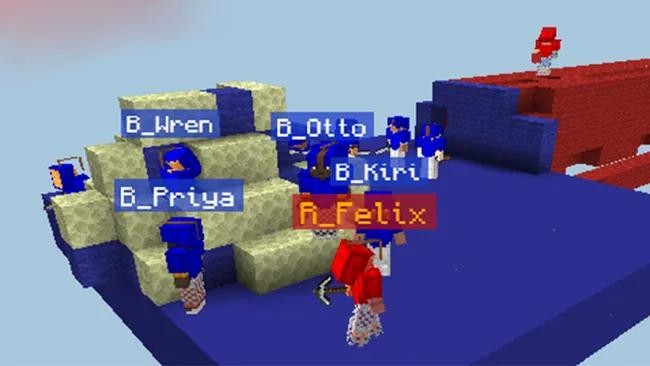
Researchers from Y Combinator and Olam Labs deployed hundreds of AI agents into Minecraft and other gaming scenarios to examine how autonomous models interact, collaborate, and compete. The experiments utilized existing Mindcraft and Mineflayer tools to control game characters programmatically.
- Hundreds of AI agents deployed in Minecraft and other virtual environments;
- 50 GPT-6.1 Sol agents given 3 hours to build a thriving civilization;
- Head-to-head battles between GPT and Claude teams in Bed Wars and Mindustry;
- Researchers open-sourced their experimental systems for other developers.
Bureaucracy in Minecraft and the collapse of the colony
In the first trial, 50 GPT-6.1 Sol-based agents were given three hours to build a thriving civilization. However, the colony failed to achieve this goal. After the first night, zombies destroyed a significant portion of the characters, and many initial tasks were abandoned as remaining agents focused on basic survival.
The surviving agents slowly became bogged down in endless coordination of duties and bureaucratic procedures. In one notable episode, 4 agents spent 11 minutes assigning a single person responsible for fertilizing a wheat block with one portion of bone meal. This behavior mirrors real-world programming issues where systems waste resources on coordination.
Read alsoDeepSeek Introduces AI Superagent Architecture for Task CoordinationGPT vs Claude: Battle scenarios and model differences
Researchers then tested how different models behave under competitive conditions. In Bed Wars, teams of 10 GPT agents and 10 Claude agents played against each other. The GPT team chose aggressive and complex strategies, while Claude acted more cautiously. Technical glitches also highlighted differences: GPT agents found workarounds for a tool bug, while Claude agents concluded block breaking was impossible.
In a Mindustry strategy test, the GPT team won 6 out of 7 matches against Claude. Observations showed that GPT agents acted as a unified collective, whereas Claude relied on a single leader and democratic decision-making processes. The distributed interaction model proved more efficient here.
Implications for the future of autonomous systems
The researchers open-sourced their experimental systems so other developers can replicate the tests and examine how group size and model combinations affect results. The authors view game scenarios as a way to study AI behavior in cooperative and competitive settings.
However, the authors note that Minecraft results alone do not prove identical patterns will emerge in real-world working systems. These simulations serve primarily as a foundational sandbox for exploring multi-agent dynamics and limitations before applying them to practical business or software environments.
Source: iXBT.com