Former Microsoft engineer builds custom RAM for vintage PDP-11
Faced with exorbitant vintage memory prices, former Microsoft engineer Dave Plummer used AI to design his own custom RAM board for the PDP-11.
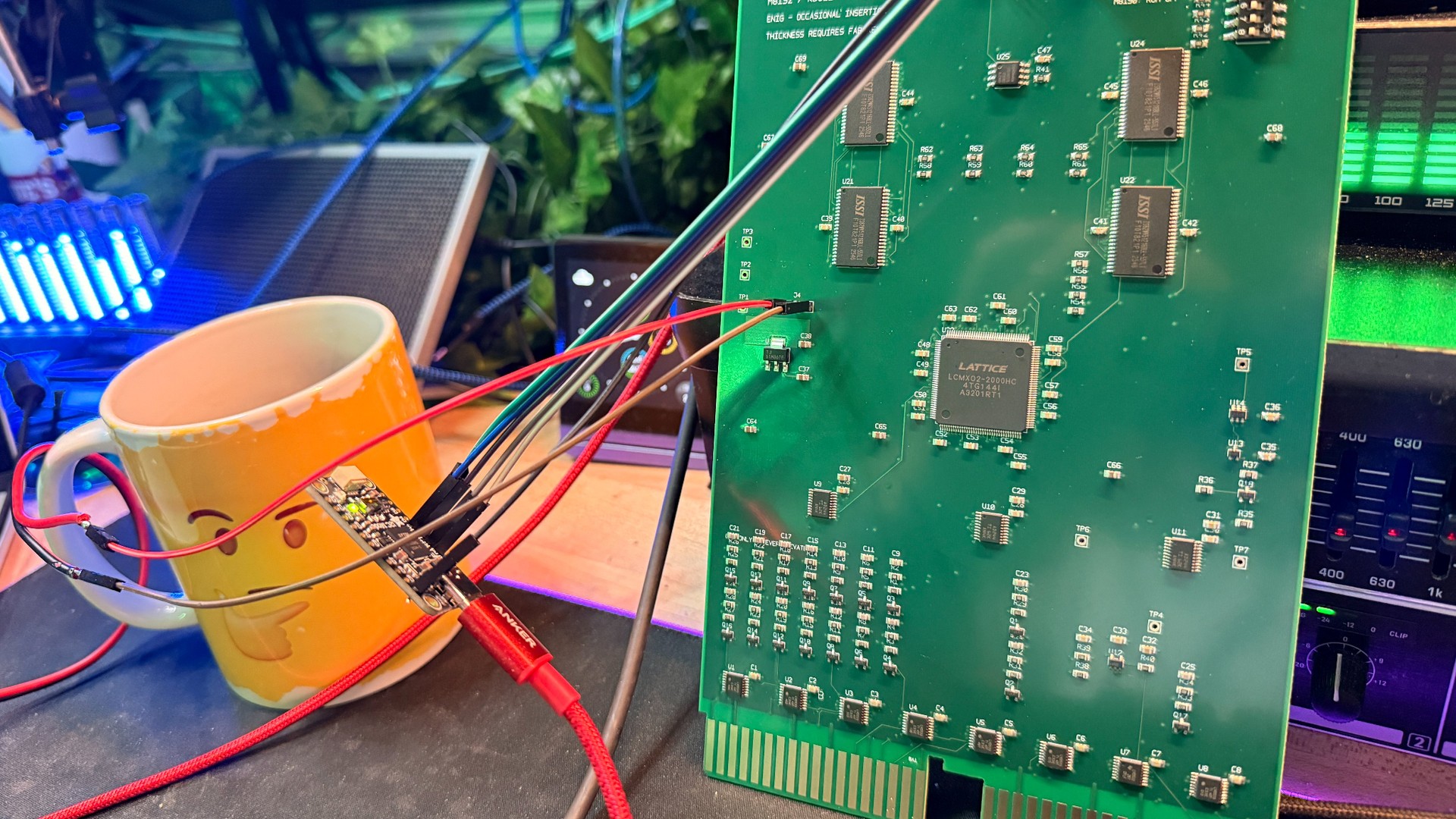
Dave Plummer, a former Microsoft engineer famous for Task Manager and Windows Pinball, has embarked on a fascinating hardware project. After discovering the astronomical price of memory for his vintage PDP-11 computer, he decided to take matters into his own hands and build a brand-new RAM board from scratch.
- Dave Plummer built a custom RAM board for a 1970 PDP-11 using ChatGPT and EasyEDA.
- The project utilizes a Lattice MachXO2 FPGA chip as a memory controller.
- Plummer overcame bus architecture challenges with feedback from the retro-computing community.
Building retro memory with AI assistance
The PDP-11 dates back to 1970, and later models could accommodate up to four megabytes of memory. Seeing the extreme price tags for original vintage memory modules, Plummer decided to engineer his own solution. Though he had not tackled projects of this complexity before, he enlisted the help of ChatGPT and the EasyEDA online circuit simulator.
Since many PDP-11 models relied on Q-Bus boards, Plummer designed the RAM as a standalone card, testing it alongside a board containing the system's M8190 CPU. He mounted a Lattice MachXO2 FPGA serving as a memory controller atop the board, alongside four ISSI 1 MB memory chips, a U2S I/O chip, and DIP switches.
Read alsoAlphabet, Meta, Microsoft, Amazon and Oracle future obligations exceed $3.2 trillionFPGA programming and bus architecture hurdles
The project was not an immediate success, as Plummer had never flash-programmed an FPGA chip before. After overcoming that initial hurdle, he ran into a classic PDP-11 design trap. The machine's memory bus can only access entire two-byte words at once, treating the lowest address bit as a lane selector between the low and high byte.
Because of this design, the memory controller must handle word alignment and byte selection carefully during read and write operations to avoid data corruption. After commenters pointed out this behavior, Plummer likely addressed it with a quick fix in his FPGA code, showcasing the collaborative nature of retro-computing.
Modern alternatives and project context
Discussing alternative approaches, a community member suggested bypassing the hardware complexity by implementing memory in software using a Raspberry Pi wired to the PDP bus. Plummer noted that he had essentially done something similar recently using a modern QBone DEC interface board paired with a Beaglebone Black.
This project highlights how modern developer tools, inexpensive FPGA chips, and AI assistants like ChatGPT enable enthusiasts to resurrect vintage hardware without paying collectors' prices for rare original components.
Source: Latest from Tom's Hardware