Geomagnetic storms November 2026: Earth faces days of solar turbulence
Earth is bracing for a week of geomagnetic storms starting November 6, driven by a massive coronal hole and rising solar flare activity.
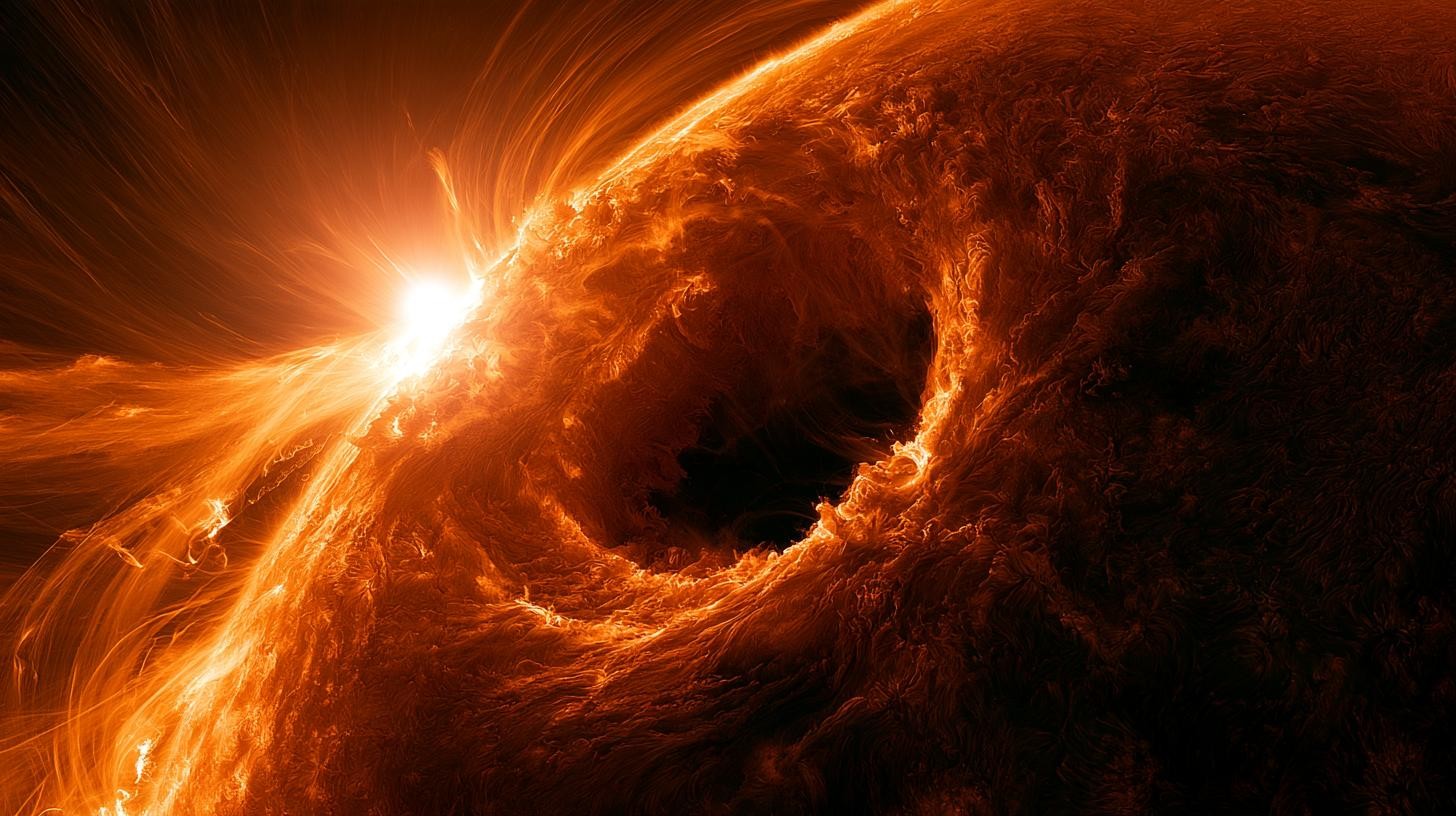
Since the evening of November 5, scientists have recorded a sharp increase in solar flare activity. Although no catastrophic events have occurred yet, the total intensity of eruptions has noticeably increased, and the activity index has shifted from calm to the orange zone, rising from 2 to 5 points on a ten-point scale.
Key highlights of the solar activity update: - The solar activity index jumped from 2 to 5 points, entering the orange zone. - An M3.6 class flare in sunspot region 4566 became the strongest since October 10. - Initial G1 level magnetic storms are expected on the night of November 6 to 7 and may last up to a week.
New sunspot groups and rising activity The activation began with an M3.6 class flare on November 5 within sunspot region 4566, marking the strongest solar event since October 10. This sudden shift has drawn close attention from space weather researchers around the globe. However, experts are equally concerned by signs of a new sunspot group emerging near the eastern limb of the solar disk. If this structure turns out to be large, it could combine with the existing active region to generate significantly more frequent and intense flares in the coming days.
The threat from a giant coronal hole Simultaneously, Earth faces strong geomagnetic disturbances caused by a massive coronal hole, which is already recognized as one of the largest throughout 2026. High-speed solar wind streams originating from this area are capable of rattling our planet's magnetosphere for an extended period. Preliminary forecasts indicate that the first magnetic storms will strike on the night of November 6 to 7, with intensities preliminarily rated at the G1 category. The period of disturbance is expected to stretch across 5 to 7 days, with further storms already predicted for November 8.
Potential impacts on technology and health The combined effect of the coronal hole's solar wind and escalating flare activity could drive geomagnetic storms to strong or even very strong levels. While initial impacts are categorized as G1, the situation remains dynamic. Such prolonged geomagnetic storms can cause minor disruptions to satellite communications and navigation systems, while also affecting individuals sensitive to space weather changes. Experts recommend monitoring daily space weather forecasts and taking necessary precautions ahead of time.
Source: iXBT.com