Haiyang NPP: China is building the world's largest passive safety nuclear plant
Construction of the third phase of the Haiyang NPP has started in Shandong Province, China. Total capacity will reach 7.6 GW.
·2 min read
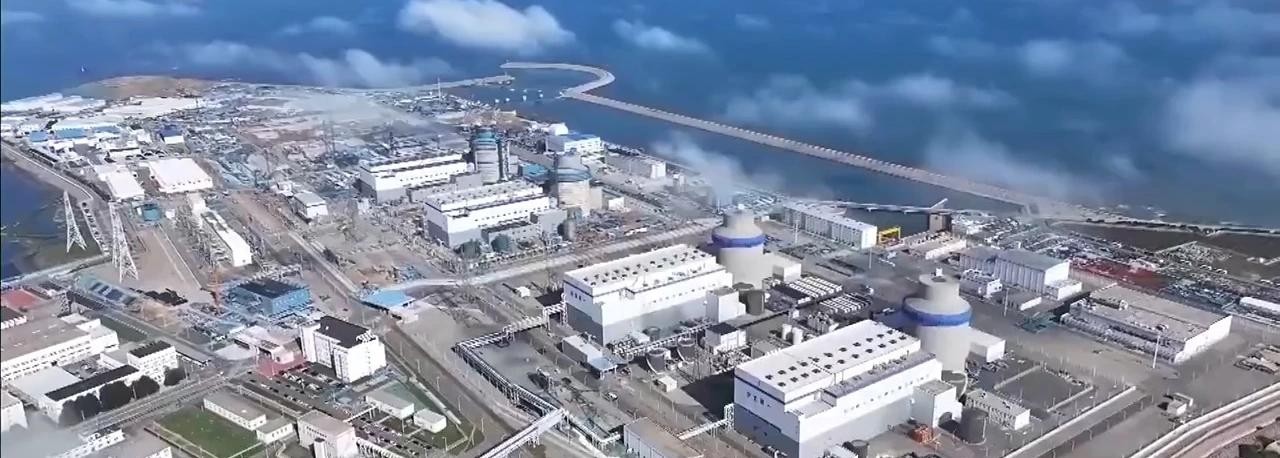
On October 31, construction of the third phase of the Haiyang Nuclear Power Plant officially began in China's Shandong province. The project involves building power units No. 5 and No. 6 equipped with CAP1000 reactors, which are a domestic Chinese version of the third-generation AP1000 technology featuring advanced passive safety systems.
- Construction of units 5 and 6 featuring CAP1000 reactors has officially begun.
- Each new unit will have a capacity of 1.3 GW, bringing total NPP capacity to 7.6 GW.
- Passive safety systems maintain cooling for 72 hours without external power or operators.
- The project integrates private capital and provides widespread district heating.
Advanced Features of CAP1000 Reactors The CAP1000 reactors represent the Chinese adaptation of the proven third-generation AP1000 technology. The primary feature of these units is a passive safety system that does not require external electricity to operate valves and pumps. Instead, it relies entirely on natural circulation and gravity to maintain core cooling. According to the developers, following a complete blackout, this system can independently maintain reactor cooling and containment integrity for up to 72 hours. Crucially, this mechanism operates without requiring any intervention from human operators, significantly reducing operational risks during emergency scenarios.
Record-Breaking Scale and Environmental Impact Once the third phase is fully completed, the Haiyang NPP will become the largest atomic energy station in the world utilizing purely passive safety reactors. Its total installed capacity will reach approximately 7.6 GW, with an estimated annual electricity generation of 60.9 billion kWh. In addition to generating massive amounts of electricity, the station provides centralized district heating to about 400,000 residents in Haiyang and Rushan. Future plans involve expanding the heating network to cover 25 county-level cities and heating over 150 million square meters of indoor spaces.
Investment Model and National Significance A notable aspect of the third phase is the incorporation of private capital while state structures maintain a controlling stake. Chinese authorities promote this financing model as a successful precedent for attracting private investments into large-scale national nuclear projects. According to official estimates, this expansion will save approximately 18.56 million tons of standard coal annually and reduce carbon dioxide emissions by 48.63 million tons. This highlights the project's dual importance for regional energy supply and global environmental goals.
Source: iXBT.com