How to make Claude Code, Codex and Antigravity work together
An experiment in combining Claude Code, Codex, and Antigravity AI coding agents to build a study app using the Orca environment.
·2 min read
Over the past few months, developers have increasingly jumped between different AI coding tools. The industry leaders clearly include Anthropic's Claude Code, OpenAI's Codex, and Google's Antigravity. Instead of treating these powerful models as strict competitors, combining their unique strengths on a single project yields impressive results.
Benefits of multi-agent collaboration in software development - Every AI coding tool features distinct strengths and weaknesses that complement each other when assigned appropriately. - Utilizing multiple agents prevents development bottlenecks caused by hitting usage limits on a single platform. - Parallel execution enables separate parts of a complex project to be built simultaneously, significantly speeding up delivery.
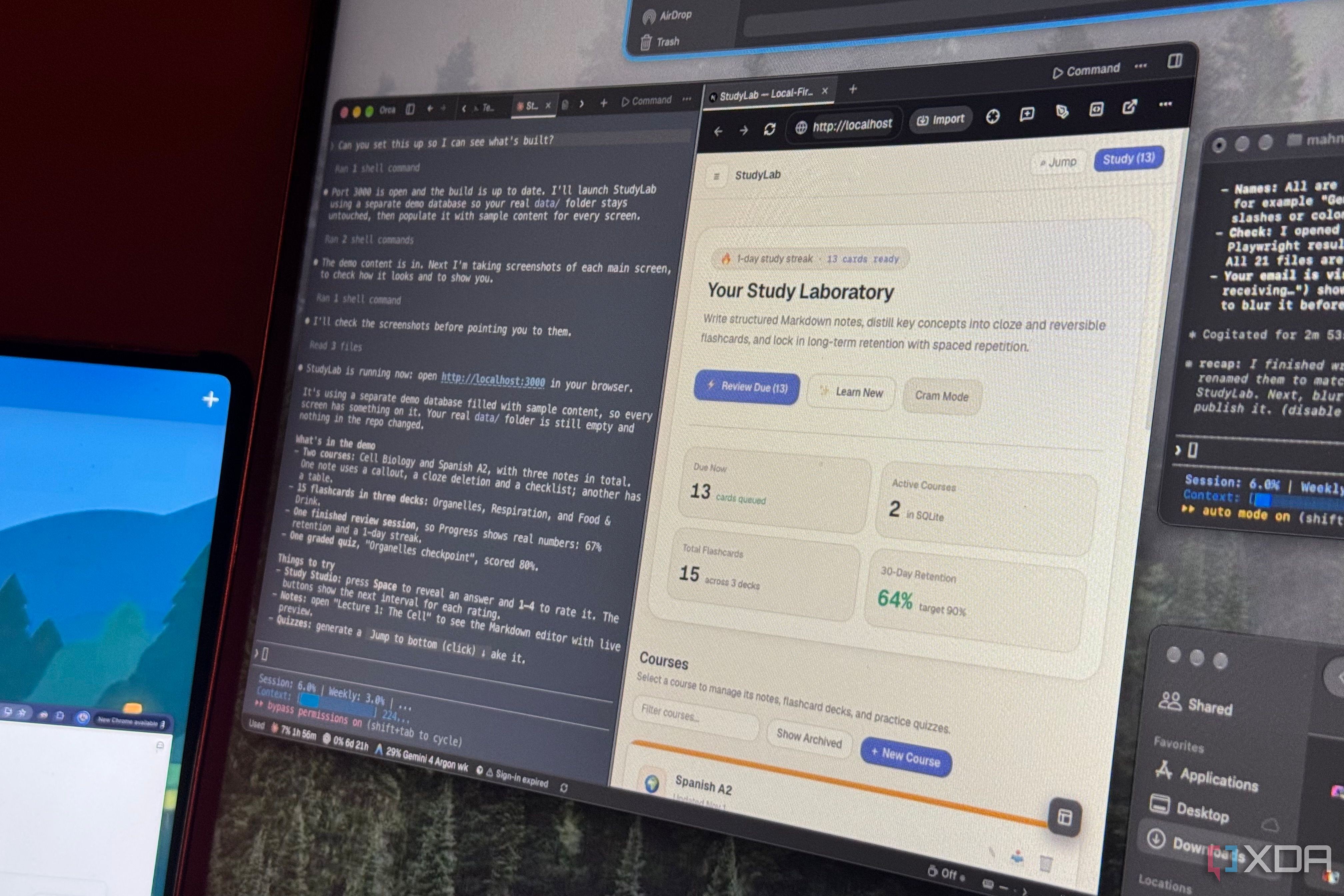
Architecture and initial setup for the StudyLab application To test this collaborative approach, a study application named StudyLab was built, combining features from NotebookLM, Quizlet, and Anki. Management of multiple AI agents was handled via Orca, an open-source Agent Development Environment supporting Git worktrees. The process began with Claude Code establishing the project architecture, shared data models, API contracts, and an AGENTS.md file outlining specific responsibilities. Three separate Git worktrees were then created from this shared foundation to keep the agents isolated.
Task distribution and the parallel development workflow Frontend development and UI design were assigned to Antigravity, backend development and database management were given to Claude Code, and study algorithms along with testing were handled by Codex. Running sessions through Orca allowed all three agents to build different parts of the application simultaneously without interfering with each other's code. This eliminated the need to juggle multiple terminal windows while monitoring progress.
Code merging and automated testing results Once all three agents completed their tasks, Claude Code merged the contributions into a single application. Surprisingly, only a single documentation conflict occurred, which was resolved automatically. Browser testing was then conducted using Playwright to verify the user experience. Ultimately, all core user journeys, including creating courses and saving notes, passed their initial automated checks successfully.
Source: XDA