Le GPT Fat and 10,000 Agents: Inside OpenAI's Secret Architecture
OpenAI engineer teases Le GPT Fat while dual VMs appear in the API. How 10,000 autonomous agents tackled the Navier-Stokes equations.

On November 3, OpenAI engineer Thibault Sottiaux published a three-word message on X: "Le GPT Fat". This brief teaser quickly captured the tech community's attention, hinting at the upcoming release of a heavy model. Just a day later, two mysterious identifiers appeared briefly in the OpenAI API before vanishing.
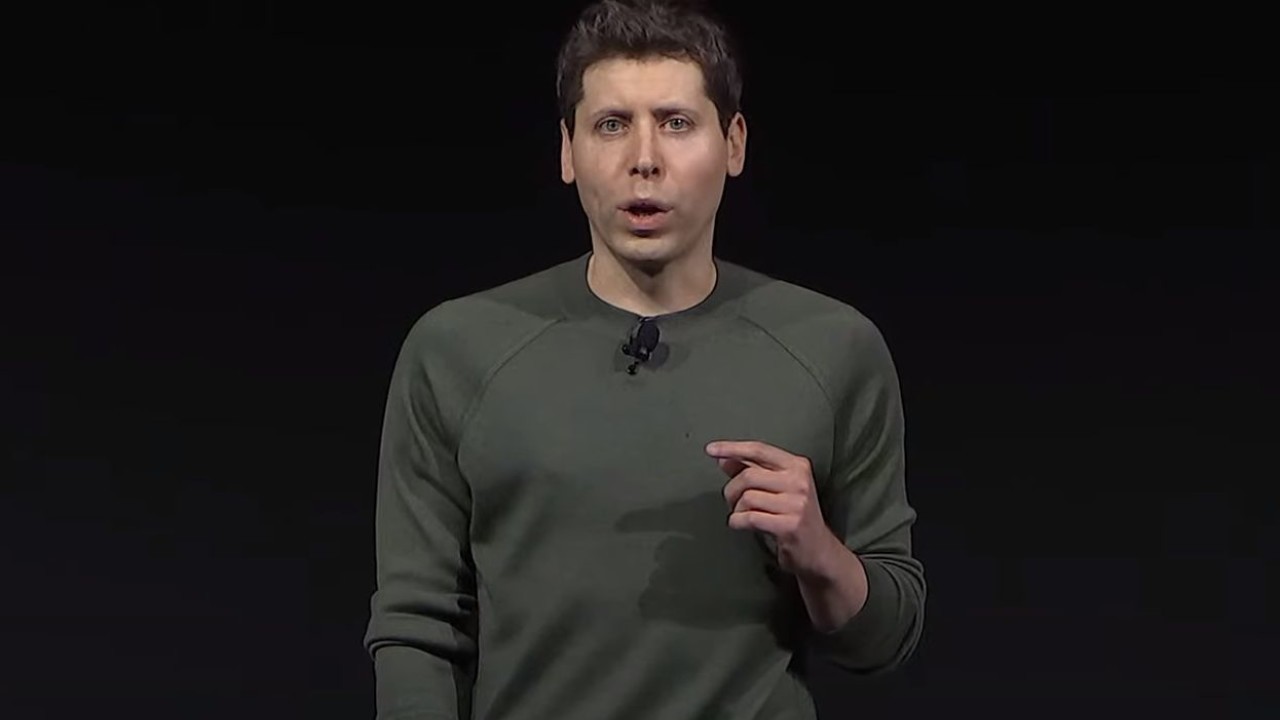
A day prior, at the ADIPEC 2026 conference, Sam Altman confirmed rumors that one of the Millennium Prize Problems — the Navier-Stokes equations — had been solved. As it turned out, an unreleased public version of GPT coordinated thousands of autonomous systems to achieve this milestone.
- OpenAI engineer Thibault teased a release using the phrase "Le GPT Fat".
- Identifiers rc-ada-or-vm and rc-ada-sh-vm briefly surfaced in the API.
- 10,000 AI agents worked without a boss to solve the Navier-Stokes problem in 88 hours.
Dual Virtual Machine Architecture and API Leaks
The appearance of identifiers rc-ada-or-vm and rc-ada-sh-vm in the API sparked intense developer discussions. The "rc" prefix traditionally stands for Release Candidate, indicating final testing stages. Developers attempting to invoke these endpoints received a "503 Capacity Limit" error.
Read alsoPerplexity launches its own take on AI agents for workThe "vm" suffix points to an architecture featuring two isolated virtual machines at the core: one plans tasks, while the other executes code inside a secure sandbox. This setup is specifically engineered to support large-scale multi-agent scenarios where the model tests its own hypotheses and writes code autonomously.
10,000 Agents and the Navier-Stokes Problem
A day before the API leak, Sam Altman shared details of a massive experiment at the ADIPEC 2026 conference. The Navier-Stokes equation solution was powered by an unannounced next-generation GPT model controlling 10,000 decentralized AI agents operating without a single boss.
The decentralized system ran for 88 hours, during which each agent independently researched its domain, shared findings, and determined next steps. Throughout this period, they exchanged 2.7 million messages and generated around 130 billion tokens. Final formalization and proof verification in Lean were completed by GPT-6 Astra in an additional 17 hours.
Implications for Developers and the AI Ecosystem
The puzzle pieces surrounding OpenAI's hidden releases are coming together. "Le GPT Fat" references the heavy computational model designed to manage massive clusters of autonomous agents. Integrating such infrastructure into public pipelines will transform how complex engineering and research challenges are approached.
For the global software engineering community, this marks a shift from simple conversational chatbots to autonomous digital workgroups capable of solving heavy mathematical and computational problems. The architecture demonstrates the viability of large-scale agent networks in pushing the boundaries of artificial intelligence.
Source: Все новости подряд