Lenovo Kaitian: powerful AI desktop with 160 TOPS and 35B model support
Lenovo unveils the Kaitian AI computer featuring up to 320 TOPS performance, dedicated NPU memory, and support for local 35B models.
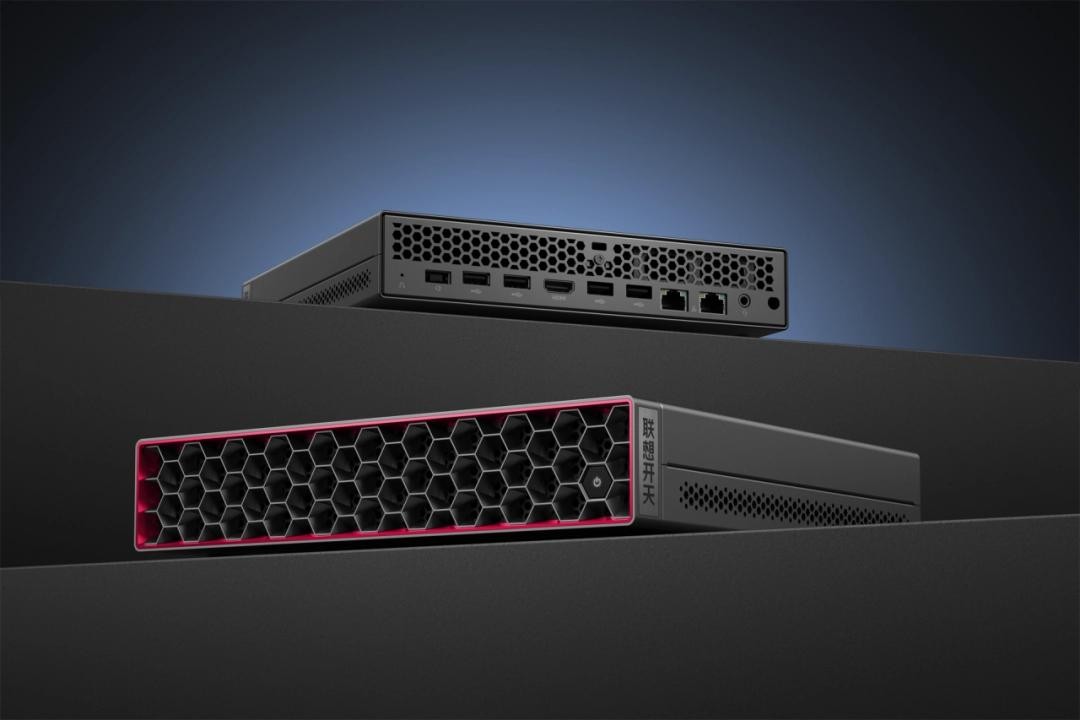
Lenovo has introduced its first domestically developed personal computer in China designed specifically for local artificial intelligence workloads. Named Lenovo Kaitian, the new machine targets enterprise environments by offering robust hardware capabilities to run large language models directly on the desktop.
- Lenovo Kaitian is the company's first AI-focused desktop computer developed in China.
- Powered by a Zhaoxin KX-7000 octa-core CPU and a Houmo Intelligent Power LQ50 NPU.
- The NPU delivers up to 160 TOPS performance (scaling up to 320 TOPS) with 24 GB of dedicated memory.
- Supports large language models with up to 35 billion parameters and runs on the Kylin operating system.
Hardware Specs and Performance
At the core of the new computer is an octa-core Zhaoxin KX-7000 processor paired with a Houmo Intelligent Power LQ50 neural processing unit. The base NPU configuration provides up to 160 TOPS of performance for INT8 calculations, while the maximum configuration can reach up to 320 TOPS. To handle intensive AI workloads, the system includes 24 GB of dedicated memory with a bandwidth of 153.6 GB/s.
This powerful configuration allows the computer to seamlessly run and process large language models (LLMs) with approximately 35 billion parameters locally, eliminating the need to rely on cloud servers. This ensures enhanced data privacy and operational independence for enterprise users.
Read alsoiOS 27.3 Beta Brings Apple Intelligence to ChinaSoftware and Model Compatibility
The computer runs on the Kylin operating system as its primary software platform. It also comes with a pre-installed AI agent named Tianxi AI Pro, which is designed to create digital workforce assistants capable of performing corporate tasks around the clock.
The manufacturer has confirmed full compatibility with widely used open-source model families, including the Qwen3.5 series and the specific Qwen3.6-35B-A3B model. This ensures that developers and corporate clients have immediate access to popular open AI tools without complex integration hurdles.
Cooling System and Acoustic Comfort
Lenovo paid special attention to thermal management and acoustic comfort during heavy workloads. Both the main processor and the neural unit feature independent heat dissipation systems, supplemented by a high-pressure cooling fan and intelligent temperature control algorithms.
At an ambient room temperature of 25 °C, the chassis heats up to just 33 °C in idle mode and reaches about 41 °C under full load. Even in a warmer room at 35 °C, the temperature under heavy load does not exceed 46 °C. Furthermore, noise levels remain extremely low at 19.4 dB in idle and around 29.5 dB at peak NPU load.
Impact on the Market and Business
The launch of the Lenovo Kaitian highlights the growing trend toward local hardware optimization for corporate AI applications. By enabling enterprises to run massive language models on-premises, Lenovo provides a secure and efficient pathway for businesses aiming to integrate artificial intelligence into their daily workflows without cloud dependency.
Source: iXBT.com