Local LLM power consumption and cost compared to AI subscriptions
An XDA analysis measures the power draw of running a local AI model on an RTX 4070 Ti Super PC, proving it costs far less than a $20 subscription.
Self-hosting AI models has gained popularity due to data privacy and cost control. However, critics often argue that electricity bills offset any savings compared to paying for monthly cloud subscriptions.
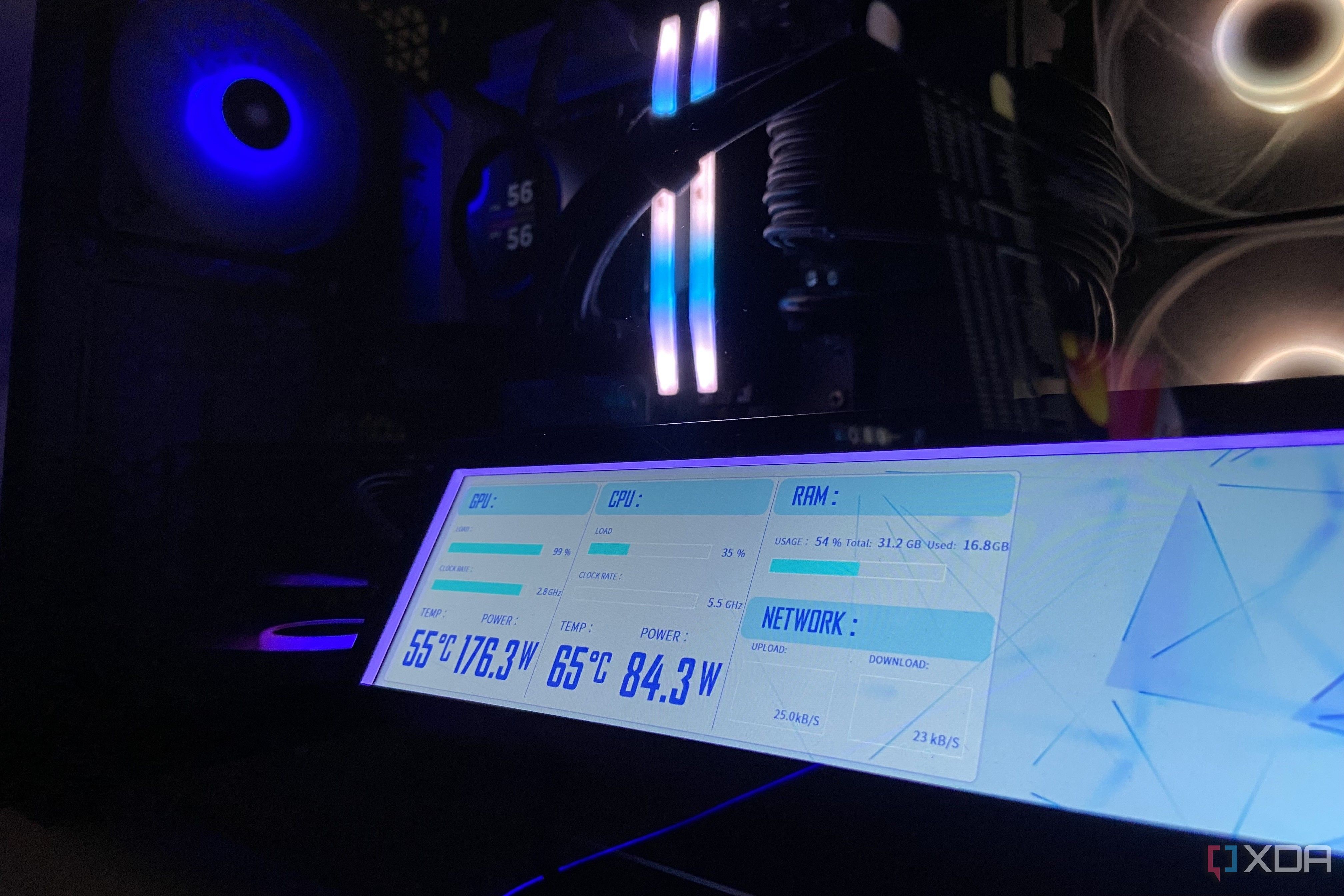
- Testing used the Qwen3.6-35B-A3B model on a PC featuring an RTX 4070 Ti Super and Ryzen 5 7600X.
- Power draw was logged using llama-bench, HWiNFO, and nvidia-smi.
- Peak power consumption reached 251.9W during token generation.
- Even under conservative worst-case scenarios, the electricity cost remains a fraction of a standard $20 AI subscription.
Measurement methodology and hardware setup
To ensure a comprehensive test, the author selected the Qwen3.6-35B-A3B model in its UD-IQ4_XS quantization (16.5GB). Since it exceeds the 16GB VRAM of the RTX 4070 Ti Super, expert layers were offloaded to a Ryzen 5 7600X CPU using llama.cpp. This ensured that both GPU and CPU power draws were accounted for.
Using llama-bench, the system processed 2,048-token prompts and generated 512 tokens repeatedly. HWiNFO and nvidia-smi logged CPU and GPU power every half second, revealing peaks of 237.5W during reading and 251.9W during generation.
Read alsoGPT-6 Astra can read and write neural network weightsCost analysis against $20 subscriptions
Using the U.S. Energy Information Administration's projected 2026 rate of 18.2 cents per kWh, the cost accounting deliberately favored the highest possible power draw without subtracting idle states.
A $20 bill buys roughly 110 kWh. At the measured peak of 251.9W, the PC would need to generate tokens non-stop for about 436 hours—roughly 14.5 hours every day for a month. Factoring in an extra 100W for system overhead, it would still require over 10 hours of daily continuous generation to match a single subscription.
Debunking local AI power misconceptions
Many believe that running a local model keeps hardware pinned at maximum rated power. In reality, token generation relies heavily on memory bandwidth rather than raw compute.
The RTX 4070 Ti Super peaked at 144W during generation against its 285W rating, proving that energy concerns regarding self-hosted language models are vastly overstated.
Source: XDA