OptiScaler unlocks DLSS 5 neural rendering on RTX 4070 Ti GPUs
An open-source tool called OptiScaler lets gamers run multi-layer DLSS 5 neural rendering on older RTX 40-series cards, bypassing official Nvidia limits.
Ever since Nvidia introduced DLSS 5, the open-source and modding community has worked tirelessly to inject neural rendering files into various games. While these mods bring impressive visual upgrades, they come with a heavy performance cost. Thanks to a tool named OptiScaler, users of older GPUs like the RTX 4070 Ti can now access advanced features officially restricted to newer hardware.
- OptiScaler spoofs the GPU architecture, allowing older cards to run DLSS 5 and multi-frame generation.
- The "NR before SR" feature changes the pipeline order, significantly reducing VRAM pressure.
- Testing shows a 12GB VRAM card can handle multiple neural rendering passes with proper pipeline tweaks.
The Performance and VRAM Bottleneck of Neural Rendering
Enabling DLSS 5 immediately puts a heavy tax on hardware, especially when dealing with VRAM-heavy neural rendering passes. Running games at 1440p or 4K with high-to-ultra settings and ray tracing brings a 12GB card dangerously close to its memory limit. Consequently, frame rates often drop into the low 40s before even stacking additional AI rendering passes.
Stacking multiple neural rendering passes further threatens to crash games because each pass must process a full-resolution image. Nvidia's official implementation does not expose fine control over how aggressively these passes can be piled onto an image. OptiScaler changes this dynamic by giving users direct pipeline control over where neural rendering takes place.
Read alsoAMD declares itself a data center-first technology companyHow OptiScaler Pipeline Optimization Works
One of OptiScaler's most powerful features is the option to place neural rendering before super resolution. Typically, neural rendering operates on an already upscaled image, but flipping this order means NR runs on the lower internal resolution image before Super Resolution upscales it to the target resolution.
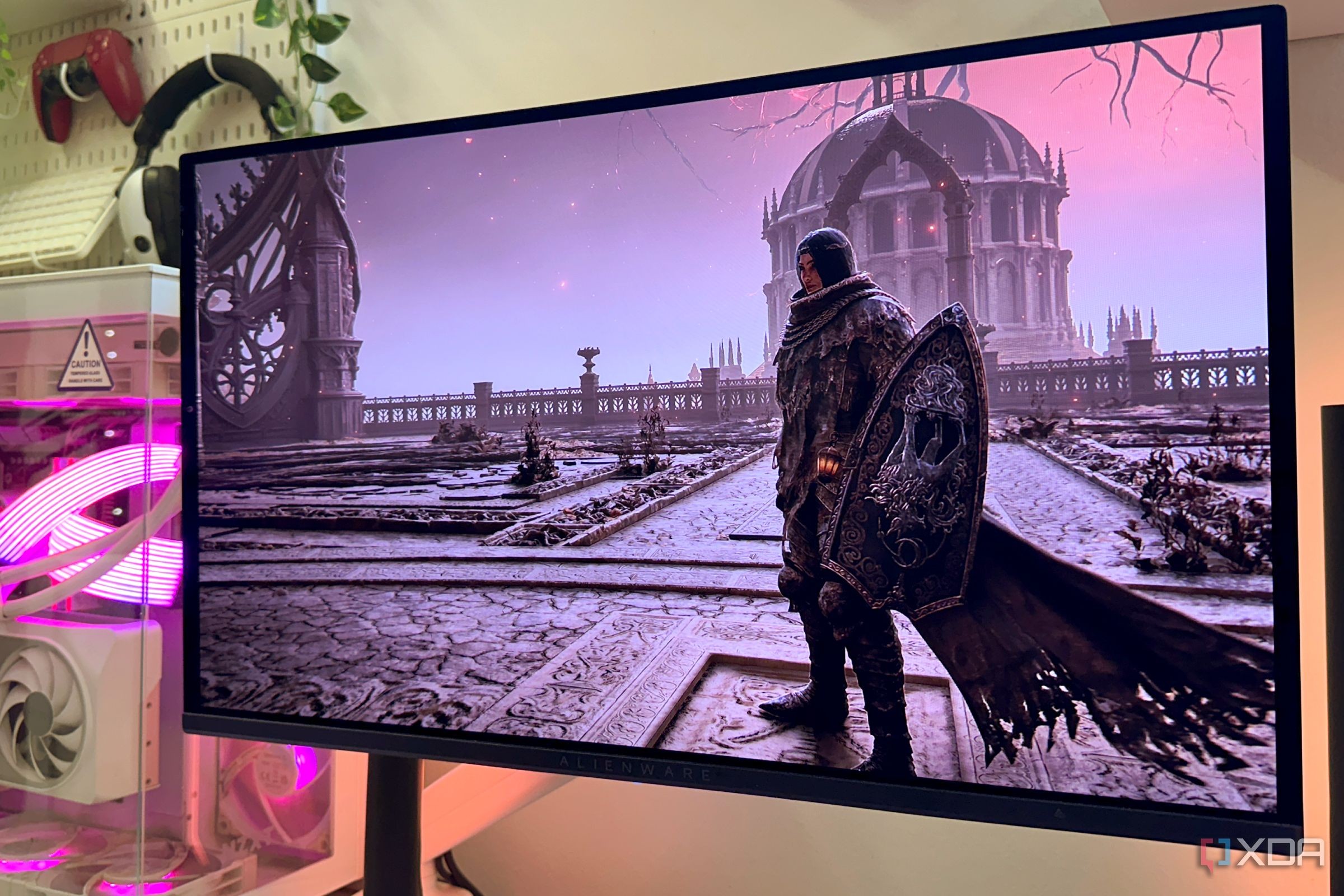
In testing with Elden Ring, this simple pipeline adjustment recovered roughly half of the performance lost during conventional neural rendering passes. The RTX 4070 Ti has far fewer pixels to process during the most expensive rendering phase, making it feasible to experiment with a second neural-rendering layer without overheating or crashing the system.
What This Means for Older Hardware and Enthusiasts
These experiments highlight just how software-defined modern features like DLSS 5 truly are. With the right dynamic-link libraries, architecture spoofing, and open-source utilities, hardware boundaries established by manufacturers can be effectively pushed aside. An Ada Lovelace card can pull off remarkable feats with technology supposedly reserved for newer Blackwell GPUs.
Ultimately, software ingenuity proves that there is often a wide gap between what a GPU physically supports and what manufacturers choose to enable. While VRAM remains the ultimate hardware limitation for older cards, open-source tools continue to extract surprising longevity and performance from last-generation technology.
Source: XDA