Solid-state battery 30 times thinner than hair developed
Donguk University researchers have created an anode-free solid-state battery with a thickness of just 2.77 µm.
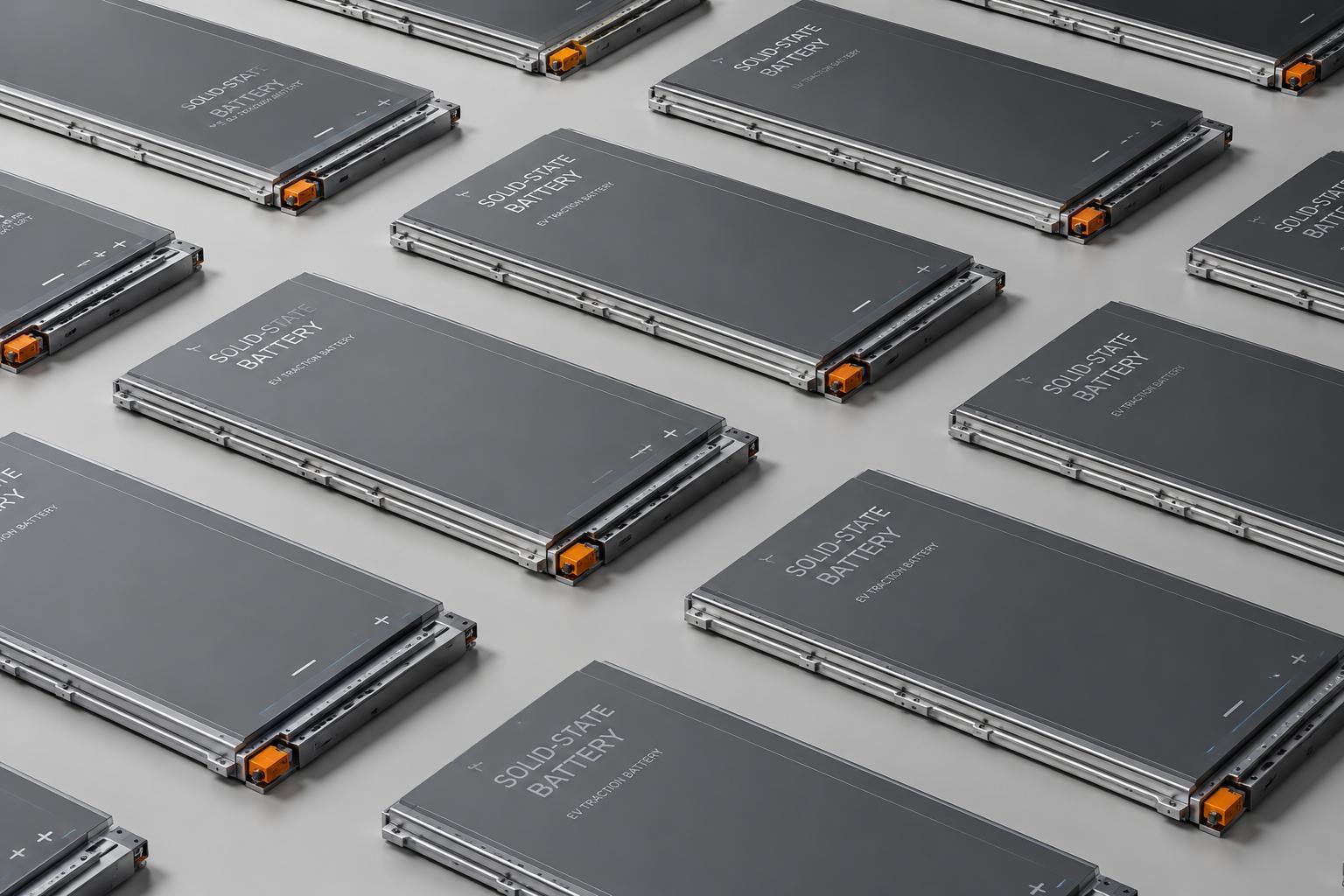
Researchers from Donguk University in South Korea have developed an ultra-thin thin-film solid-state battery with a thickness of only 2.77 micrometers. This breakthrough can find applications in wearable electronics, miniature sensors, and medical devices where traditional batteries are simply too bulky.
- The battery thickness is just 2.77 µm, making it significantly thinner than a human hair.
- The design lacks a traditional anode, as lithium deposits directly onto the current collector during the first charge.
- A special tin and carbon coating helps control lithium distribution and reduces losses during cycling.
- The device demonstrated a volumetric energy density of 235.13 Wh/L after 100 charge and discharge cycles.
Innovations in Anode-Free Battery Design
The research team, led by Professor Hyun-Soch Kim from the Department of Energy and Materials Science, attempted to solve one of the major challenges of anode-free solid-state batteries. In such cells, the liquid electrolyte is replaced by a solid material, and a separate anode is absent. During the initial charge, lithium from the cathode deposits directly onto the current collector, forming an anode inside the cell. This structure simplifies manufacturing and increases volumetric energy density.
However, over multiple cycles, lithium can deposit unevenly. Part of the metal loses electrical contact with the current collector, turning into dead lithium, while some areas may detach from the solid electrolyte during discharge. As a result, the amount of available lithium gradually decreases, degrading the battery's performance and longevity.
Read alsoTesla and SpaceX in Texas: What the Democratic sweep means for Elon MuskTin-Carbon Coating and Prelithiation
To combat this problem, the scientists tested several coating options for the current collector, including carbon and metal layers. A double-layer structure of tin and carbon applied to a copper base showed the best results.
Additionally, the researchers applied a thin layer of metallic lithium to the prepared current collector. This pre-lithiation process creates an extra metal reserve to compensate for initial operational losses. During the first charge, a three-dimensional structure of tin and a lithium-tin alloy forms within the coating, helping to accommodate volume changes and maintain layer contact.
Practical Implications and Future Impact
The finished battery consisted of a lithium vanadium oxide-based cathode, a lithium phosphorus oxynitride solid electrolyte, and a copper current collector with the new coating. With a total thickness of 2.77 µm, it demonstrated a volumetric energy density of 235.13 Wh/L after 100 charge and discharge cycles.
Such advancements represent a crucial step forward for modern microelectronics and medical technology. As next-generation wearables and sensors demand increasingly smaller power sources, ultra-thin solid-state batteries will play a pivotal role in shaping future hardware design.
Source: iXBT.com