Sun Develops 1-Million-Km Coronal Hole: Geomagnetic Storm Alert
A massive 1-million-km coronal hole on the Sun is sending high-speed solar wind toward Earth, threatening extended geomagnetic storms through mid-November.
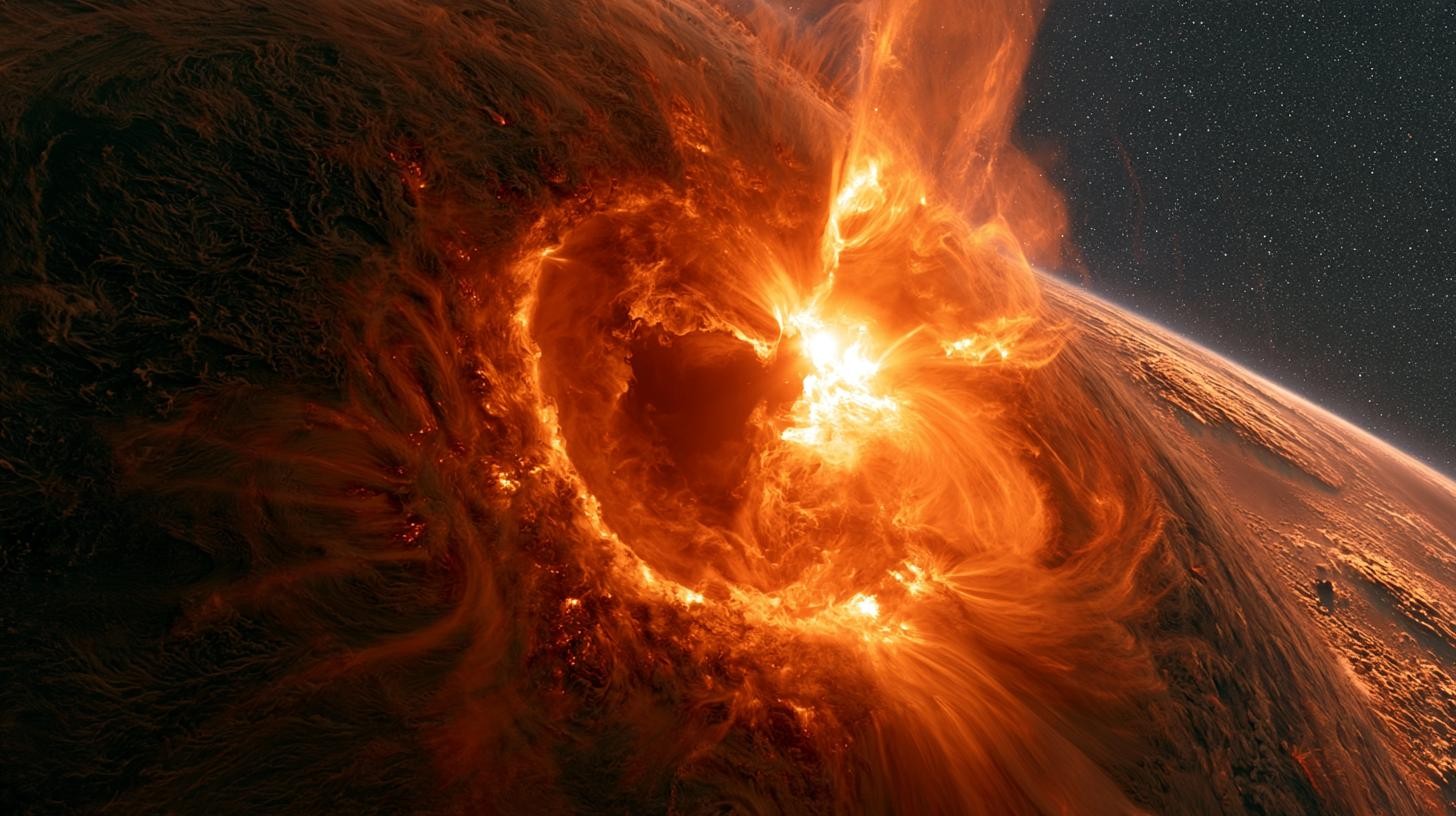
A colossal coronal hole spanning roughly one million kilometers has formed on the Sun, ranking among the largest observed this year. Captured in satellite imagery on November 5, this vast patch of the solar corona exhibits significantly lower plasma density and temperature than its surroundings, causing it to appear as an imposing dark void. Scientists warn that directed streams of high-speed solar wind will trigger prolonged geomagnetic disturbances on Earth.
- Coronal hole spans roughly one million kilometers across the solar surface.
- Solar wind velocities within the stream may reach up to 1,000 km/s.
- The plasma front is projected to impact Earth's magnetosphere starting overnight November 6–7.
- Geomagnetic conditions are unlikely to fully stabilize before November 13–14.
The Mechanics of Coronal Holes and High-Speed Wind
Coronal holes develop where the Sun's magnetic field lines open into interplanetary space rather than looping back into the surface. Because of reduced plasma density and significantly cooler temperatures, these zones emit very little ultraviolet radiation and X-rays, appearing dramatically darker than surrounding regions. While the phenomenon does not change the total amount of light or heat warming the Earth, it dramatically impacts space weather conditions.
Through these open magnetic channels, energetic solar particles escape unobstructed into deep space. They generate fast solar wind streams that travel at velocities ranging from hundreds of kilometers per second up to 1,000 km/s. When this dense, high-velocity stream collides with Earth's magnetosphere, it transfers kinetic energy into our upper atmosphere, sparking geomagnetic storms.
Read alsoHuawei Mate 80 Air release date and rumored specificationsTimeline and Severity of the Impact
Current forecasts indicate that the leading edge of the high-speed solar wind will strike the planet overnight between November 6 and November 7. The sharpest geomagnetic disturbances are projected to coincide with this initial contact. However, the sheer size of the coronal hole means Earth will remain enveloped in the plasma stream for at least five days.
The ongoing severity of the storm depends heavily on the orientation and density fluctuations of the solar magnetic field embedded within the plasma stream. Forecasts suggest intermittent storm conditions followed by recurring disturbances through mid-week, with complete geomagnetic quiet unlikely before November 13–14.
Consequences for Infrastructure, Tech, and Public Health
During peak storm intervals, satellite navigation systems such as GPS and high-frequency communication channels may experience signal degradation or intermittent dropouts. High-latitude electrical grids and satellite operators must account for increased induced currents and orbital drag.
For everyday consumer devices such as smartphones and laptops, there is no threat of hardware damage. However, weather-sensitive individuals and those prone to cardiovascular irregularities may experience fatigue or headaches during prolonged periods of elevated geomagnetic activity between November 7 and 14.
Source: iXBT.com