The ISS installs penultimate next-generation solar array to boost power
The ISS crew installed the penultimate new solar array. Station power capacity will increase to 215 kW upon completion.
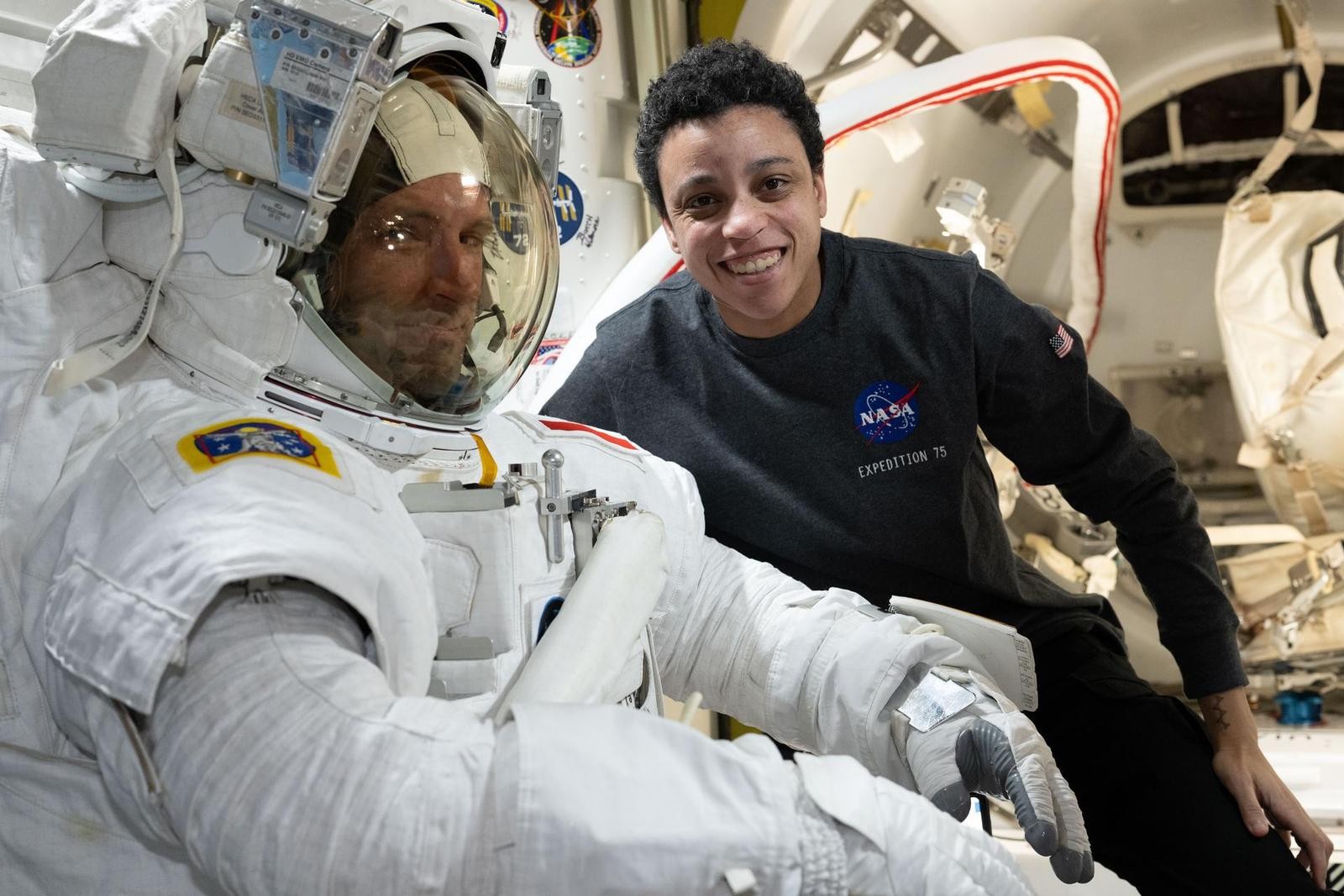
The crew of the International Space Station has successfully completed the installation of the penultimate of eight new deployable solar arrays designed to boost power supply. This milestone spacewalk marks another major step in upgrading the orbital laboratory's aging power grid.
- NASA and Canadian Space Agency astronauts spent 7 hours and 11 minutes in the vacuum of space.
- The installation increases the station's total power supply capacity toward the 215 kW goal.
- The eighth and final solar array is scheduled for installation on November 5.
- Alongside power upgrades, the crew continues intensive biological and physical science research.
Upgrading the orbital power grid
The massive energy system modernization program for the International Space Station began back in June 2021 to supplement its original power channels. During a recent spacewalk, astronauts Anil Menon and Joshua Kutryk spent over seven hours attaching the massive solar array to the port side truss structure of the station.
After releasing the structural latching bolts, the new roll-out solar array autonomously deployed within ten minutes. According to NASA, installing the final starboard-side array on November 5 will boost the station's total power generation capability from 160 to 215 kilowatts, ensuring continuous power for all future operations.
Read alsoSpaceX Prepares Historic First Starship Launch from Florida with Unique Flight PlanResuming advanced onboard science
Following their return from the spacewalk, the crew immediately resumed a packed scientific schedule across the station's laboratory modules. Inside the Japanese 'Kibo' lab, researchers studied how microgravity affects cell division in green algae and tobacco cultures, gathering data that could aid future farming on the Moon and Mars.
Other crew members investigated plant disease resistance mechanisms using model organisms and artificial gravity incubators. Additional operations included growing high-purity semiconductor crystals, testing virtual reality headsets for spatial orientation in weightlessness, and maintaining critical research hardware.
Significance for space exploration
Continuous technological upgrades to the International Space Station are vital for maintaining its productivity as a premier microgravity research facility. Reaching a power capacity of 215 kW will reliably support an increasing number of computers, life support systems, and commercial payloads.
The data gathered from these orbital experiments provides foundational knowledge for deep space exploration while offering valuable insights that can be adapted to improve industries and agriculture back on Earth.
Source: iXBT.com