NASA successfully extends Voyager 1 lifespan with Big Bang operation
NASA completed the Big Bang operation on Voyager 1, freeing up 10 watts of power and extending its interstellar scientific mission for years.
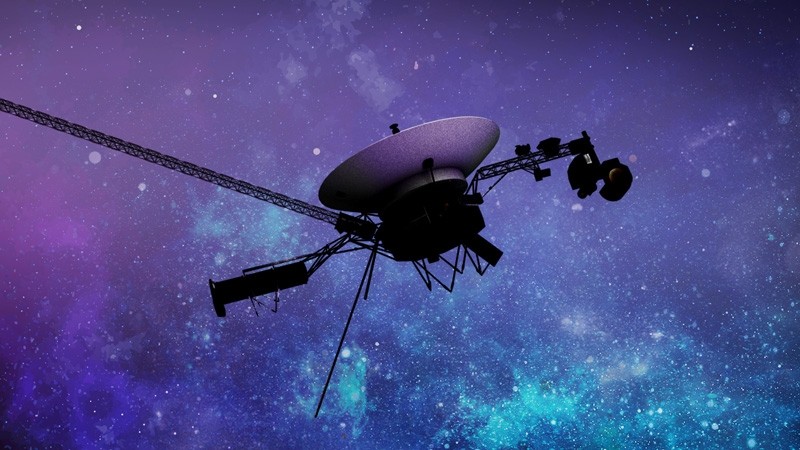
NASA has successfully completed the complex Big Bang operation, allowing the Voyager 1 interstellar probe to continue its groundbreaking scientific research for years to come. The procedure involved switching between onboard heaters to free up 10 watts of critical power, though the dangerous maneuver nearly resulted in a temporary loss of the spacecraft.
- The Big Bang operation successfully switched onboard heating systems.
- Engineers managed to free up 10 watts of much-needed power.
- The spacecraft entered a safe mode for two days following communication issues.
Details of the risky procedure
The core idea of the procedure was to replace three power-hungry thruster fuel line heaters with three less power-intensive alternatives. Engineers had to simultaneously alter the operating parameters of six different systems aboard the spacecraft. Any minor deviation could have disrupted the thermal balance and permanently disabled the probe. NASA previously tested this exact procedure on the Voyager 2 twin probe in September 2026 before attempting it on the more distant spacecraft.
Both historical spacecraft are powered by radioisotope thermoelectric generators that convert the heat of decaying plutonium-238 into electricity. As the fuel naturally decays, the available power decreases by roughly 4 watts annually. Without the Big Bang operation, engineers would have been forced to shut down yet another scientific instrument by the summer of 2027.
Read alsoSpaceX Prepares Historic First Starship Launch from Florida with Unique Flight PlanUnexpected communication glitch and recovery
Shortly after switching to the new heaters, mission specialists faced an unexpected communication failure. On October 18 and 19, 2026, NASA's Deep Space Network twice failed to detect a radio signal from Voyager 1 over a 24-hour interval. Given the vast distance—where a signal takes nearly a day to travel one way—the enforced waiting period was incredibly tense. Fortunately, the signal reappeared on October 20.
A preliminary investigation showed that one group of attitude articulation thrusters shut down, prompting the backup thrusters to automatically activate. This fail-safe mechanism temporarily placed the spacecraft into a safe state and paused routine operations. Engineers are still investigating the exact root cause of the thruster shutdown.
Historical significance of the mission
As of now, Voyager 1 is traveling at approximately 61,155 km/h and is approaching a historic milestone of being nearly one light-day away from Earth. Every extra year of operation for these unique interstellar explorers brings invaluable data to modern science.
Source: 3DNews: