Xiaomi humanoid robots complete a full 8-hour shift at EV factory
Xiaomi has shared footage of humanoid robots independently completing an 8-hour shift sorting car parts at its EV factory.
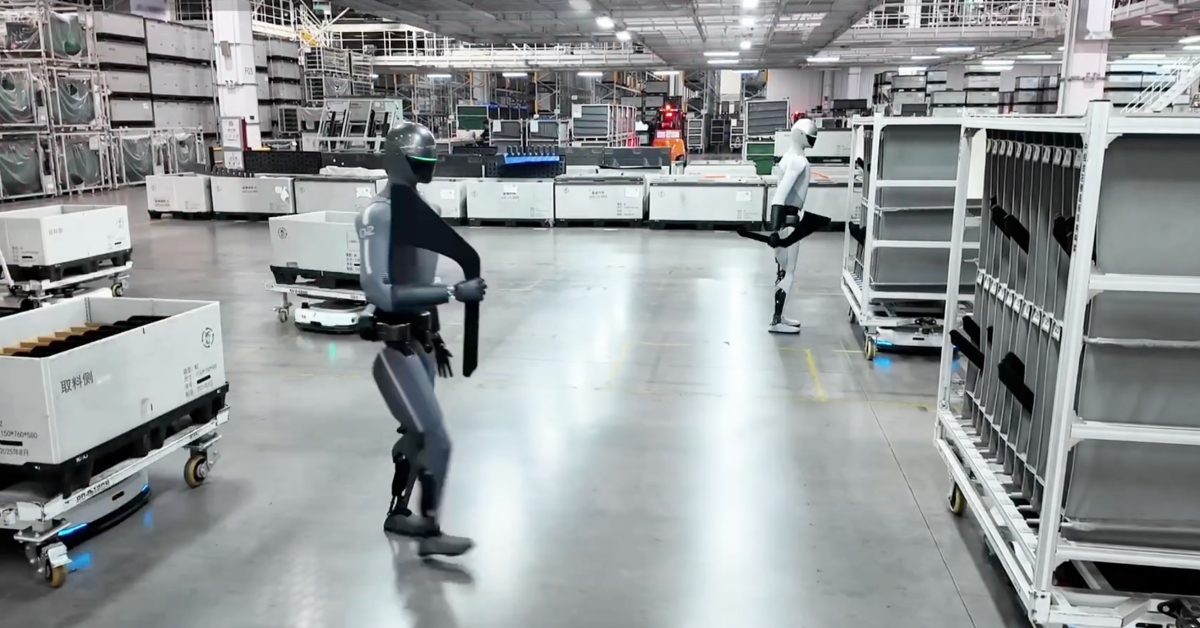
Xiaomi has released footage showcasing its humanoid robots successfully working a full 8-hour shift at its electric vehicle factory. The robots were tasked with sorting center console side covers for vehicles. According to the company, the machines operated autonomously, identifying and correcting their own errors throughout the process.
- The robots completed a full 8-hour shift at the Center Console Side-Cover Sorting Workstation in Xiaomi's auto factory.
- The video was posted on X on November 3 during the World Internet Conference in Wuzhen.
- Xiaomi stated that the robots autonomously detected anomalies and coordinated with the production line control system.
- Public testing started in March with basic assembly tasks, and success rates steadily climbed from 90.2% to 98% by July.
Progress in real-world industrial testing
This deployment marks the third major milestone in Xiaomi's public robotics program this year. In March, an initial humanoid intern installed self-tapping nuts in the Beijing EV factory with a 90.2% success rate over three hours. By July, that rate improved to 98%, leading to the addition of harder workstations like the side-cover sorting job. Last December, CEO Lei Jun announced plans to deploy humanoids in large numbers across factories within five years.
Alongside factory trials, Xiaomi announced that its open-source Xiaomi-Robotics-1 AI model, trained on 100,000 hours of real-world data, has started trial runs in staff apartments. However, critics note that the latest video omitted specific numerical details regarding total parts sorted, precise success metrics over the 8 hours, or battery management strategies.
Read alsoXiaomi humanoid robots complete 8-hour shift at auto factoryWhy wheeled platforms challenge humanoids in factories
One of the most intriguing moments in the video features a wheeled base equipped with a humanoid upper body assisting with dropped materials. On flat factory floors, wheels are inherently more efficient than legs, requiring no energy for balance, allowing for larger batteries, and needing fewer expensive actuators.
While legs are practical for homes with stairs, industrial plants were originally engineered around wheeled carts and forklifts rather than walking bipeds. The true value of these systems lies in their hands, arms, and controlling AI, proving that form factors should match practical utility rather than strict humanoid designs.
Source: Electrek