Chinese dual-arm robot maintains 10 kV live power lines
State Grid Corporation of China unveiled a dual-arm robot designed to service 10 kV live power lines without cutting electricity.
·1 min read
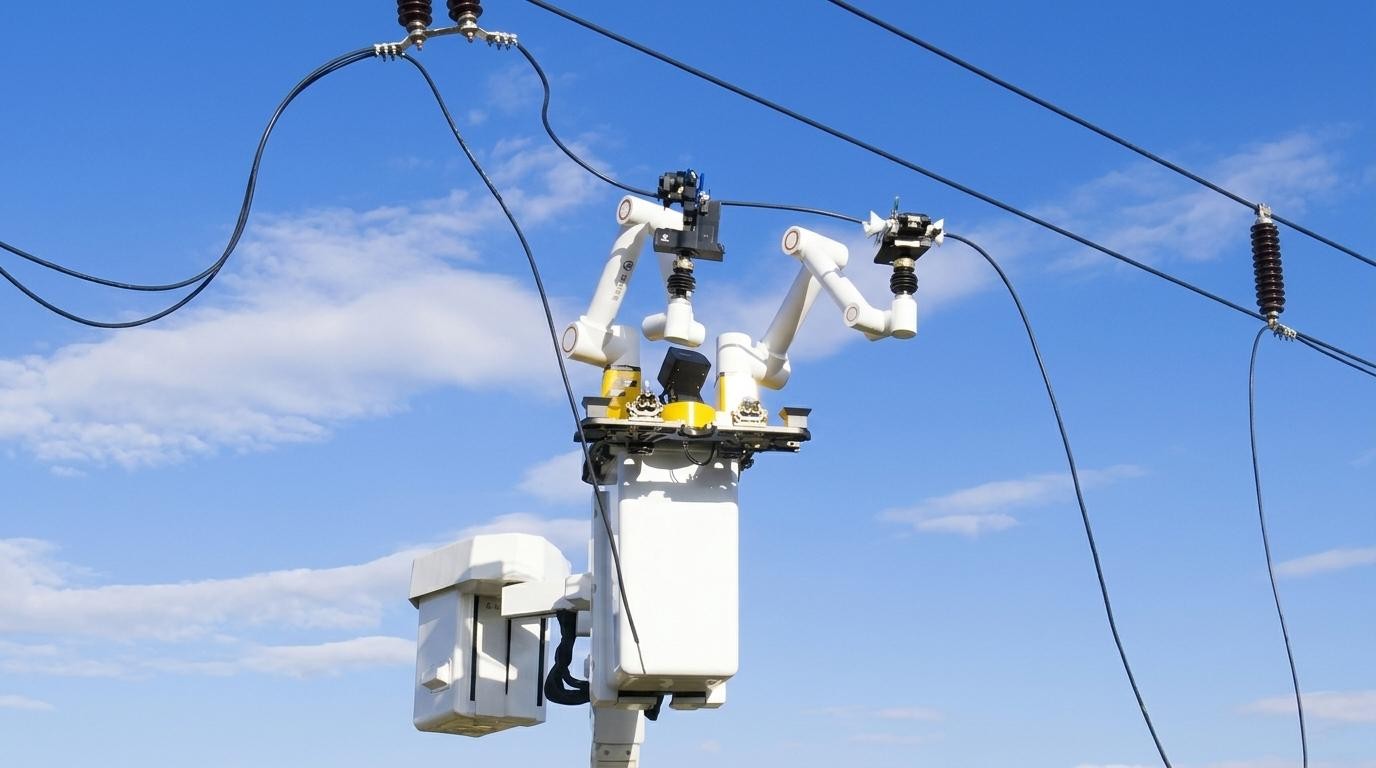
The State Grid Corporation of China has demonstrated the operation of a specialized dual-arm robot designed for the maintenance of live high-voltage power transmission lines. This innovation aims to radically transform grid maintenance while eliminating life-threatening risks for human electricians.
- The robot operates on 10 kV networks without shutting off power supply.
- Operators control the device remotely from the ground using a tablet.
- The technology is already active across 9 energy divisions in Heilongjiang province.
Real-world deployment and first operations Tesla-like precision engineering is finding its way into utilities as Heilongjiang Electric Power deploys the robot in Qitaihe, Heilongjiang province. The machine saw its first practical application at the beginning of 2026 on a central local grid section, directly connecting new lines on energized wires.
Safety and remote control technologies Previously, such hazardous maintenance required human electricians to work at heights directly inside powerful electric fields. Now, technicians can remain safely on the ground and control the robot remotely via a standard tablet. To navigate spatial environments, the device utilizes machine vision and multiple sensors, while visual and force-feedback control systems ensure extreme precision. Because maintenance happens without interrupting power, end consumers experience zero downtime.
Expanded capabilities and future outlook The robot's functions extend beyond simply connecting wires: it is also capable of trimming tree branches growing close to power lines and replacing surge arresters. Utilizing sensor data fusion and local feedback loops, the system represents a major leap in utility automation, with Chinese authorities planning to expand deployments to handle all high-risk tasks.
Source: iXBT.com