LXD and MicroCloud Flaw Allows Attackers to Bypass Private Keys
A critical CVSS 10.0 flaw in Canonical LXD and MicroCloud lets attackers impersonate trusted clients without holding a private key.
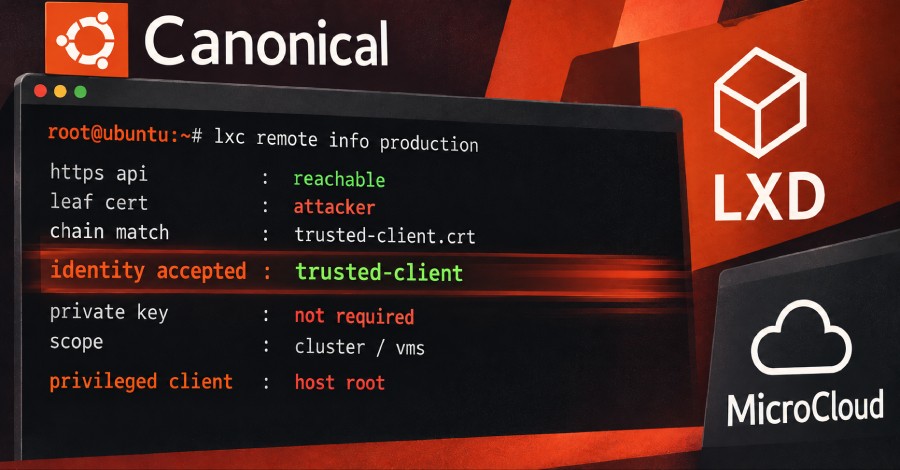
Canonical's LXD and MicroCloud platforms are affected by a critical vulnerability rated 10.0 on the CVSS scale. The flaw allows malicious actors to log in as trusted clients without possessing the necessary private key.
- Critical flaw rated CVSS 10.0
- Affects Canonical LXD and MicroCloud
- Allows impersonation without private keys
- Requires network access to HTTPS API and public certificate
Attack Vector and Details
To exploit this vulnerability, an attacker must be able to reach the target's HTTPS API over the network and possess the trusted client's public certificate. No private key is required.
Once authentication is bypassed, the attacker operates with the privileges of the impersonated client, gaining access to the cluster and its virtual machines.
Read alsoCVE-2026-98432: Critical TCP Use-After-Free Vulnerability in Linux KernelSecurity Implications
Gaining unauthorized access to a cluster through client impersonation poses severe risks to data integrity and overall cloud infrastructure security. Administrators must act swiftly.
Applying vendor patches and monitoring API access are crucial steps in mitigating the risks associated with this high-severity flaw.
What This Means for IT Professionals
Critical infrastructure vulnerabilities underscore the importance of prompt patch management and robust access controls in modern cloud and virtualization environments.
Source: The Hacker News