NASA SLS rocket ionosphere disruption poses risks to GPS navigation
Taiwanese scientists have discovered that NASA's heavy SLS rocket launches cause massive ionosphere disturbances, creating critical GPS risks.
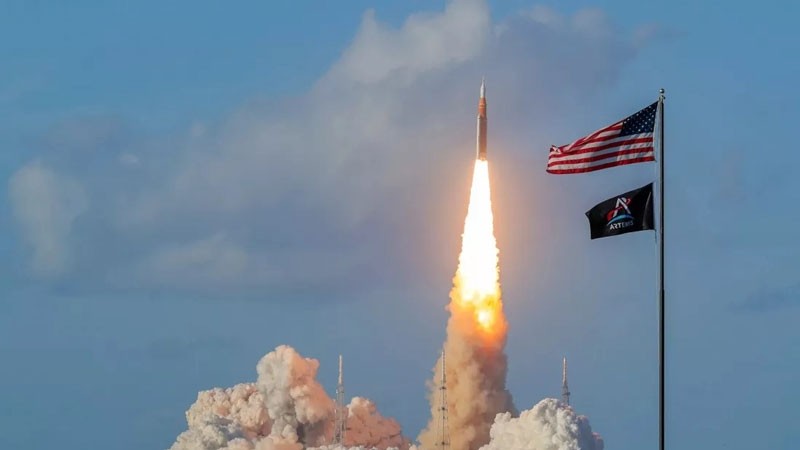
Recent research by a group of Taiwanese scientists highlights the potentially severe consequences that heavy rocket launches can have on the Global Positioning System (GPS). Since modern autonomous vehicles and drones rely heavily on precise GPS data, such atmospheric disturbances could lead to accidents.
- Researchers evaluated the impact of large rocket launches on Earth's ionosphere.
- The Artemis II mission launch triggered three massive ionospheric disturbances.
- These disruptions can cause GPS positioning errors of several meters.
To assess how rocket launches affect the upper atmosphere, scientists utilized a network of tectonic plate monitoring stations equipped with high-precision GPS receivers. This infrastructure provided an accurate picture of how global positioning networks react to atmospheric anomalies.
Earth's ionosphere extends from 48 to 965 kilometers above sea level, containing a dense layer of free electrons. When a massive rocket passes through this region, it alters electron density and distribution, indirectly causing delays in GPS signals traveling from satellites positioned 20,200 km above.
Data from ground sensors revealed that the Artemis II mission launch caused three distinct waves of ionospheric disturbances. The first occurred at lift-off, the second about 1 hour and 48 minutes later during upper-stage engine ignition, and the third approximately 25 hours later during trans-lunar injection.
Read alsoSpaceX successfully catches orbital Starship spacecraft with mechanical armsThe second disturbance was the most massive, spreading roughly 5,000 kilometers over North America. Interestingly, subsequent high-altitude engine maneuvers caused stronger ionospheric reactions than the initial massive solid rocket boosters, emphasizing the importance of altitude and flight conditions.
According to the authors, these electron density fluctuations can introduce navigation errors of several meters. While no major accidents have been officially linked to historical crewed rocket launches yet, the increasing reliance on precision GPS makes this an issue that requires close attention.
The GPS signal disturbance caused by the SLS rocket was ten times stronger than anything observed during Starship flight tests. As future lunar and Martian exploration missions expand, space agencies will need to address these atmospheric impacts before critical failures occur in navigation networks.
Source: 3DNews: