NASA Swift space telescope re-enters Earth atmosphere after 22 years
The NASA Swift space observatory has ended its mission, re-entering Earth atmosphere after operating nearly 22 years on orbit.
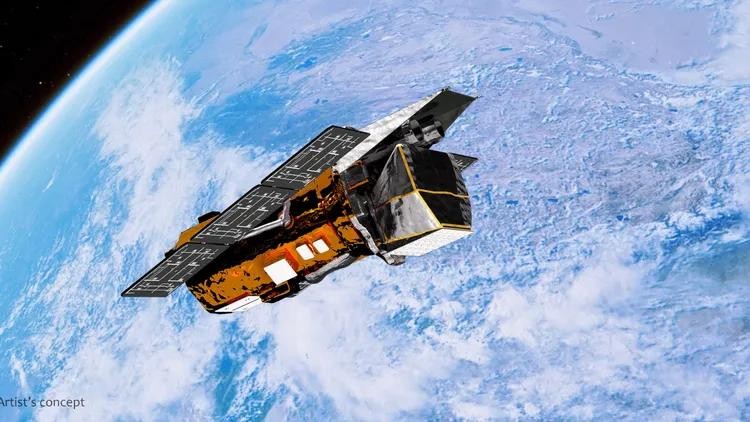
The NASA Swift space observatory has officially concluded its long mission after uncontrollably re-entering Earth's atmosphere over northern Sumatra. The spacecraft operated on orbit for nearly 22 years, far exceeding expectations.
- The observatory served about ten times longer than its initially planned lifespan.
- The spacecraft weighed approximately 1450 kg and mostly burned up upon re-entry.
- During its mission, the telescope detected over 2000 gamma-ray bursts and 1400 supernovae.
Mission history and key achievements
Launched in November 2004 with an initial two-year mission plan, Swift's primary objective was detecting and studying gamma-ray bursts—some of the most powerful explosions in the universe. The system could pinpoint coordinates and deploy its telescopes within roughly a minute.
Over the years, the observatory—later renamed the Neil Gehrels Swift Observatory in 2018—studied black holes and various cosmic phenomena, conducting its final scientific observation on October 20, 2026.
Read alsoXcode 27.3 beta 1 adds GitHub Copilot to coding assistantThe attempted rescue mission
Swift had a chance for a prolonged life when NASA awarded a $30 million contract to Katalyst Space in September 2025. The company was tasked with building the LINK robotic spacecraft to capture Swift and boost it to a higher orbit, as the observatory lacked thrusters.
However, LINK launched in July 2026 and suffered propulsion and attitude control issues, failing to capture the telescope. The rescue craft itself eventually de-orbited in September.
Significance for future space operations
NASA considers the failed rescue attempt a useful technological experiment that tested robotic satellite servicing and lifespan extension operations. Large space debris re-entering the atmosphere remains a common occurrence, with numbers expected to grow alongside increasing satellite constellations.
Source: iXBT.com