Nvidia considers teflon for upcoming AI chips and circuit boards
Nvidia is evaluating PTFE teflon for AI system printed circuit boards to improve high-speed data transmission and reduce signal degradation.
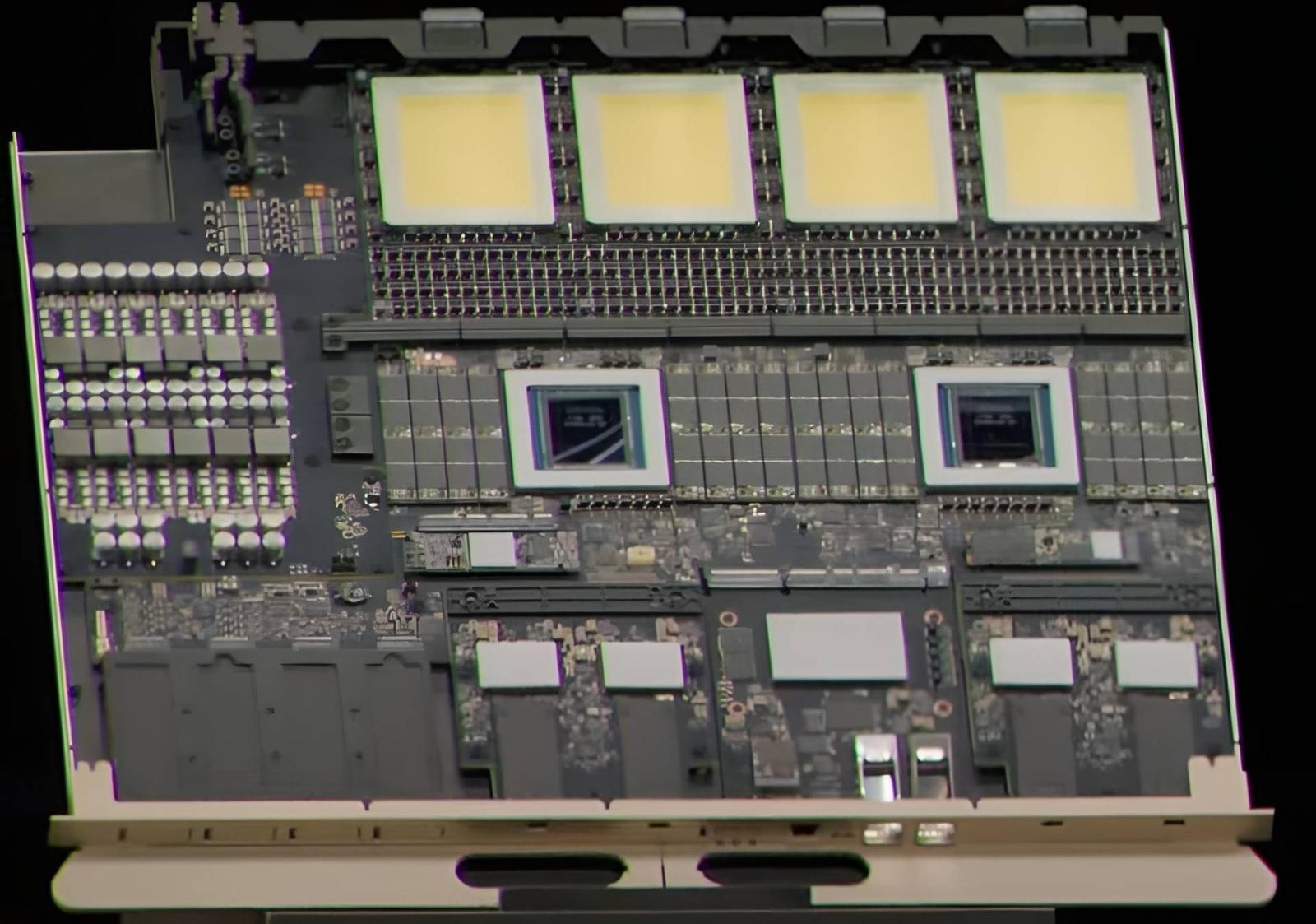
Nvidia is considering the use of teflon in the manufacturing of printed circuit boards for its upcoming AI systems. We are talking about polytetrafluoroethylene (PTFE), a material best known for non-stick cookware coatings. Its low dielectric losses could help solve one of the main problems facing modern AI accelerators — signal degradation during ultra-high-speed data transmission.
- Nvidia is eyeing teflon (PTFE) for printed circuit boards in future AI systems.
- The primary goal is to combat signal degradation at speeds up to 200 Gbps per lane.
- The material could be used in switch boards for the Rubin Ultra architecture.
- Key challenges include extremely low adhesion, softness, and a low yield rate of about 5%.
Why Nvidia needs teflon for modern AI accelerators
Modern AI chips already deliver transmission speeds of up to 200 Gbps per lane, meaning even minor interference can severely impact overall system performance. While chip-packaged optics (CPO) technology is not yet ready for widespread commercial adoption, improving traditional printed circuit boards remains one of the most accessible solutions for hardware engineers.
The potential use of PTFE was discussed after Nvidia unveiled its new NVLink switch board at the OCP summit in early October. The material was later showcased at the TPCA Show. According to industry sources, the company could apply it in the switch board for Rubin Ultra or in the next generation of board-to-board interconnects. This would enable high-speed data transmission directly through the circuit board, reducing dependence on complex copper cables.
Read alsoAmazon Reports $42.4B Outflow and Prepares $220B AI InvestmentTechnical hurdles and low manufacturing yields
PTFE is already utilized in military radars, satellite equipment, and automotive advanced driver-assistance systems, though its use has largely been limited to antenna designs. The main problem is extremely low adhesion: the material does not bond well with other substances, making multilayer board construction difficult. Additionally, PTFE is relatively soft and thin, which complicates processing and increases costs.
Unlike teflon, the epoxy and hydrocarbon resins used today bond better when heated, drill more easily, and are well-suited for metal plating. According to industry estimates, the yield of usable products when working with PTFE currently does not exceed 5%. The material remains in the sample stage, and some industry representatives doubt the feasibility of its widespread adoption.
Market outlook and industry implications
Nevertheless, several of Nvidia's partners from China, Taiwan, and the US have reportedly already purchased a significant portion of the equipment required to process PTFE. One analyst believes that these technological limitations can be successfully overcome within the next two years, potentially opening a new chapter in high-performance computing infrastructure.
Source: iXBT.com