Running a local AI model with access to your personal documents
Learn how to set up a private local LLM with direct access to your personal folders and documents for secure analysis.
Using cloud chatbots for heavy workloads involving sensitive documents like health insurance policies or bank statements poses privacy risks. Sending private files to third-party servers defeats the purpose of keeping your personal data secure.
- Running a local LLM ensures privacy, but it remains just a chatbot unless given direct access to your files.
- Tools like LM Studio, Cherry Studio, and AnythingLLM provide convenient local workspaces for AI models.
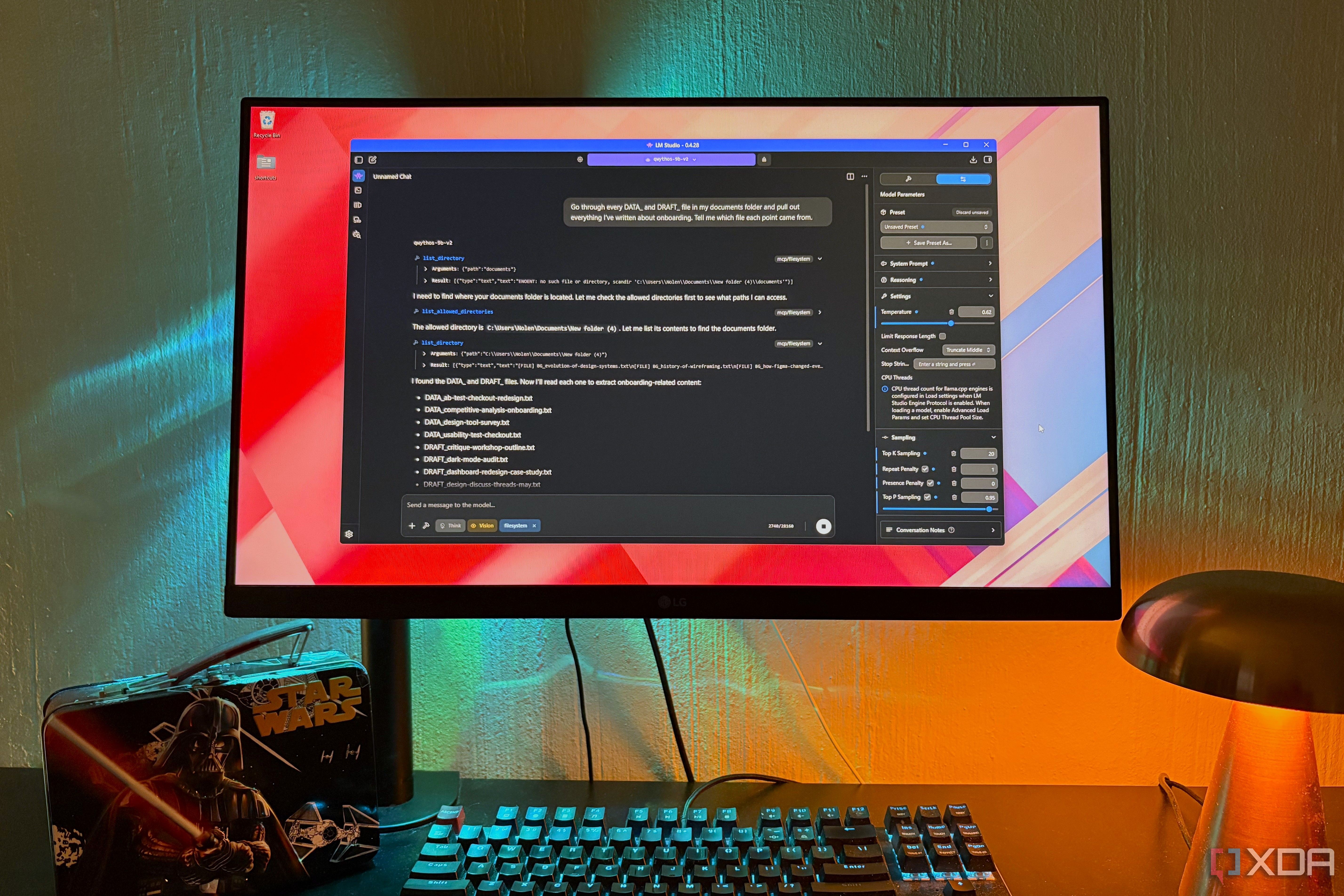
- Filesystem MCP servers allow the AI model to open, read, and search through chosen local folders seamlessly.
- Models such as Qwen 3.5 9B offer reliable tool-calling capabilities necessary for accurate file navigation.
Setting up the workspace and runner
To make a local model truly useful, you need a runner that can handle file inputs effectively. LM Studio is a top pick due to its user-friendly interface and built-in document upload features. If your preferred runner lacks this, alternative AI workspace tools like Cherry Studio or AnythingLLM can connect your local LLM through a server. Files can be attached directly, and if a document exceeds the context window, the tool extracts the most relevant sections automatically.
Connecting local folders via MCP
Read alsoHow a local LLM nightly automation workflow saved me hoursWhile attaching individual files works, notes often live scattered across various folders. The filesystem Model Context Protocol (MCP) server solves this by letting the model open and read files in specified directories directly. This eliminates the need to upload files one by one. Reliable tool use is essential here, and models like Qwen 3.5 9B handle file reading and contextual retrieval with high precision.
Practical benefits and real-world use
This private setup enables users to cross-reference personal documents, such as comparing health insurance policies against claim statements or tracking down forgotten notes. It helps retrieve decisions and details without remembering exact file names. Although cloud-based models are faster, running a capable open-source model locally on your own hardware ensures complete data privacy for sensitive information that should never leave your device.
Source: XDA